Hyperkalemia Risk & Food Estimator
Risk Profile Assessment
Select factors that apply to you to estimate your risk level for elevated potassium levels.
Daily Potassium Intake
Click items to add them to your daily log. Target limit for at-risk patients is often 2,000 mg.
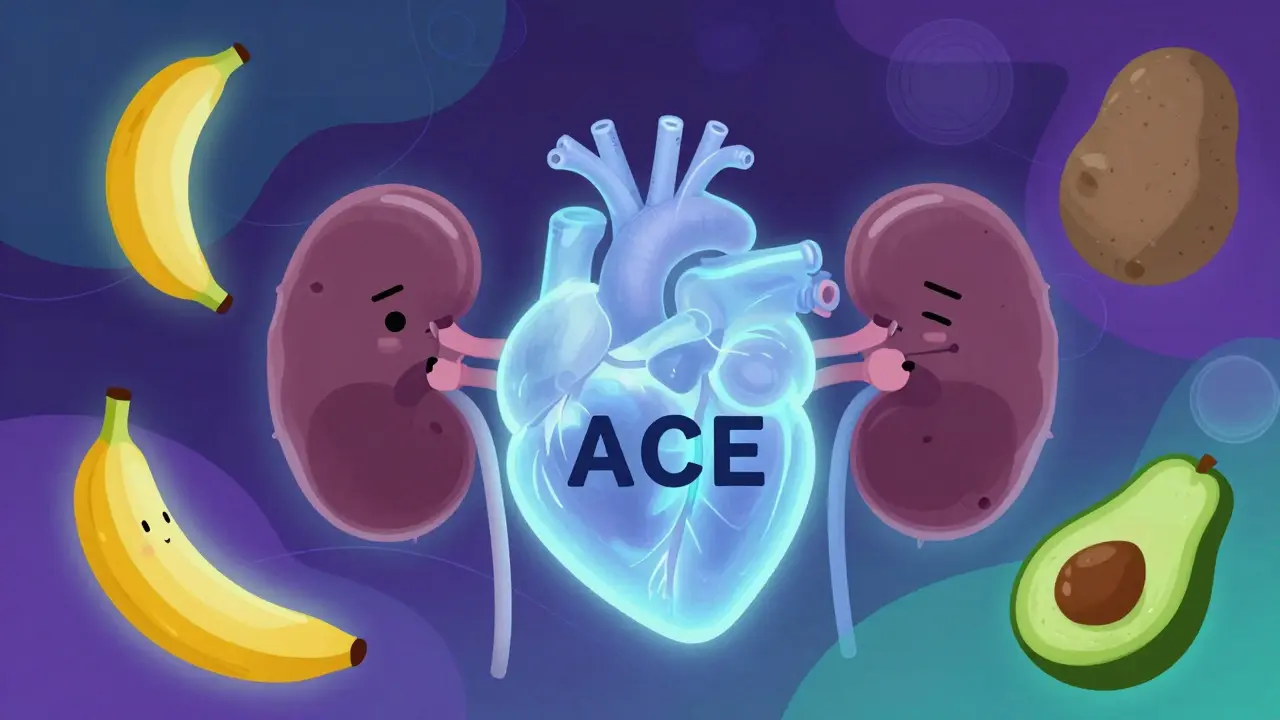
Imagine this: you’ve been prescribed a life-saving heart or blood pressure medication. You’re doing everything right-taking your pills on time, exercising, and eating a diet packed with "healthy" fruits and vegetables. But suddenly, you feel weak, confused, or your heart starts fluttering. What went wrong? For millions of people taking ACE inhibitors, a class of drugs used for hypertension and heart failure, the culprit might be hidden in their fruit bowl. ACE inhibitors work by blocking an enzyme that causes blood vessels to narrow, but they also affect how your kidneys handle potassium. When these medications meet high-potassium foods, they can trigger a dangerous condition called hyperkalemia, which is elevated potassium levels in the blood. This isn't just a theoretical risk; it’s a real-world scenario that affects up to 24% of patients on these drugs. The good news? With the right knowledge, you can keep your heart protected without risking your electrolyte balance.
How ACE Inhibitors Change Your Body’s Potassium Balance
To understand why bananas and potatoes become risky companions to certain medications, we need to look at what happens inside your body. ACE inhibitors belong to a group of drugs that block the renin-angiotensin-aldosterone system (RAAS). Sounds complex, right? Let’s break it down simply.
Normally, your body produces a hormone called aldosterone. Think of aldosterone as a bouncer at a club-it tells your kidneys to hold onto sodium and kick out excess potassium. When you take an ACE inhibitor, it reduces the production of aldosterone by about 40-60%. Without that "bouncer," your kidneys stop excreting potassium as efficiently. In fact, studies show that potassium clearance can drop by 25-35% in patients on standard doses.
This mechanism is actually part of why these drugs are so effective for heart failure and chronic kidney disease-they protect the heart and slow kidney damage. However, this benefit comes with a trade-off. If you load up on potassium-rich foods while your kidneys are already struggling to remove it, levels build up in your bloodstream. For healthy individuals, kidneys handle over 90% of potassium removal. But if you have even mild renal impairment, that safety net has holes in it.
Who Is Most at Risk?
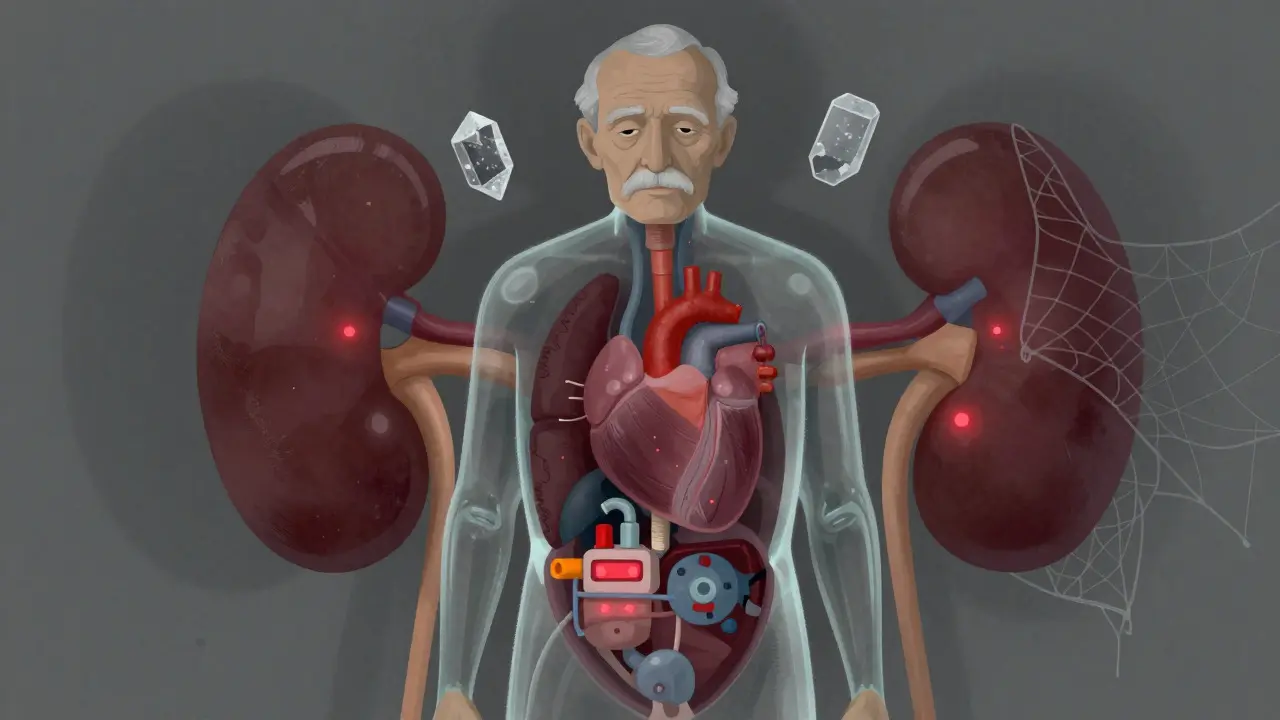
Not everyone who takes an ACE inhibitor will develop hyperkalemia. Your risk depends heavily on your underlying health conditions. According to guidelines from the Cleveland Clinic Journal of Medicine, specific groups face significantly higher dangers:
- Elderly patients (age >75): Aging kidneys naturally lose some filtering capacity.
- Diabetics: Diabetes often damages the small blood vessels in the kidneys (diabetic nephropathy), increasing hyperkalemia incidence by 47% compared to non-diabetics.
- Heart Failure Patients: Especially those with severe symptoms (NYHA Class III-IV), as their bodies are already under stress.
- Chronic Kidney Disease (CKD) Patients: If your estimated glomerular filtration rate (eGFR) is below 60 mL/min/1.73m², your risk triples.
Dr. George Bakris, a leading expert in hypertensive disease, notes that diabetic patients are particularly vulnerable because they often have undiagnosed renovascular disease. Additionally, combining ACE inhibitors with other medications like trimethoprim/sulfamethoxazole (an antibiotic) can increase the risk by nearly threefold. Always review all your prescriptions with your pharmacist.
The Hidden Potassium Bombs in Your Diet
We’ve been taught since childhood that fruits and vegetables are always good for us. While true for most people, this rule changes when you’re managing potassium levels on ACE inhibitors. The National Kidney Foundation recommends limiting high-potassium foods to less than 2,000 mg daily if your eGFR is below 45. Here are some common foods that pack a surprising potassium punch:
| Food Item | Serving Size | Approximate Potassium (mg) |
|---|---|---|
| Banana | 1 medium | 422 |
| Potato (Baked) | 1 medium | 926 |
| Spinach (Cooked) | 1 cup | 839 |
| Avocado | 1 cup | 708 |
| Tomato | 1 medium | 292 |
| Coconut Water | 16 oz | 1,150 |
Notice coconut water? It’s marketed as a natural sports drink, but one large glass contains more potassium than the entire day’s limit for many at-risk patients. Sweet potatoes, oranges, and even certain protein powders are other stealth sources. A 2022 study found that 68% of patients couldn’t correctly identify three high-potassium foods from a list. Don’t let yourself be part of that statistic.
Smart Strategies to Prevent Hyperkalemia
You don’t have to give up all your favorite foods, but you do need to be strategic. Here are practical steps to manage your intake safely:
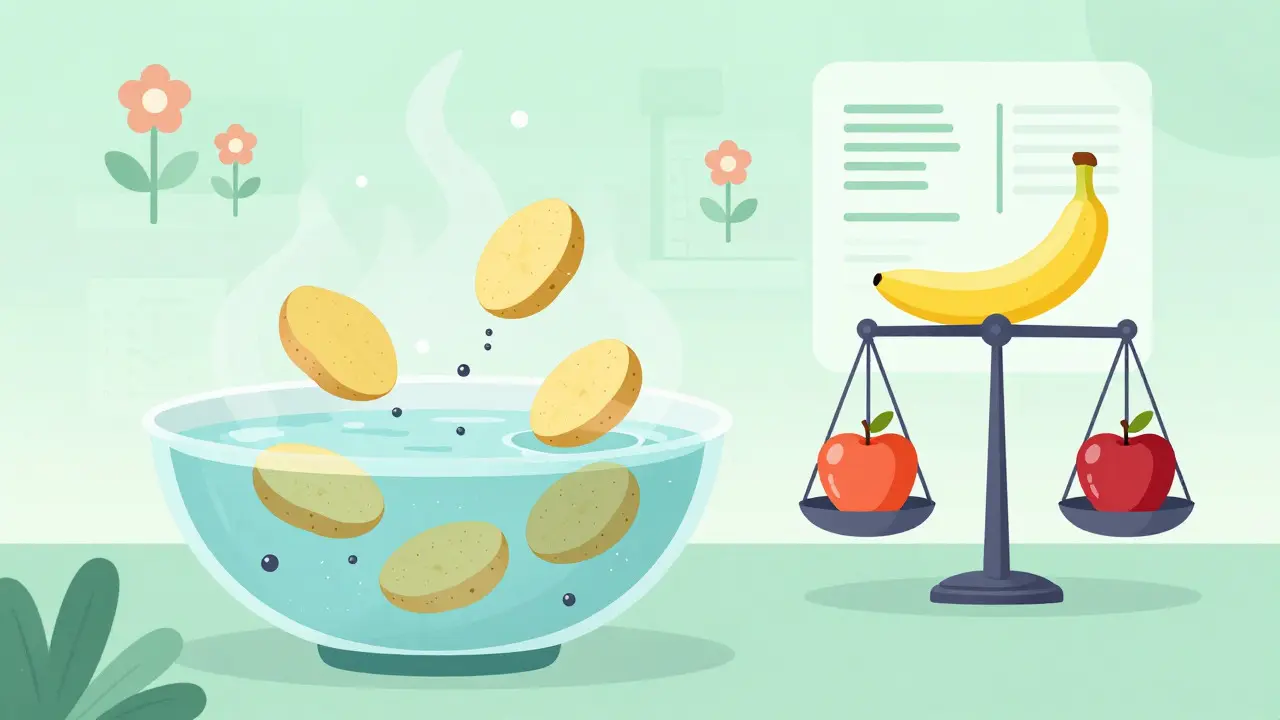
- Leaching Vegetables: For starchy vegetables like potatoes, cut them into small pieces, soak them in warm water for at least two hours, then rinse and cook in fresh water. This process can remove up to 50% of the potassium.
- Portion Control: Instead of avoiding bananas entirely, eat half a banana paired with low-potassium fruits like apples or berries.
- Read Labels Carefully: Look for "potassium chloride" in ingredient lists, especially in salt substitutes and processed foods. These are essentially pure potassium bombs.
- Use Technology: Apps like 'Renal Diet Helper' allow you to track your daily potassium intake specifically designed for kidney patients. Digital tracking has shown to improve adherence by helping users visualize their limits.
- Consult a Renal Dietitian: The KDIGO 2022 guidelines emphasize individualized counseling. A specialist can create a meal plan that fits your taste preferences while keeping you safe.
Education works. The American Journal of Kidney Diseases documented that structured dietary counseling reduced hyperkalemia incidence by 34% in high-risk patients. Knowledge is your best defense.
Monitoring and Medical Management
Diet alone isn’t always enough. Regular monitoring is non-negotiable. Clinical guidelines recommend checking baseline serum electrolytes and creatinine before starting therapy. Then, get tested 7 to 14 days after starting or changing your dose, and every four months thereafter.
If your potassium levels creep up, doctors have tools to help. Newer potassium binders like patiromer (Veltassa) and sodium zirconium cyclosilicate (Lokelma) have changed the game. These medications bind to potassium in the gut and remove it through stool, allowing patients to stay on their life-saving ACE inhibitors. Clinical trials show these agents reduce discontinuation rates due to hyperkalemia by 41%. Discuss these options with your cardiologist if diet changes aren’t sufficient.
Remember, a rise in creatinine of up to 30% is considered acceptable when starting these drugs, provided potassium remains stable. Don’t panic at slight fluctuations, but do report persistent trends to your healthcare provider.
Conclusion: Balancing Heart Health and Kidney Safety
Taking ACE inhibitors is a powerful step toward protecting your heart and kidneys. Yes, they require vigilance regarding potassium intake, but this is a manageable challenge. By understanding which foods to limit, learning preparation tricks like leaching, and staying on top of your lab tests, you can enjoy the benefits of these medications without the fear of hyperkalemia. Stay informed, ask questions, and partner closely with your healthcare team.
Can I still eat bananas if I am on Lisinopril?
Yes, but in moderation. One medium banana contains about 422 mg of potassium. If your kidney function is normal, a single banana occasionally is usually fine. However, if you have chronic kidney disease or elevated baseline potassium, you should limit portion sizes or choose lower-potassium alternatives like apples or grapes. Always check your latest blood work results with your doctor.
What are the symptoms of hyperkalemia?
Mild hyperkalemia often has no symptoms. As levels rise, you may experience muscle weakness, fatigue, nausea, or tingling sensations. Severe cases can cause irregular heartbeats (palpitations), chest pain, or shortness of breath. If you experience heart-related symptoms, seek emergency medical attention immediately.
Do salt substitutes contain potassium?
Many salt substitutes replace sodium chloride with potassium chloride, which is very high in potassium. If you are on an ACE inhibitor, avoid using these substitutes unless approved by your doctor. Check labels carefully for ingredients listing "potassium chloride."
How often should I get my potassium levels checked?
Guidelines recommend testing 7 to 14 days after starting an ACE inhibitor or changing the dose. After that, routine monitoring every 4 months is standard for stable patients. More frequent checks may be needed if you have diabetes, kidney disease, or are taking other medications that affect potassium.
Can drinking coconut water cause hyperkalemia?
Yes, coconut water is extremely high in potassium. A 16-ounce serving contains approximately 1,150 mg of potassium, which exceeds the daily limit for many at-risk patients. It is best to avoid or strictly limit coconut water if you are taking ACE inhibitors and have reduced kidney function.