You might think having a glass of wine with dinner while taking your evening pills is harmless. For many people, it is. But for a significant number of patients, mixing alcohol with certain medications can turn a routine habit into a medical emergency. It’s not just about getting drunk faster; it’s about how your body processes both substances simultaneously. Understanding these **alcohol medication interactions** isn’t just about following rules-it’s about protecting your life.
According to the National Institute on Alcohol Abuse and Alcoholism (NIAAA), approximately 40% of adults take medications that negatively interact with alcohol. These aren't obscure, rare drugs. They include common antibiotics, pain relievers, antidepressants, and sleep aids. The risk isn't theoretical. The Illinois Poison Center reported nearly 2,000 hospitalizations in the U.S. annually directly linked to these combinations. This guide breaks down exactly what happens in your body, which drugs are dangerous, and how you can stay safe without giving up your social life entirely if your doctor says it's okay.
How Your Body Processes Alcohol and Drugs
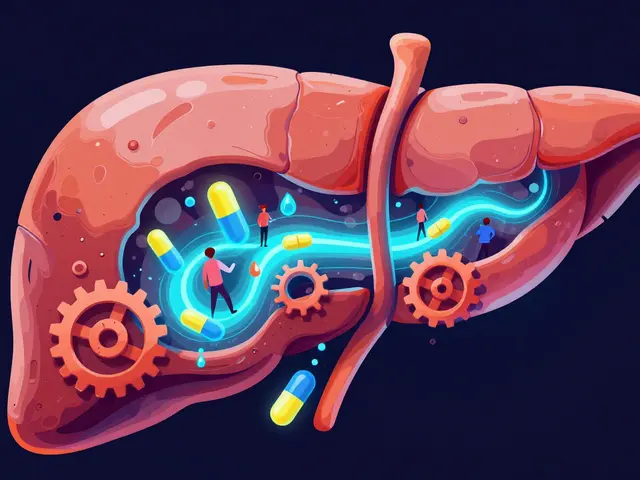
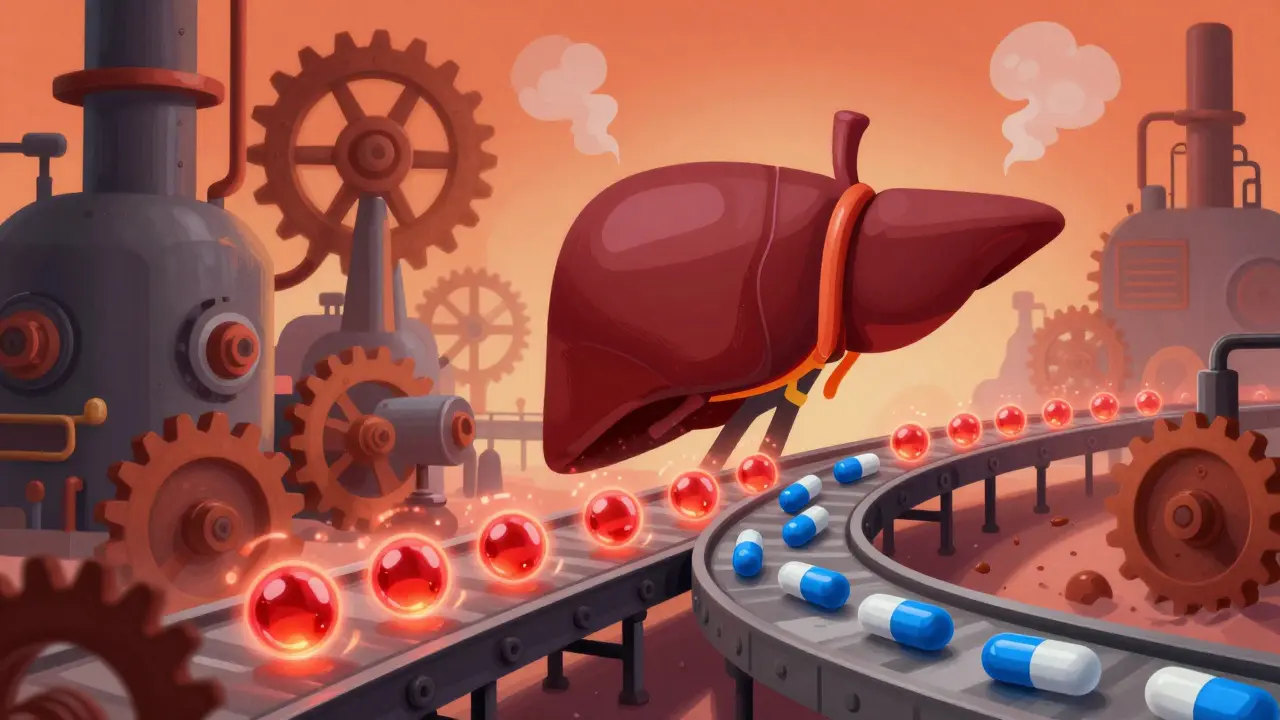
To understand why mixing them is risky, you first need to look at your liver. Think of your liver as a busy factory with limited machinery. When you drink alcohol, your liver prioritizes breaking down ethanol because it views it as a toxin. It uses specific enzymes, primarily from the cytochrome P450 family (like CYP2E1 and CYP3A4), to do this work.
When you introduce medication into this system, two things can happen. First, alcohol can block these enzymes. If the enzymes are busy processing alcohol, they can't break down your medication. This leads to pharmacokinetic interaction, where medication levels build up in your blood to potentially toxic concentrations. Acute drinking can increase medication blood levels by 25-75% within an hour. Conversely, chronic heavy drinking forces the liver to produce more enzymes, which can break down medication too quickly, rendering it ineffective.
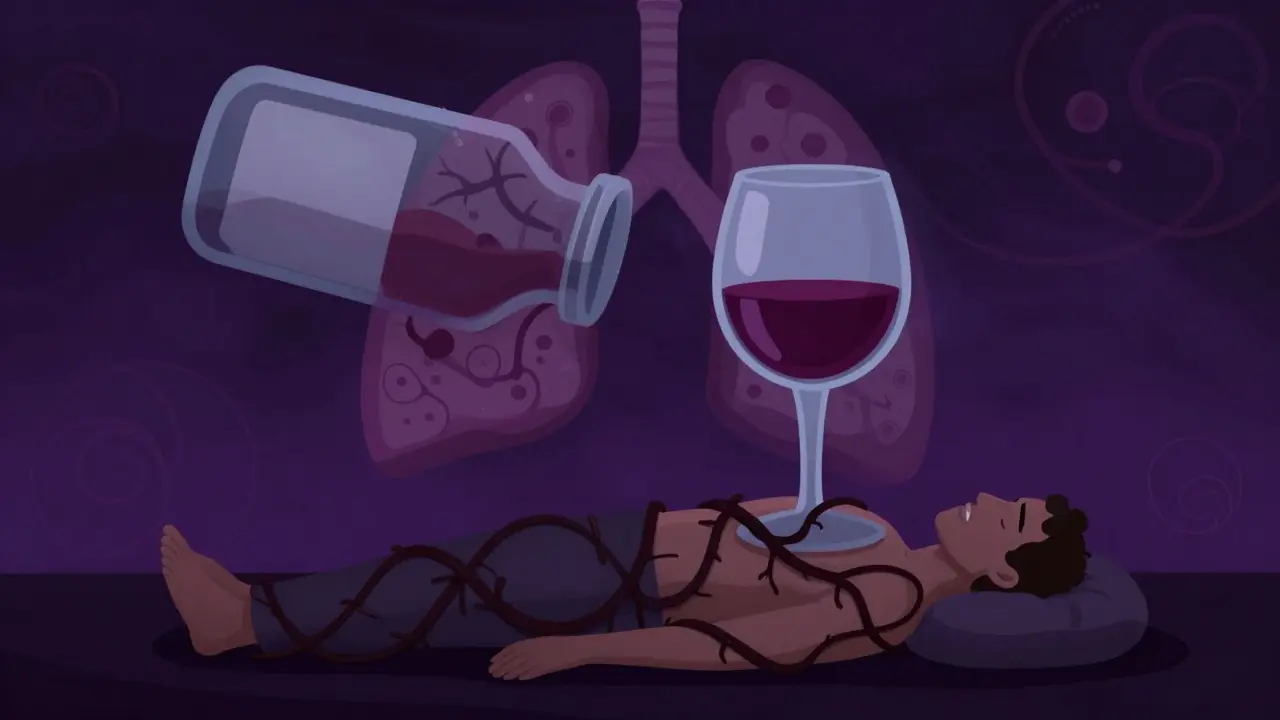
The second type is pharmacodynamic interaction, where both substances affect the same bodily systems, amplifying each other's effects. For example, if a medication slows your breathing and alcohol also slows your breathing, the combination doesn't just add up-it multiplies the danger. This is particularly critical with central nervous system depressants.
The Most Dangerous Combinations
Not all risks are created equal. Some combinations cause immediate, severe reactions, while others lead to long-term damage. Here are the categories you need to watch out for.
| Medication Class | Primary Risk | Severity Level | Key Example |
|---|---|---|---|
| Benzodiazepines | Respiratory depression, extreme sedation | Critical (Fatal) | Diazepam, Alprazolam |
| Opioids | Stopped breathing, overdose | Critical (Fatal) | Morphine, Oxycodone |
| Antibiotics (Nitroimidazoles) | Disulfiram-like reaction (violent vomiting) | High (Immediate) | Metronidazole |
| Pain Relievers (Acetaminophen) | Acute liver failure | High (Cumulative) | Tylenol |
| NSAIDs | Gastrointestinal bleeding | Moderate to High | Ibuprofen, Naproxen |
| SSRIs/Antidepressants | Increased intoxication, mood instability | Moderate | Fluoxetine, Sertraline |
Benzodiazepines and Opioids: This is the deadliest category. Combining benzodiazepines (like Xanax or Valium) with alcohol increases gamma-aminobutyric acid (GABA) receptor activity by up to 400%. This can cause your breathing to stop completely, even at low blood alcohol concentrations (0.05%). The CDC notes that this combination accounts for a significant portion of pharmaceutical-related fatalities.
Metronidazole and Tinidazole: If you’ve been prescribed Flagyl for an infection, avoid alcohol strictly. About 92% of users experience a "disulfiram-like reaction" if they drink. This isn't just a hangover; it causes flushing, rapid heartbeat, nausea, and vomiting almost immediately. The NIAAA categorizes this as an absolute contraindication.
Acetaminophen (Tylenol): Many people don’t realize that over-the-counter painkillers are dangerous with alcohol. Acetaminophen is processed by the liver. When alcohol is present, the liver produces a toxic byproduct called NAPQI. In healthy adults, glutathione neutralizes this toxin. But alcohol depletes glutathione. Consuming more than three alcoholic drinks daily while taking standard doses of acetaminophen increases the risk of acute liver failure significantly. Even moderate drinking can elevate liver enzymes in nearly half of patients, according to recent hepatology studies.
Why Over-the-Counter Meds Are Sneaky Risks
We often trust store-bought medicines more than prescriptions because we buy them ourselves. However, the interaction risks remain real. Antihistamines like diphenhydramine (Benadryl) are sedating. Mixing them with alcohol can multiply sedative effects by 300%, leading to impaired coordination and memory loss.
Nonsteroidal anti-inflammatory drugs (NSAIDs) like ibuprofen or naproxen irrit the stomach lining. Alcohol does the same. Using them together increases the risk of gastrointestinal bleeding by 300-500%. If you have a history of ulcers or gastritis, this combination is particularly hazardous.
Practical Steps for Safe Management
If you’re diagnosed with a condition requiring medication, you likely won’t be told to abstain from alcohol forever-unless you have a severe liver condition or are taking high-risk CNS depressants. Here is how to manage the risk practically.
- Ask the Specific Question: Don’t ask, "Can I drink?" Ask, "What is the specific interaction between my medication and alcohol, and what is the safe limit?" Pharmacists are often better equipped to answer this than prescribers who may be focused solely on the therapeutic effect of the drug.
- Know Your Standard Drink: Confusion about volume is a major error source. One standard drink is 12 oz of beer (5% ABV), 5 oz of wine (12% ABV), or 1.5 oz of spirits (40% ABV). A large cocktail often contains 3-4 standard drinks.
- The 72-Hour Rule for Antibiotics: For drugs like metronidazole, stop drinking at least 72 hours before starting the course and wait 48 hours after finishing before resuming. This reduces adverse reaction risk from 92% to roughly 8%.
- Eat Before You Drink: Food slows alcohol absorption by 25-30%, giving your liver more time to process both substances gradually rather than being hit with a spike.
- Monitor for Early Symptoms: If you feel unusual flushing, palpitations, extreme drowsiness, or confusion after a small amount of alcohol, stop immediately. These are signs your body is struggling to metabolize the combination.
Who Is at Higher Risk?
Risk isn't uniform across the population. Older adults face heightened dangers due to physiological changes. Between ages 25 and 75, hepatic blood flow decreases by approximately 35%. This means older adults process alcohol and medications much slower. The American Geriatrics Society lists 17 medications in their Beers Criteria as high-risk for alcohol interactions in seniors.
Additionally, women generally have less body water and lower levels of alcohol dehydrogenase in the stomach compared to men, meaning alcohol stays in their system longer and reaches higher blood concentrations. This makes interactions more potent for female patients even at lower consumption levels.
Is one glass of wine safe with most medications?
For many medications, such as statins or beta-blockers, occasional moderate drinking (defined as ≤1 drink/day for women, ≤2 for men) is generally considered safe. However, for drugs like metronidazole, benzodiazepines, or opioids, even one drink can be dangerous or fatal. Always check the specific classification of your medication. Category 1 drugs require zero alcohol, while Category 3 drugs require caution.
How long should I wait after taking medication to drink?
This depends on the medication's half-life. For short-acting drugs, waiting 2-3 hours after dosing may reduce peak interaction risks. For long-acting drugs like diazepam (Valium), which has a half-life of 20-100 hours, alcohol can interact for days after the last dose. Consult your pharmacist for the specific timeline based on your drug's pharmacokinetics.
What are the symptoms of an alcohol-medication interaction?
Symptoms vary by drug class but commonly include extreme drowsiness, nausea, vomiting, flushing, rapid heartbeat, confusion, and impaired coordination. In severe cases, especially with sedatives or opioids, symptoms include slowed breathing, blue lips/fingernails, and unconsciousness. If you experience respiratory distress, seek emergency care immediately.
Does herbal tea or non-alcoholic beer count as "drinking"?
Generally, no. Non-alcoholic beers typically contain less than 0.5% ABV, which is usually negligible for most interactions. However, some herbal supplements (like St. John’s Wort or Kava) can interact with medications independently. Always verify if your supplement contains any active compounds that affect liver enzymes.
Why do some online interaction checkers give conflicting advice?
Online tools vary in accuracy. A 2022 study found only 37% of consumer-facing interaction tools accurately reflected current FDA labeling. Always prioritize information from your pharmacist or official prescribing information. Use online checkers as a preliminary screening tool, not a definitive medical diagnosis.