
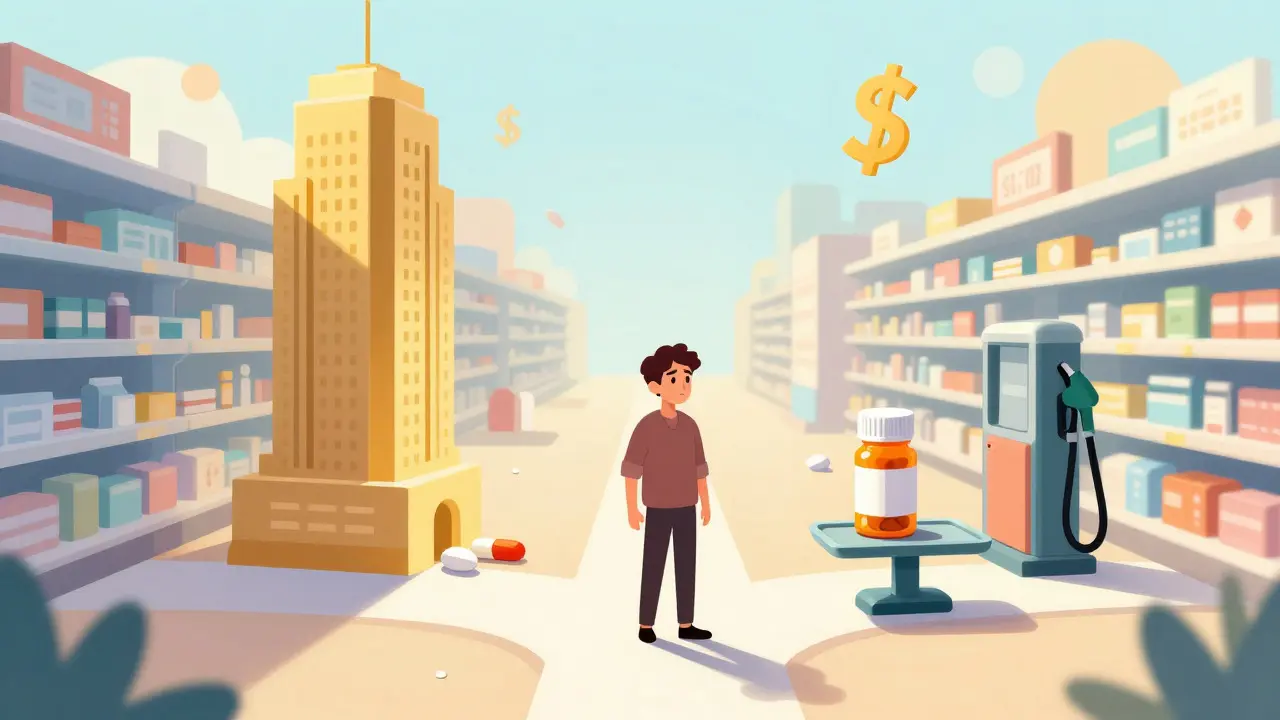
Have you ever stared at a pharmacy receipt and wondered why your simple generic pill costs more than a tank of gas? You are not alone. For years, the idea of buying medicines abroad has been the ultimate hack for saving money on prescriptions. But here is the twist that most people miss: while brand-name drugs in the U.S. are notoriously expensive, cheaper generics from overseas might not actually be the bargain you think they are.
In fact, recent data shows a strange paradox. While Americans pay nearly three times as much for brand-name drugs compared to other wealthy nations, U.S. prices for unbranded generics are often lower than those in Europe or Canada. This happens because the U.S. healthcare system leverages massive volume and negotiating power specifically for generics. So, before you order a shipment from across the border, let’s break down whether crossing the line for pills is worth the risk, the wait, and the potential legal headaches.
The Price Paradox: Are Foreign Generics Actually Cheaper?
It seems logical that if Sweden or Canada can buy drugs cheaper, you should be able to too. However, the math gets complicated quickly. According to a 2022 report by the Assistant Secretary for Planning and Evaluation (ASPE), U.S. prices for all drugs were significantly higher than in 33 OECD countries. But when we look strictly at generics, the story flips. U.S. generic prices were found to be about 67% of the prices in comparison countries.
Why is this? The U.S. uses Pharmacy Benefit Managers (PBMs) that negotiate aggressively for generic volumes, which make up 90% of prescriptions here. In contrast, European countries rely on government-mandated price controls and reference pricing systems. For example, Sweden’s TLV agency reported in 2024 that their pharmaceutical prices with generic competition are 44% lower than the European average. If you are looking for a specific brand-name alternative that has no generic equivalent in the U.S., foreign sources might still offer savings. But for standard generics like atorvastatin or metformin, your local U.S. pharmacy might already have the best deal due to these domestic negotiations.
| Region/Country | Pricing Mechanism | Generic Price vs. U.S. | Key Constraint |
|---|---|---|---|
| United States | PBM Negotiation & Volume | Baseline (100%) | High brand-name costs subsidize generics |
| Sweden | Government Reference Pricing | ~56% of U.S. levels | Strict national health service rules |
| Canada | Patented Medicine Prices Review Board | ~68% of U.S. retail | Residency requirements for pharmacies |
| United Kingdom | NHS Price Controls | ~53% of U.S. list prices | Prescriptions must be issued locally |
Safety First: Quality Control and Shipping Risks
Price is only half the equation. The bigger question is safety. When you buy from a local pharmacy, you trust that the FDA has vetted the facility. When you buy from an online international pharmacy, that oversight vanishes. The FDA’s Office of Pharmaceutical Quality reported that in 2022, 12.3% of foreign manufacturing facilities inspected received an 'Official Action Indicated' rating, compared to just 4.7% of domestic facilities.
This doesn't mean every foreign pill is bad, but it highlights a real risk. The World Health Organization notes that only 45% of countries have regulatory systems capable of ensuring consistent quality control for imported generics. Furthermore, shipping itself is a hazard. The International Air Transport Association documented that 20-25% of temperature-sensitive pharmaceuticals experience temperature excursions during international shipping. If your medication needs to stay cool, a week-long journey through a hot cargo hold could reduce its potency by up to 30%, according to warnings from Dr. Ameet Sarpatwari of Harvard Medical School.
Then there is the issue of counterfeits. The FDA’s 2023 Import Risk Assessment identified that 15.7% of seized counterfeit drugs entered through international mail, with the vast majority originating from China, India, and even Canada. Without proper verification, you might be paying less for a pill that contains nothing but chalk and binders.
Legal Hurdles: What the FDA Allows
So, is it even legal? The FDA permits personal importation under 'enforcement discretion,' but the rules are tight. You can generally bring in a 90-day supply for personal use if the drug is not considered an 'imminent danger.' However, this is not a guarantee. Customs officers have the right to seize shipments, and 18% of users in a 2023 FDA survey reported having their medications seized.
Things are changing, though. Several states have launched sanctioned importation programs. Florida’s Canadian Drug Importation Program, launched in January 2024, has processed over 12,000 prescriptions with average savings of $427 per prescription. Vermont and Maryland have similar programs approved by the FDA. These state-level initiatives bypass many of the risks associated with individual online orders because the state verifies the pharmacy and the supply chain.
If you are not in one of these states, you are operating in a gray area. The FDA has issued warning letters to over 140 websites selling unapproved drugs since 2022. To stay safe, always check if a pharmacy is accredited by the National Association of Boards of Pharmacy's Verified Internet Pharmacy Practice Sites (VIPPS) program. As of July 2024, only 63 international pharmacies hold this accreditation.
User Experiences: Savings vs. Stress
What do actual patients say? On forums like Reddit, experiences are mixed. Some users, like 'MedSaver87,' report saving thousands annually on heart medications bought from Canadian pharmacies accredited by the Canadian International Pharmacy Association. They cite significant cost savings and access to discontinued U.S. medications as major pros.
However, others share cautionary tales. User 'AnxiousPatient' described receiving inconsistent tablet sizes and potency issues from an Indian online pharmacy, requiring medical intervention. Common complaints across Trustpilot reviews include:
- Shipping Delays: Average delays of 7-14 business days, with some users waiting weeks during winter months.
- Language Barriers: 27% of users reported difficulty understanding packaging instructions in foreign languages.
- Lack of Consultation: 41% noted the absence of pharmacist support for questions about side effects.
- Return Difficulties: 33% found it nearly impossible to return defective products.
The bottom line from user data is clear: while 68% of Americans who tried buying abroad reported successful purchases, 32% experienced problems ranging from seizures to ineffective medication. The average savings for those who succeeded was around 58%, which is tempting, but comes with a high stress factor.
How to Buy Safely: A Checklist
If you decide the savings are worth the hassle, follow these steps to minimize risk:
- Verify Accreditation: Look for VIPPS certification or equivalent national body approval (like CIPA in Canada). Avoid sites that don’t require a valid prescription.
- Check the Supply Chain: Ensure the pharmacy ships directly from a licensed facility, not a third-party drop-shipper.
- Consult Your Doctor: Inform your physician. They can help verify if the generic bioequivalence standards in the source country match FDA requirements (80-125% pharmacokinetic parameters).
- Start Small: Order a one-month supply first to test shipping times and product quality before committing to a 90-day stockpile.
- Watch for Red Flags: If the site sells 'miracle cures,' requires payment via wire transfer only, or has no physical address listed, walk away.
The Future of Drug Importation
The landscape is shifting. The International Prescription Drug Price Transparency Act (H.R. 2347), introduced in March 2024, aims to create a federal framework for verifying international pharmacies, potentially making safer imports easier. Meanwhile, industry groups like PhRMA argue that widespread importation could undermine pharmaceutical innovation, noting that U.S. patients fund 67% of global R&D.
For now, the decision rests with you. If you are on a fixed income and struggling with brand-name costs, exploring state-sanctioned import programs or highly accredited Canadian pharmacies may be a viable option. But for standard generics, your local U.S. pharmacy might already offer the best balance of price, safety, and convenience. Always prioritize verified sources over the lowest price tag.
Is it legal to buy generic medicines from Canada?
Technically, the FDA prohibits importing prescription drugs, but they often exercise 'enforcement discretion' for personal use (up to a 90-day supply) if the drug is not deemed an imminent danger. However, legality varies by state, and several states like Florida and Vermont have created official importation programs that make the process fully compliant and safer.
Are generic drugs from India safe?
India is a major producer of generics, but safety depends entirely on the specific manufacturer and pharmacy. The FDA has flagged higher rates of quality issues in foreign facilities compared to domestic ones. Only purchase from Indian pharmacies that are accredited by recognized bodies like VIPPS or have passed rigorous WHO benchmarking inspections to ensure quality control.
Why are U.S. generics sometimes cheaper than foreign ones?
The U.S. market leverages massive volume and aggressive negotiation by Pharmacy Benefit Managers (PBMs) to drive down generic prices. Additionally, high profits from brand-name drugs in the U.S. often subsidize the lower margins on generics, creating a pricing structure that can be more competitive for unbranded pills than in countries with strict government price caps.
Will customs seize my medicine package?
There is a risk. The FDA reports that about 18% of personal import attempts result in seized shipments. Factors increasing this risk include ordering more than a 90-day supply, lacking a valid prescription, or using a pharmacy not recognized by state importation programs. Proper documentation and staying within personal use limits help mitigate this risk.
How do I know if an online pharmacy is legitimate?
Look for the VIPPS seal from the National Association of Boards of Pharmacy. Legitimate pharmacies will require a valid prescription from a licensed doctor, provide a physical address and phone number, and employ a licensed pharmacist available for consultation. Avoid sites that sell drugs without prescriptions or promise 'miracle' results.


Jairam Prasad
July 25, 2026 AT 17:27Oh, look at you Americans, crying about the price of chalk.
In India, we don't just buy generics; we manufacture the very concept of affordability while you debate the metaphysical implications of a co-pay. You pay for the privilege of being scammed by your own 'free market' gods. It is quite poetic, really. The irony is thicker than the syrup in your local pharmacy's coffee machine.
Gary Hull
July 26, 2026 AT 06:19i mean its not like the govt has a monopoly on stupidity or anything. but yeah, buying from canada is risky cus maybe they dont have our special freedom to get ripped off. also u spell pharamcy wrong in ur head probably. typical.
Padraic Cepek
July 27, 2026 AT 19:34This is exactly why America is failing. We let foreigners pollute our supply chain with their cheap junk. Keep the borders closed and keep paying your taxes to support domestic jobs that are already disappearing. If it’s not made in the USA, it’s trash. Period. Stop whining and buy American or get out.
Mildred Fierce
July 28, 2026 AT 02:56You see, the fundamental issue here isn't the price, it's the lack of discipline in the consumer base. When you allow yourself to be seduced by the siren song of savings, you invite chaos into your bloodstream. I had a cousin who bought pills from Toronto and now he can't even remember his own mother's face. Is that what you want? To be a hollow shell because you wanted to save forty dollars? It is tragic. Truly. And yet, you persist in this self-destructive dance with death.
Trey Newkerk
July 28, 2026 AT 12:47The universe demands balance! You think you can cheat the system? The system is alive! It breathes! Every time you order a generic from overseas, the fabric of reality tears a little more. I felt it yesterday when my shipment arrived late. The stars aligned against me. You are all playing with fire, fools! The pharmaceutical giants are watching, and they are hungry!
Charles PINSON
July 29, 2026 AT 15:19It is amusing how the plebeian masses struggle with basic economic principles. The article suggests that volume negotiation lowers costs, which is obvious to anyone with a functioning prefrontal cortex. However, the nuance regarding PBM structures is lost on those who rely on government handouts. One must understand that quality is a luxury good, and if you cannot afford the premium assurance of FDA oversight, perhaps you should reconsider your life choices rather than blaming the global market.
John Anderson
July 30, 2026 AT 03:24Just stop it. Its illegal. Do it right or dont do it. Simple as that. No need for long stories. Just follow the rules. Everyone else does. Why are you so special?
Patrick Plummer
July 30, 2026 AT 03:29But wait! Think about it! The article says US generics are cheaper than Europe, but then it says Canada is cheaper for brands. Which is it?! Are we being lied to by the media?! Or is it a conspiracy by the PBMs to confuse us into buying more brand names?! I feel like I'm missing something huge here. What if the pills are actually tracking devices?!??
Kieran Healy
July 30, 2026 AT 20:17I guess it makes sense that people would try to save money when healthcare is so expensive :/ Maybe we should focus on helping each other find safe options instead of fighting? I know some folks who use verified Canadian sites and seem okay. Just wish there was an easier way for everyone without the stress. :)
Kevin Burke
July 31, 2026 AT 22:10The truth is, you are all sheep. Following the herd into danger because a website told you it was safe. The VIPPS seal is a joke created by the industry to protect itself. I have studied the ancient texts of pharmacology, and they say that true healing comes from within, not from a pill manufactured in a foreign land. Wake up! The matrix is controlling your blood pressure!
neal vince
August 1, 2026 AT 14:49Actually, the data presented in the ASPE report is flawed because it doesn't account for the inflation rate in Sweden during Q3 2023. Furthermore, the definition of 'generic' varies by jurisdiction. In the UK, a generic might be considered a biosimilar in the US. This semantic ambiguity renders the entire comparison moot. You are comparing apples to oranges, and frankly, it shows a lack of rigorous academic scrutiny.
Sinead Doyle
August 2, 2026 AT 00:02its all part of the plan. the deep state wants you sick so they can control you. the pills from india are laced with microchips that track your location. i saw a docuementary about it. the fda is in on it. dont trust them. buy gold instead. or grow your own meds lol. #wakeup #pharmafraud