
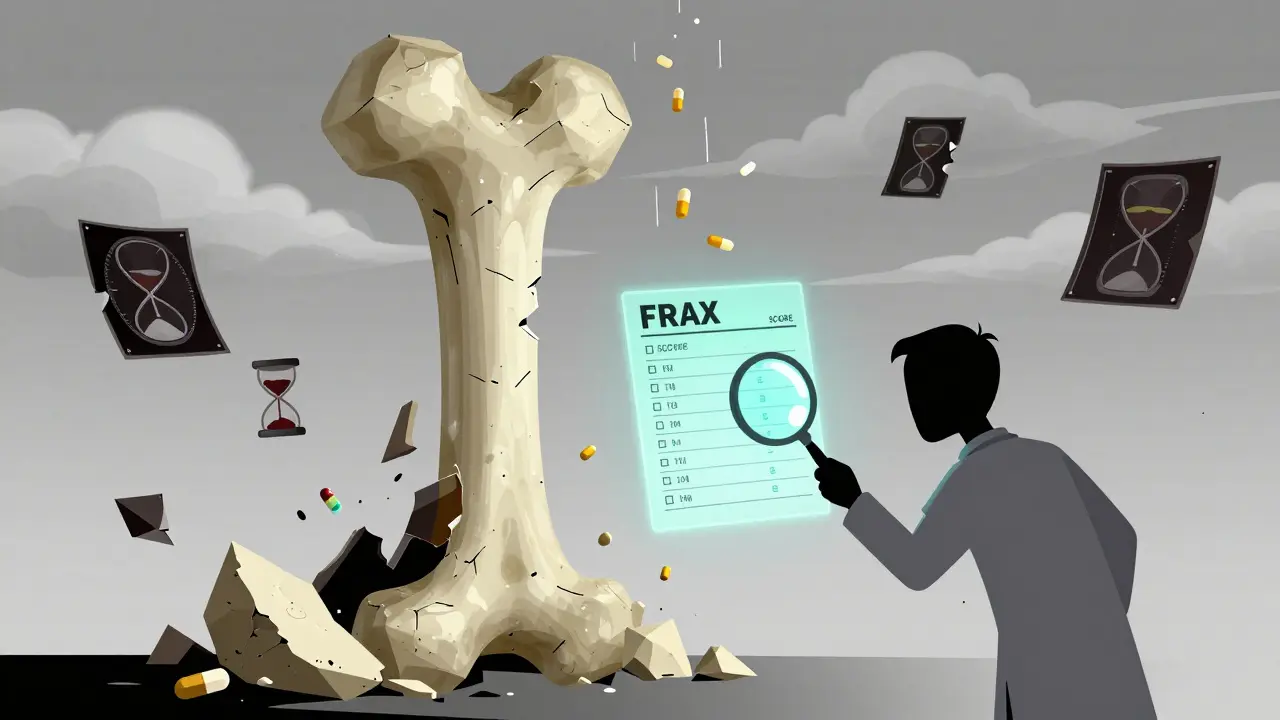
Fractures don’t just happen to older people-they happen to people who’ve been told to take a calcium pill and a vitamin D capsule and think that’s enough. But here’s the truth: calcium and vitamin D alone won’t stop most fractures. If you’re over 65, have had a prior break, or were diagnosed with osteopenia or osteoporosis, you need more than supplements. You need the right combination, at the right dose, for your body. And if you’re still taking 400 IU of vitamin D and 1,000 mg of calcium because your doctor said "it can’t hurt," you might be wasting your time-and possibly putting yourself at risk.
Why Calcium and Vitamin D Alone Don’t Prevent Fractures
The idea that calcium and vitamin D are a magic shield against broken bones has been around for decades. But the science doesn’t back it up unless you’re severely deficient. A major 2019 analysis of over 34,000 people found that taking vitamin D by itself-no matter the dose-did nothing to lower the risk of hip or any other fracture. The same study showed that when calcium and vitamin D were taken together at low doses (400 IU vitamin D and 1,000 mg calcium), there was still no measurable benefit. That’s the exact dose most over-the-counter supplements provide. The only time this combo works is when someone is truly deficient. Think nursing home residents with 25-hydroxyvitamin D levels below 12 ng/mL. In the landmark 1992 Chapuy trial, those people saw a 43% drop in hip fractures when given 800 IU of vitamin D3 and 1,200 mg of calcium daily. But for someone living at home, eating a decent diet, and getting a little sun? The benefit vanishes. The RECORD trial in 2005 showed no fracture reduction in community-dwelling older adults-even those with levels around 18.5 ng/mL, which many doctors still consider "low normal." And here’s the catch: too much calcium can hurt you. The Women’s Health Initiative found that taking 1,000 mg of calcium daily increased the risk of kidney stones by 17%. It also raised the chance of heart problems by 17%. That’s not a small trade-off. The FDA warned about this in 2021. So if you’re not deficient, and you’re not at high fracture risk, you’re not helping yourself-you might be making things worse.When Calcium and Vitamin D Actually Help
There are three groups where this combo makes a real difference:- People with 25-hydroxyvitamin D levels below 20 ng/mL
- Those getting less than 700 mg of calcium per day from food
- Resident elderly in care homes or hospitals
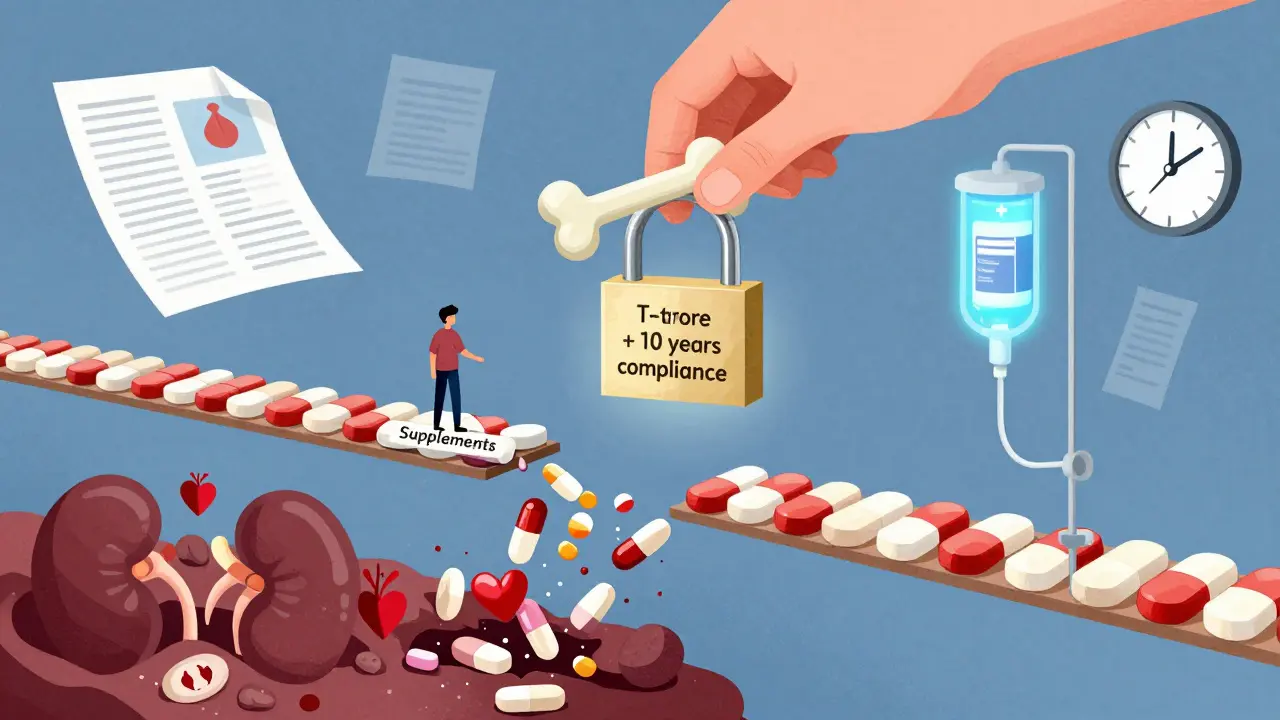
Bone-Building Medications: The Real Game Changers
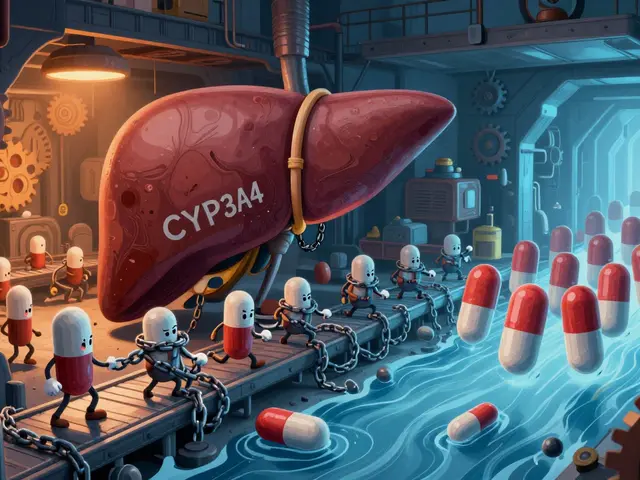
If you’ve broken a bone after age 50, or if your FRAX score says you have a 20% or higher chance of a major fracture in the next 10 years, supplements aren’t enough. You need medication. The most common are bisphosphonates-alendronate (Fosamax), risedronate (Actonel), and zoledronic acid (Reclast). These drugs slow down bone breakdown. In the Fracture Intervention Trial, alendronate cut vertebral fractures by 44%. Zoledronic acid, given as an annual IV infusion, reduced hip fractures by 41% over 18 months. That’s not a small win. That’s life-changing. Then there’s denosumab (Prolia), a biologic injected every six months. It works differently than bisphosphonates and can be used if you can’t tolerate them. It reduces vertebral fractures by 68% and hip fractures by 40%. But if you stop it, you lose protection fast-bone loss can rebound. That’s why it’s not a "take when you feel like it" drug. For the most severe cases, doctors now use anabolic agents like teriparatide (Forteo) and romosozumab (Evenity). These actually build new bone. Teriparatide reduces vertebral fractures by up to 65%. Romosozumab, approved in the U.S. in 2019, cuts vertebral fractures by 73% in the first year. But they’re expensive, require daily or monthly injections, and are limited to 1-2 years of use. After that, you switch to an antiresorptive like alendronate to hold the gains.The Real Problem: People Stop Taking Their Medication
Here’s the ugly truth: even the best drugs fail if you don’t take them. A 2022 study in Osteoporosis International found that over half of people on oral bisphosphonates stop within a year. Why? Side effects. About 68% of patients report heartburn, stomach pain, or nausea. That’s why many switch to the yearly IV infusion of zoledronic acid-it’s easier. But even then, 30% still quit because they don’t feel different. Doctors often don’t follow up. Patients aren’t told what to expect. If you’re on alendronate, you need to take it on an empty stomach with a full glass of water, stay upright for 30 minutes, and avoid food or coffee. Miss one dose? You might as well skip it for the month. Compliance is everything. Successful treatment isn’t about the pill-it’s about the plan. A 2021 Mayo Clinic study followed 127 patients with prior fractures who were given vitamin D repletion plus alendronate. Their fracture rate dropped by 58%. Why? Because they had regular check-ins, education, and support. That’s the missing piece in most clinics.
What You Should Do Right Now
If you’re over 50 and haven’t had a fracture:- Ask your doctor for a 25-hydroxyvitamin D blood test.
- If it’s below 20 ng/mL, get a bone density scan (DXA) and calculate your FRAX score.
- If your FRAX score is above 20% (or 15% in the UK), talk about medication-not supplements.
- If your vitamin D is normal and you eat dairy, leafy greens, or fortified foods, you likely don’t need extra calcium.
- Stop relying on OTC vitamins.
- Ask your doctor if you’re a candidate for bisphosphonates, denosumab, or an anabolic agent.
- Get a dental check-up before starting any bone drug-some can cause jaw problems.
- Ask about the annual IV option if swallowing pills is hard.
The Future: New Drugs and Better Strategies
In 2023, the FDA approved abaloparatide-SC (Tymlos) for men with osteoporosis, expanding its use beyond women. The European Society for Clinical and Economic Aspects of Osteoporosis now recommends starting with anabolic drugs like teriparatide in the most severe cases, then switching to bisphosphonates. This "sequential therapy" cuts new fractures by 73% more than bisphosphonates alone. The VITAL-DEP trial, currently recruiting 1,200 people in the U.S., is testing whether high-dose vitamin D (2,000 IU/day) helps prevent fractures in those with low vitamin D and depression-a group at higher fracture risk. Results are due in late 2025. The market for osteoporosis drugs is growing fast-projected to hit $14.3 billion by 2028. But the real challenge isn’t developing new drugs. It’s getting people to use the ones we already have, the right way, for long enough to work.Do calcium and vitamin D supplements prevent fractures in most people?
No. For most healthy adults over 50, especially those living at home, low-dose calcium and vitamin D supplements do not reduce fracture risk. The only time they help is if you’re severely deficient in vitamin D (below 20 ng/mL), eat very little calcium, or live in a care home. Even then, you need 800-1,000 IU of vitamin D3 and 1,000-1,200 mg of calcium daily to see any benefit.
Is it safe to take more than 1,000 mg of calcium a day?
Not usually. Taking more than 1,000 mg of calcium daily from supplements increases the risk of kidney stones by 17% and may raise the chance of heart problems. The FDA issued a warning about this in 2021. It’s better to get calcium from food-dairy, leafy greens, tofu, fortified plant milks-unless your diet is severely lacking.
What’s the best medication for preventing fractures after a break?
For most people, bisphosphonates like alendronate or zoledronic acid are the first choice. They reduce vertebral fractures by 40-70% and hip fractures by 20-50%. If you can’t take pills, zoledronic acid is given as a yearly IV infusion. For very high-risk cases, anabolic drugs like teriparatide or romosozumab build new bone and are more effective-but they’re expensive and used for only 1-2 years.
Why do so many people stop taking their osteoporosis medication?
Side effects. Oral bisphosphonates cause heartburn, nausea, and stomach pain in nearly 70% of users. Many people feel fine and think they don’t need the drug anymore. But bone loss doesn’t have symptoms. Without the medication, your risk of another fracture stays high. Switching to an IV option or getting regular support from your doctor can help improve adherence.
Should I get a bone density scan if I’m over 65?
Yes. If you’re a woman over 65 or a man over 70, a DXA scan is recommended regardless of symptoms. If you’re younger but have risk factors-like a prior fracture, steroid use, or a family history of osteoporosis-you should get tested too. The scan, along with the FRAX tool, tells you if you need medication, not just supplements.
Can I rely on sunlight and diet instead of supplements or medication?
Sunlight and diet help, but they’re rarely enough for fracture prevention after age 65. Even with daily sun exposure, most older adults can’t make enough vitamin D. And getting 1,200 mg of calcium from food alone is hard without dairy or fortified products. If you’ve had a fracture or have low bone density, you need more than diet-you need proven medical treatment.
Liz MENDOZA
December 27, 2025 AT 00:00Finally someone says it out loud. I’ve been telling my mom for years that her $10 bottle of calcium + D3 is doing nothing but filling her pee with extra calcium. She still takes it because her friend at the bridge club says it’s ‘good for bones.’ Spoiler: her bones broke anyway. 😒
Anna Weitz
December 28, 2025 AT 15:13Calcium supplements are a scam designed by pharmaceutical companies to keep old people buying stuff they dont need while the real solution is exercise and sunlight and not being a couch potato and also stop drinking soda and eating processed food and why do we even have this conversation in the first place
Andrew Gurung
December 29, 2025 AT 15:54OMG I CRIED reading this. Like I literally had a tear in my eye. My aunt took Fosamax and now she’s walking again after her hip fracture. But her doctor didn’t even test her D levels. Like… how do you not know this?? 🥺💊 #BoneHealthRevolution
Paula Alencar
December 31, 2025 AT 01:36It is imperative to underscore, with the utmost gravity, that the prevailing cultural misconception surrounding calcium and vitamin D supplementation constitutes a profound public health failure. The medical community, in its collective inertia, has perpetuated a myth that is not only scientifically unsound but also potentially hazardous. The data are unequivocal: pharmacological intervention, when indicated, is not optional-it is a moral imperative for those at elevated risk of fracture. We must cease treating bone health as a dietary afterthought.
Nikki Thames
December 31, 2025 AT 12:07Did you know that the FDA only ‘warned’ about calcium because the pharmaceutical industry lobbied them to make people think supplements are dangerous? Meanwhile, they’re quietly pushing bisphosphonates-which cause jaw necrosis and atypical femur fractures-through backdoor approval. The truth is buried under layers of corporate grease. You think your doctor’s giving you advice? They’re paid by Big Pharma. Check your bloodwork. Then check your bank account.
Elizabeth Ganak
December 31, 2025 AT 15:22in india most people dont even get enough calcium from food so supplements are kinda necessary. but yeah if you're eating curd, spinach, ragi, and getting sun you might be fine. i think it depends on your diet and lifestyle more than the age thing
Nicola George
January 1, 2026 AT 01:18So let me get this straight… you’re telling me I spent $200 a year on vitamins because my doctor said ‘it can’t hurt’… and I was just slowly turning my kidneys into rock candy? 🤡 Guess I’ll add ‘gullible’ to my resume.
Raushan Richardson
January 2, 2026 AT 04:05YES. This is the kind of info we need to stop ignoring. I started doing yoga and got my D levels checked after my stress fracture-and now I’m on a yearly Reclast infusion. No more pills. No more heartburn. Just one hour once a year and I feel like I’m actually doing something. If you’re over 50 and haven’t been tested, please just go get a DXA scan. It’s 15 minutes. Your future self will thank you.
Robyn Hays
January 2, 2026 AT 12:40It’s wild how we treat bone health like it’s a cosmetic thing-like if you don’t ‘feel’ weak, you’re fine. But bones are silent warriors. They don’t scream when they’re crumbling. They just… snap. And then you’re stuck in a hospital bed wondering why you didn’t listen. I used to think supplements were harmless. Now I see them as placebo armor. The real power? Blood tests, FRAX scores, and the courage to say ‘I need more than a pill.’
Liz Tanner
January 3, 2026 AT 01:37My mom took calcium for 12 years. She broke her wrist at 72. Her D level was 48 ng/mL. She never had a scan. She never needed the supplement. She needed a conversation. This post should be mandatory reading for anyone over 50. Thank you.
Babe Addict
January 4, 2026 AT 07:21Let’s be real: the only reason bisphosphonates work is because they induce osteoclast apoptosis. The mechanism is well-documented in J Bone Miner Res 2007. Vitamin D? It’s just a prohormone. You need CYP2R1 and 25-OH-D hydroxylase activity, which declines with age. Most people don’t even have the enzymes to convert it properly. That’s why mega-dosing D3 is useless without genetic testing. And don’t get me started on the VDR polymorphisms.
Janice Holmes
January 4, 2026 AT 12:21THEY’RE HIDING THE TRUTH. They don’t want you to know that the real solution is PEMF therapy and magnetic bone stimulators. The FDA banned them in 2018 because they’re too cheap and don’t make money. I used one after my fracture-and I’m walking without pain. But your doctor? They’ll never tell you. Because they get kickbacks from Big Pharma. I’ve seen the emails. 🕵️♀️
Alex Lopez
January 5, 2026 AT 21:28As a geriatrician, I’ve seen this pattern for 20 years. The most effective intervention isn’t the drug-it’s the follow-up. A phone call. A reminder. A nurse checking in. Patients who get weekly check-ins are 3x more likely to stay on therapy. Supplements are a distraction. The real medicine? Consistency. And human connection.
Liz MENDOZA
January 7, 2026 AT 09:45@Alex Lopez - YES. My sister’s doctor just called her once after she started Reclast. That one call made her feel seen. She’s been on it for 3 years now. That’s the part nobody talks about. It’s not the drug. It’s the care.