
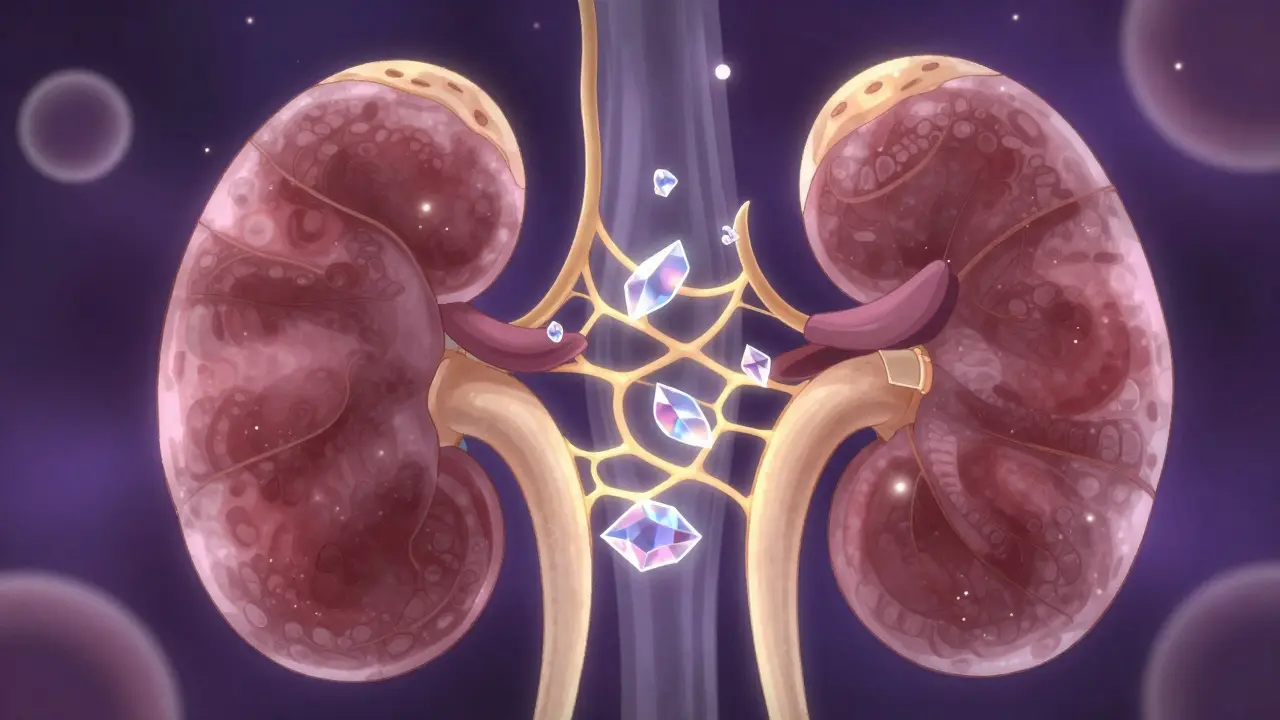
The New Outlook: Understanding Your Prognosis
For a long time, the prognosis for IgA Nephropathy (IgAN) felt like a coin flip. Many patients lived normal lives, while others saw their kidney function slide toward end-stage kidney disease (ESKD) over ten to twenty years. Data from the CheckRare 2025 analysis shows that up to 50% of patients with persistent proteinuria-protein leaking into the urine-face kidney failure within two decades. However, your individual outlook depends on specific risk factors. Doctors no longer look at just one number. Instead, they use a combination of your blood pressure, estimated Glomerular Filtration Rate (eGFR), and the MEST-C score from a kidney biopsy. This histological classification helps predict how aggressive the disease is by looking at mesangial hypercellularity and segmental sclerosis. The goal now is to hit a strict target: keeping proteinuria below 0.5 g/day. Why so low? Because newer registry data suggests that even patients with modest protein leaks (between 0.44 and 0.88 g/g of creatinine) still have a significant risk of failure within ten years.A Paradigm Shift in Therapy: The KDIGO 2025 Guidelines
If you were diagnosed a few years ago, your doctor likely started you on blood pressure medication and waited three months to see if it worked before considering stronger drugs. That "sequential" approach is now considered outdated. According to the KDIGO 2025 clinical practice guidelines from Kidney Disease: Improving Global Outcomes, the gold standard is now simultaneous therapy. This means instead of waiting, doctors now target two fronts at once:- IgAN-Specific Drivers: Stopping the production of the "bad" IgA antibodies and preventing them from damaging the kidney filters.
- Generic Kidney Responses: Reducing the pressure inside the kidney (hyperfiltration) and controlling blood pressure to prevent scarring.
Modern Medication Options and Targeted Therapies
Treatment is no longer just about high-dose steroids, which often come with brutal side effects like weight gain and mood swings. We now have more precise tools.| Therapy | Mechanism | Key Benefit | Primary Consideration |
|---|---|---|---|
| Nefecon | Targeted-release budesonide | Reduces IgA production in gut-associated lymphoid tissue | High cost; FDA approved Dec 2023 |
| SGLT2 Inhibitors | Glucose/Sodium cotransport inhibition | Lowers glomerular pressure and proteinuria | Standard of care for many kidney diseases |
| Sparsentan | Dual Endothelin/Angiotensin Receptor Antagonist (DEARA) | Potent proteinuria reduction | EMA approved June 2024 |
| Systemic Glucocorticoids | Broad immunosuppression | Rapid inflammation control | Significant toxicity and side effects |
Regional Differences: Why Location Matters
Interestingly, where you live might change your treatment plan. Nephrology isn't a one-size-fits-all field, and geographical variations are stark:- Japan: There is a strong emphasis on tonsillectomy. Since the tonsils are a primary site of IgA production, removing them has shown efficacy in Japanese populations, with about 45% of eligible patients undergoing the procedure.
- China: The use of Mycophenolate Mofetil and hydroxychloroquine is much more common here, as clinical trials in Chinese populations have shown strong positive results.
- Western Countries: The focus remains heavily on RAS inhibitors, SGLT2 inhibitors, and the newer targeted agents like Nefecon.
The Road Ahead: Personalized Medicine and Biomarkers
We are currently in the "broad strokes" era of treatment, but the next five years will bring a shift toward precision medicine. The biggest challenge today is that doctors don't have a perfect way to know which drug will work for which person. Ongoing research, such as the TARGET-IgAN study, is looking for specific biomarkers-biological markers in your blood or urine-that can predict if you'll respond better to complement inhibition or APRIL blockade. The goal is to move away from trial-and-error. Instead of trying a drug for three months and hoping for the best, your doctor will be able to look at your biomarker profile and prescribe the exact medication your specific version of IgAN requires.Practical Tips for Managing Your Treatment
Managing IgAN is a marathon, not a sprint. If you are on a combination therapy regimen, the "treatment burden" can feel overwhelming-especially for younger patients. Here is a practical way to handle the complexity:- Use a Medication Tracker: Combining RAS inhibitors, SGLT2i, and immunosuppressants means complex dosing. Use a digital app or a physical pill organizer to avoid missed doses.
- Monthly Check-ins: For the first three months of a new therapy, request monthly blood pressure and proteinuria checks. This helps your doctor tweak dosages quickly.
- Advocate for Access: If you are denied a drug like Nefecon, work with your clinic to file a prior authorization appeal based on your risk stratification score.
- Prioritize Quality of Life: Don't be afraid to discuss the side effects of steroids with your doctor. Protecting your kidneys is the goal, but not at the cost of your mental health or overall wellbeing.
What is the main goal of the new 2025 guidelines?
The primary goal is to delay or prevent end-stage kidney disease by shifting from sequential therapy to simultaneous treatment. This means using blood pressure control (RASi/SGLT2i) and immunosuppressive therapies (like Nefecon or steroids) at the same time to attack the disease from multiple angles immediately.
How much protein in my urine is considered "too much"?
While older guidelines aimed for less than 1 g/day, the current KDIGO 2025 target is less than 0.5 g/day. Research shows that even patients with protein levels between 0.44 and 0.88 g/g of creatinine still face a risk of kidney failure over ten years, making this lower threshold the new goal for better long-term outcomes.
Is Nefecon better than traditional steroids?
Nefecon is a targeted-release budesonide that focuses on the gut-associated lymphoid tissue, whereas systemic steroids affect the entire body. Many patients find Nefecon has fewer systemic side effects (like mood changes and weight gain), though it is significantly more expensive and may not be accessible to everyone.
Why do some patients have tonsils removed for IgA Nephropathy?
This is most common in Japan. Because the tonsils are a major site where the problematic IgA antibodies are produced, removing them can reduce the amount of immune complexes circulating in the blood and depositing in the kidneys.
What is the MEST-C score?
The MEST-C score is a classification system used by pathologists during a kidney biopsy. It looks at Mesangial hypercellularity, Endocapillary hypercellularity, Segmental sclerosis, Tubular atrophy/interstitial fibrosis, and Crescents. This score helps doctors determine your risk of progression and how aggressively to treat the disease.



Quinton Bangerter
April 22, 2026 AT 15:02Funny how the "gold standard" suddenly changes every few years, right? I bet the pharmaceutical companies just needed a way to push more drugs simultaneously to maximize their quarterly profits. Follow the money, people. These guidelines aren't about your kidneys; they're about the bottom line of some corporate entity in Basel.
dallia alaba
April 24, 2026 AT 01:31For anyone struggling with the insurance battle for Nefecon, make sure you specifically ask your nephrologist to include your MEST-C score and current proteinuria levels in the appeal letter. Insurance companies usually ignore the general diagnosis but they pay attention to the histological data and the risk of rapid progression. It's all about the documentation. If you can show that your protein is consistently above 0.5 g/day, you have a much stronger case for medical necessity. Don't be afraid to request a peer-to-peer review between your doctor and the insurance medical director. It's a tedious process, but it's often the only way to get these high-cost targeted therapies approved in the US healthcare system. Just keep a paper trail of every denial and the specific reason given so you can address it point-by-point in the next appeal. Persistence is key here.
Ms. Sara
April 25, 2026 AT 10:49Wait, so we're just ignoring the side effects of these new drugs because they're "targeted"? I want to know more about the long-term impact of SGLT2 inhibitors on people who aren't even diabetic. It's great that we're being more aggressive, but we can't just blindly follow the 2025 guidelines without demanding more longitudinal data on these specific cohorts. We need to be assertive about our health, not just passive recipients of the latest trend.
caesar simpkins
April 25, 2026 AT 18:33Absolute madness that the price of Nefecon is essentially the cost of a luxury car every year. It's just heartbreaking to think someone's kidney function could be saved simply because they don't have the right insurance plan.
Valorie Darling
April 26, 2026 AT 17:52lol imagine actually using a pill organizer like a grandma. just set a reminder on your phone and stop acting like this is some impossible marathon
Lesley Wimbush
April 27, 2026 AT 18:15Oh honey, it's so adorable that some of you are just discovering the MEST-C score now. I've been discussing histological classifications with my specialists for ages, but I suppose it's lovely that the rest of the world is finally catching up to the elite level of care. It's just such a tragedy when people are stuck with outdated doctors who don't keep up with the latest literature, isn't it? Just simply heartbreaking!
Venkatesh Venky
April 28, 2026 AT 02:07SGLT2i is really great for hemodynamic control. It helps with the hyperfiltration a lot. Let's all stay positive and keep fighting this!
Akshata Kembhavi
April 28, 2026 AT 19:54The part about tonsillectomies in Japan is so interesting. It's cool how different regions tackle the same disease based on their own research and patient populations.
anne camba
April 29, 2026 AT 13:27The duality of health... it is a strange thing... to be fighting one's own immune system!!!
aman motamedi
April 29, 2026 AT 22:55I find the distinction between systemic glucocorticoids and targeted-release budesonide to be quite significant for patient outcomes.
Lucy Kuo
April 30, 2026 AT 08:39It is an absolute tragedy of the highest order that such life-altering medications are sequestered behind a wall of astronomical pricing! How can we, as a global community, permit such a profound disparity in access to care? It is truly a scandalous state of affairs that a patient's survival depends upon their postal code or the depth of their pockets! We must strive for a world where these breakthroughs are accessible to every soul in need, regardless of their nationality or socioeconomic standing! The injustice is simply overwhelming!