
Opioid Nausea Management Planner
Starting a new pain medication often comes with an unwelcome surprise: nausea. It is one of the most common reasons people stop taking opioids, which are powerful pain relievers prescribed for everything from severe injuries to cancer-related pain. According to data from the European Association for Palliative Care, roughly 30-40% of patients experience this discomfort when they first begin treatment. The good news? For most people, this feeling is temporary. Your body usually builds a tolerance within three to seven days. But waiting it out isn't always an option, especially if you need to eat or work. Understanding how to manage this specific type of nausea-known clinically as opioid-induced nausea and vomiting (OINV)-can make the difference between effective pain control and giving up on your treatment plan entirely.
Why Opioids Cause Nausea
To fix the problem, you have to understand the mechanism. Unlike motion sickness or stomach bugs, opioid nausea doesn't start in your gut. It starts in your brain. Specifically, opioids stimulate the chemoreceptor trigger zone (CTZ) located in the brainstem. This area acts like a security guard, monitoring your blood for toxins. When mu-opioid receptors in this zone are activated by the medication, the CTZ sends false alarm signals to the vomiting center, triggering nausea even though there is no actual threat in your digestive system.
This reaction typically hits hardest during the first 24 to 48 hours after starting the drug or increasing the dose. As your nervous system adapts, these signals quiet down. However, because the initial impact can be so disruptive, proactive management is key rather than reactive suffering.
Choosing the Right Antiemetic
Not all nausea medicines work the same way. Since opioid nausea is driven by dopamine activity in the brain, general antacids or remedies for indigestion won't touch it. You need medications that block specific neurotransmitters. Here is how the main classes compare:
| Medication Class | Common Examples | Best For | Efficacy Rate |
|---|---|---|---|
| Dopamine D2 Antagonists | Haloperidol, Prochlorperazine | Direct CTZ stimulation | 70-75% |
| Prokinetics | Metoclopramide | Slow gastric emptying + Nausea | 65-70% |
| Serotonin (5-HT3) Antagonists | Ondansetron | Acute, short-term relief | Moderate |
| Corticosteroids | Dexamethasone | Severe, refractory cases | 50-60% |
Haloperidol and prochlorperazine are often the first line of defense. They directly block the dopamine receptors in the CTZ. Haloperidol is inexpensive and potent, but older adults should use caution as it carries a risk of parkinsonism symptoms at higher doses. Metoclopramide is unique because it does two things: it blocks dopamine in the brain and speeds up stomach emptying. If your opioid is also causing constipation or slow digestion, metoclopramide addresses both issues simultaneously. Ondansetron is widely known for chemotherapy nausea; while it helps with acute opioid nausea, studies show it is less effective for persistent symptoms compared to dopamine blockers.
The Power of Timing
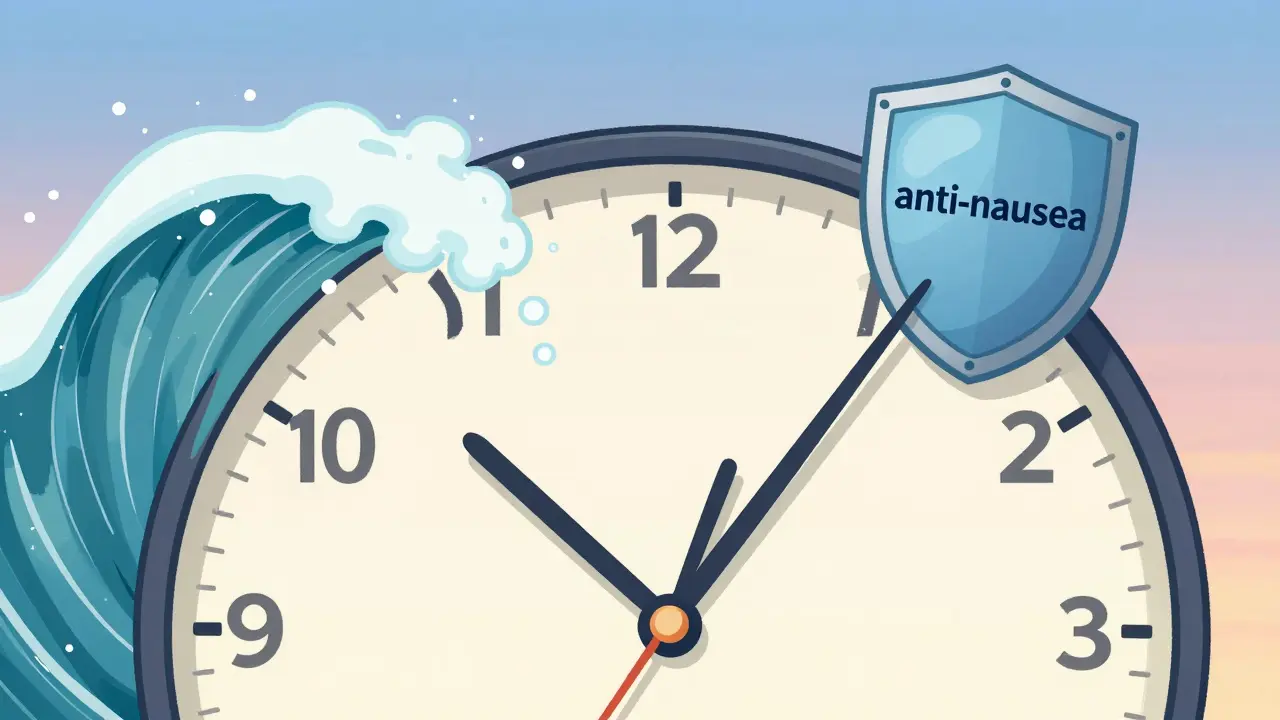
When you take your medication matters just as much as what you take. A common mistake is waiting until you feel sick to take the antiemetic. By then, the nausea cycle has already started. Clinical guidelines suggest administering your antiemetic 30 to 60 minutes before your opioid dose. This ensures the anti-nausea drug is at peak concentration in your bloodstream right when the opioid levels rise and hit the CTZ.
If you are on a scheduled dosing regimen, consistency is crucial. Missing a dose can lead to withdrawal-like symptoms that include nausea, creating a confusing feedback loop. If you find yourself needing breakthrough doses frequently, talk to your doctor about adjusting the baseline schedule rather than stacking pills, which can increase side effects without improving pain control.
Diet Adjustments That Help
Your stomach is more sensitive than usual when processing opioids. Large, heavy meals can sit in your stomach longer, exacerbating feelings of fullness and nausea. Instead, try this approach:
- Small, Frequent Meals: Eat five or six small snacks throughout the day instead of three large meals. This keeps your stomach from becoming too distended.
- Bland Foods: Stick to the BRAT diet basics initially: Bananas, Rice, Applesauce, and Toast. These are easy to digest and unlikely to trigger further upset.
- Avoid Triggers: Greasy, spicy, or very sweet foods can worsen nausea. Strong smells can also trigger the CTZ, so cook in well-ventilated areas or eat cold foods like sandwiches or salads that don't release strong aromas.
- Hydration Strategy: Don't chug water. Sip slowly. Dehydration makes nausea worse, but drinking too much too fast can trigger vomiting. Ice chips or popsicles can be easier to tolerate than liquid water.
If you are taking metoclopramide, timing your food intake with the medication can help ensure your stomach empties properly before you eat again.

Opioid Rotation: Changing the Drug
If antiemetics and diet changes aren't enough, another strategy is opioid rotation. This means switching from one opioid to another. Because different opioids have slightly different chemical structures, your body might react better to a new one. For example, switching from morphine to oxycodone or hydromorphone has been shown to reduce nausea in 40-50% of patients who couldn't tolerate their initial prescription. This should always be done under medical supervision to ensure the equivalent pain-relief dosage is calculated correctly.
Prevention and Long-Term Management
The best way to prevent severe nausea is to "start low and go slow." Doctors often begin with a lower dose than standard and increase it gradually over 7-10 days. This allows your brain's CTZ to adapt without being overwhelmed. For opioid-naïve patients (those who haven't taken opioids before), co-prescribing an antiemetic for the first 1-2 weeks is standard practice. Most people develop tolerance to the nausea long before they develop tolerance to the pain-relieving effects, meaning the nausea will likely disappear while the pain relief continues.
How long does opioid-induced nausea last?
For most patients, opioid-induced nausea is transient. It typically peaks within the first 24 to 48 hours of starting treatment or increasing the dose. With consistent dosing, the body usually develops tolerance to the emetic effects within 3 to 7 days. If nausea persists beyond this window, it may indicate a need for medication adjustment or an underlying issue like constipation.
Is ondansetron effective for opioid nausea?
Ondansetron provides moderate efficacy for acute opioid-induced nausea but is generally less effective for persistent symptoms compared to dopamine antagonists like haloperidol or prochlorperazine. It works by blocking serotonin receptors, which plays a smaller role in opioid-specific nausea pathways than dopamine does.
Can constipation cause nausea in opioid users?
Yes, opioid-induced constipation is a major contributor to secondary nausea. Opioids slow down gastrointestinal motility, causing stool to back up. This pressure can trigger nausea and vomiting. Using a prokinetic agent like metoclopramide or adding a bowel regimen (laxatives/stool softeners) can address both the constipation and the resulting nausea.
What is the best time to take antiemetics with opioids?
You should take your antiemetic 30 to 60 minutes before taking your opioid dose. This timing ensures that the anti-nausea medication reaches peak concentration in your blood at the same time the opioid levels rise, effectively blocking the nausea signal before it starts.
Should I stop taking my opioid if I get nauseous?
Do not stop abruptly without consulting your doctor, as this can lead to withdrawal symptoms and uncontrolled pain. Instead, contact your healthcare provider. They may adjust the dose, add an antiemetic, or rotate to a different opioid. In many cases, lowering the dose by 25-33% can eliminate nausea while still providing adequate pain relief.