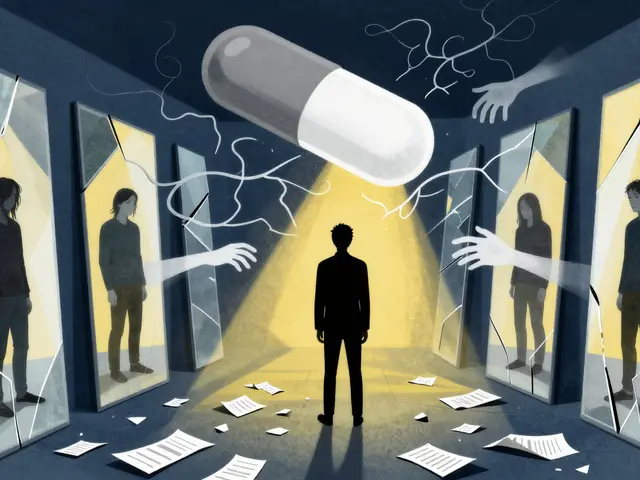
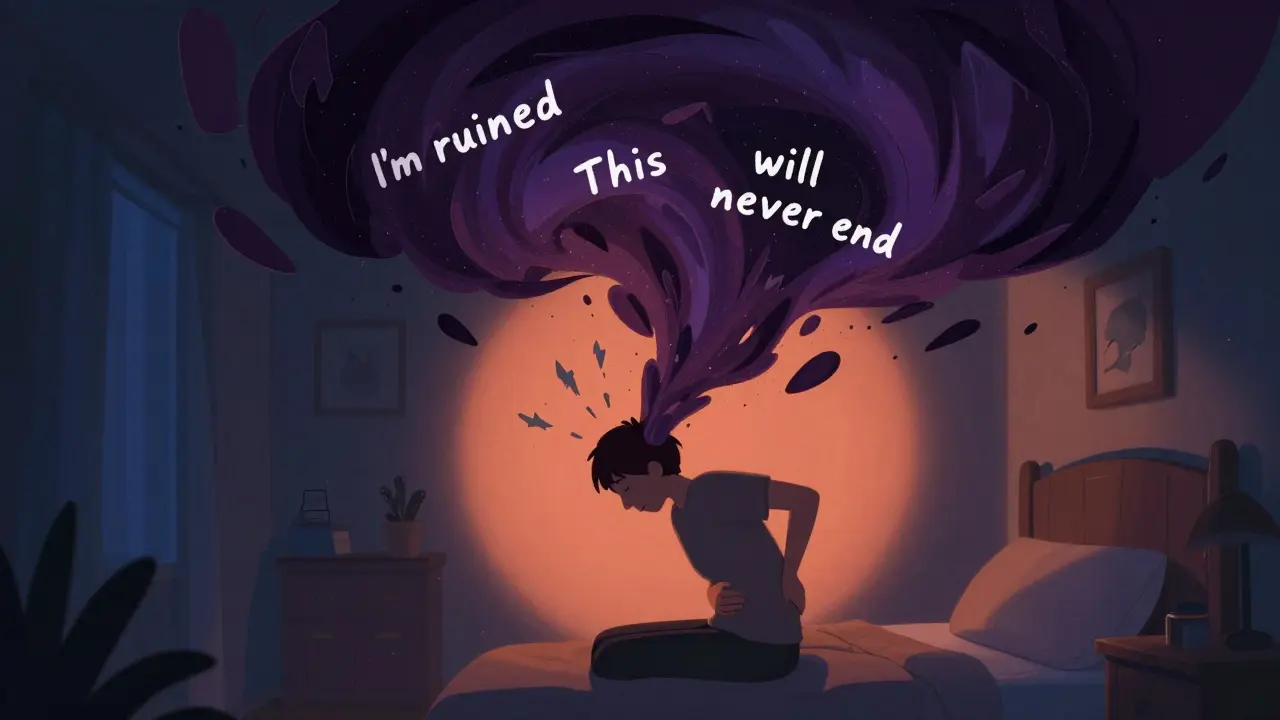
You know that feeling. You wake up with a stiff back, or your knee throbs after a long walk. Instantly, your brain doesn't just register the sensation; it starts screaming. "This is never going to get better." "I'm ruined." "What if I can't work tomorrow?" If this sounds familiar, you aren't just dealing with physical pain. You are likely experiencing pain catastrophizing, which is an exaggerated negative mental set brought to bear during actual or anticipated painful experience. It’s a psychological trap where your thoughts amplify the suffering, creating a vicious cycle that makes the pain feel far worse than the physical injury alone would suggest.
This isn't about being weak or "all in your head." It is a well-documented biological and psychological response. Research from the International Association for the Study of Pain (IASP) identifies pain catastrophizing as perhaps the strongest psychological predictor of poor pain outcomes. But here is the good news: because these are learned thought patterns, they can be unlearned. Cognitive Behavioral Therapy (CBT) offers specific, proven tools to break this cycle, reduce distress, and help you reclaim your life from the grip of catastrophic thinking.
Understanding the Three Faces of Catastrophizing
To fix the problem, you first need to recognize what you are actually doing. In the 1990s, researchers led by Dr. Michael Sullivan developed the Pain Catastrophizing Scale (PCS), a tool that measures three core dimensions of catastrophic thinking: rumination, magnification, and helplessness. Understanding these three components is crucial because they show up differently in your daily life.
- Rumination: This is when you can't stop thinking about the pain. You replay the sensations over and over in your mind, unable to shift your attention to anything else. It’s like a broken record stuck on the worst track.
- Magnification: Here, you blow the threat out of proportion. A minor ache becomes proof of a devastating, permanent injury. You interpret normal bodily signals as signs of impending doom.
- Helplessness: This is the feeling that you have no control and cannot cope. You believe there is nothing you can do to make the pain better, so you give up before you even try.
When these three forces combine, they create a "negative cognitive-affective response" that literally changes how your brain processes pain signals. Neuroimaging studies show that catastrophizing increases activity in brain regions responsible for integrating sensory information, effectively turning up the volume on your pain receptors. By identifying which of these three faces is dominating your experience, you can start to target them specifically with CBT tools.
The Core CBT Tool: Self-Monitoring and Labeling
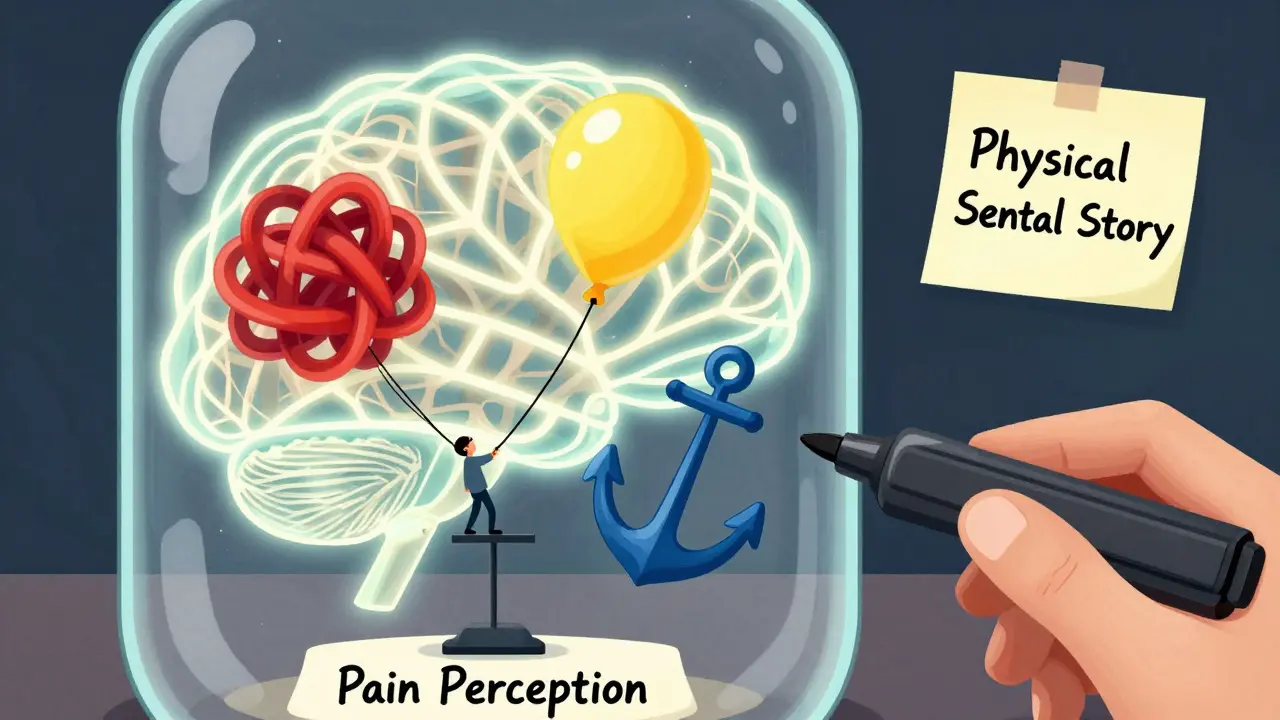
The first step in any CBT protocol for pain is self-monitoring. It sounds simple, but it is powerful. The goal is to separate the physical sensation from the mental story you are telling yourself about it. A 2024 study published in *Nature Scientific Reports* found that effective CBT interventions help patients "unravel" the tangled web between somatic distress (physical pain) and mental anguish (psychological distress).
How do you do this? Start keeping a pain diary, but not just for tracking intensity levels. Use it to label your experiences. When you feel a flare-up, pause and ask yourself:
- What is the physical sensation? (e.g., "My lower back feels tight and hot.")
- What is the thought? (e.g., "This means my spine is collapsing.")
- What is the emotion? (e.g., Fear, anxiety, despair.)
- What is the behavior? (e.g., Lying down immediately, avoiding movement.)
By breaking the experience into these categories, you create distance between you and the pain. You start to see that the pain itself might be a 5/10, but the catastrophe you built around it pushes the distress to a 9/10. This labeling process is the foundation for all other CBT techniques. It transforms an overwhelming, undifferentiated blob of suffering into manageable parts that you can address one by one.
Cognitive Restructuring: Challenging the Narrative
Once you can identify the catastrophic thoughts, the next tool is cognitive restructuring. This is where you actively challenge the accuracy and usefulness of those thoughts. The Veterans Affairs Whole Health Library emphasizes that this technique helps patients "examine and unhook from negative thinking" and develop coping thoughts instead.
Let’s look at a real-world example. Imagine you have chronic knee pain. You plan to go grocery shopping. Suddenly, you think, "If I walk too much, my knee will give out, I’ll fall, and I’ll end up in a wheelchair forever." That is classic magnification and helplessness.
With cognitive restructuring, you act as a detective. You look for evidence:
- Evidence for the thought: My knee hurts sometimes when I stand too long.
- Evidence against the thought: I have walked further distances before without falling. I have used supports in the past that helped. Falling does not automatically mean a wheelchair.
- Alternative balanced thought: "My knee is sensitive today. I will take it slow, use my cane, and take breaks if needed. Even if it hurts, I can manage it, and it won’t destroy my life."
This doesn’t mean ignoring the pain. It means replacing a paralyzing, irrational fear with a realistic, actionable plan. Over time, this shifts your brain’s default response from panic to problem-solving. Studies show that patients who practice this regularly see significant reductions in pain-related distress, with many reporting a return to daily activities they had previously abandoned.
Behavioral Activation: Breaking the Avoidance Cycle
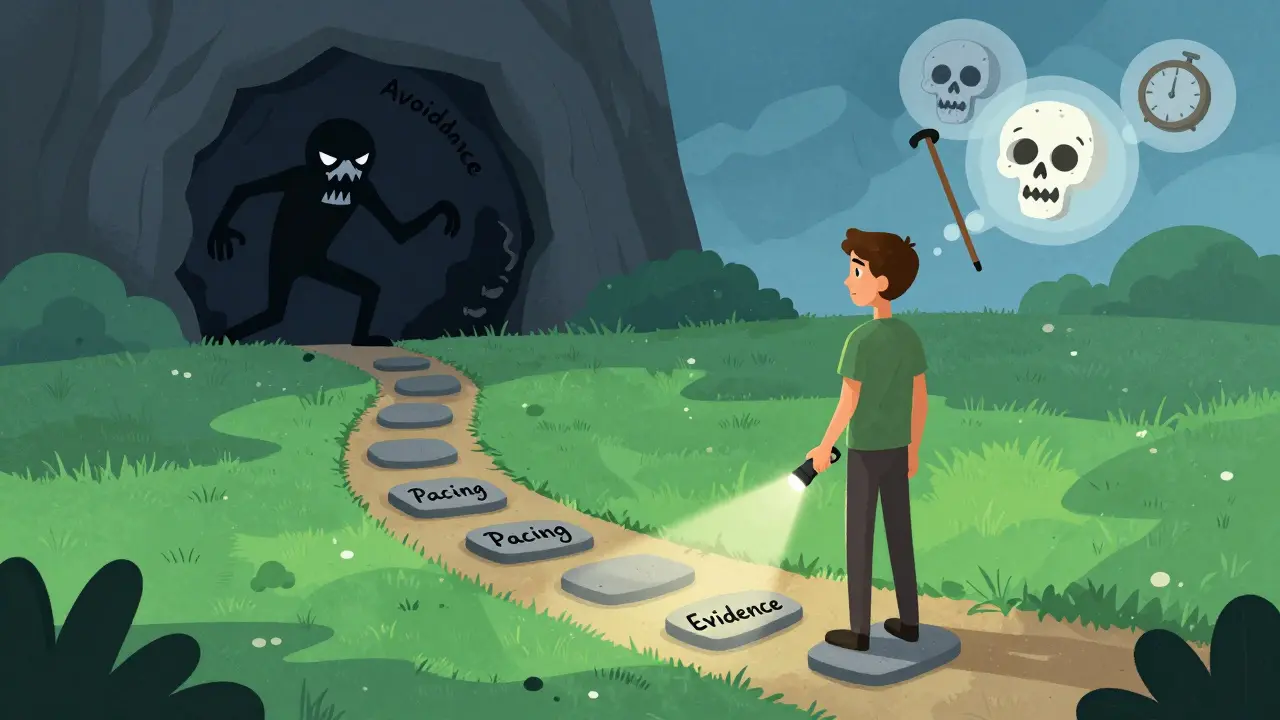
Catastrophizing leads to avoidance. You avoid moving because you’re afraid of hurting yourself more. But avoidance often makes pain worse due to stiffness, deconditioning, and increased sensitivity. This is where behavioral activation comes in. It involves gradually reintroducing valued activities despite the presence of pain.
The key is pacing. Don’t push through severe pain, but don’t let fear dictate your limits either. Start small. If you’ve been avoiding walking because of back pain, commit to a five-minute walk around the block. Notice what happens. Did your back collapse? No. Did the pain get slightly worse? Maybe. But did you survive? Yes. And did you prove to your brain that movement is safe?
Research indicates that multimodal treatments combining CBT with gentle exercise produce the strongest effects on reducing catastrophizing. The combination works because the CBT tools keep your mind from spiraling, while the exercise provides concrete evidence that your body is capable. This dual approach addresses both the mental and physical aspects of chronic pain, leading to better long-term outcomes than either treatment alone.
Comparing Approaches: Why CBT Stands Out
You might wonder if other therapies work just as well. Acceptance and Commitment Therapy (ACT) is another popular option, focusing on accepting pain rather than fighting it. While ACT has merit, systematic reviews comparing interventions reveal that CBT demonstrates superior efficacy specifically for reducing pain catastrophizing. According to data analyzed by the IASP, when looking at targeted studies, CBT showed larger effect sizes (SMD = -0.84) compared to active controls, whereas other approaches showed more modest results.
| Approach | Primary Focus | Efficacy for Catastrophizing | Best For |
|---|---|---|---|
| CBT | Changing thought patterns and behaviors | High (SMD = -0.84) | Patients with strong rumination and magnification |
| ACT | Acceptance and values-based living | Moderate | Patients struggling with emotional resistance to pain |
| Meditation/Mindfulness | Present-moment awareness | Moderate to Low (as standalone) | Supplemental stress reduction |
| Medication Only | Symptom suppression | Low (for psychological distress) | Acute pain spikes; not for long-term catastrophizing |
The reason CBT excels here is its direct focus on the cognitive distortions that drive catastrophizing. It doesn’t just ask you to accept the pain; it gives you the tools to dismantle the fear and helplessness that make the pain unbearable. For many people, this distinction is the difference between staying stuck and moving forward.
Overcoming Common Challenges
Implementing CBT isn’t always easy. One of the biggest hurdles patients face is the "cognitive load" during high-pain episodes. As one user on a chronic pain forum noted, "When my pain is at 8/10, I simply don't have the mental energy to implement CBT techniques." This is a valid concern. Trying to restructure complex thoughts when you are in agony can feel impossible.
The solution is preparation and simplicity. Practice your CBT skills when your pain is low. Make flashcards with your balanced thoughts. Keep them visible. When a flare-up hits, you don’t need to do deep analysis. You just need to read the card: "This is a flare. It will pass. I am safe." Simple, repetitive anchors are more effective than complex reasoning in moments of crisis.
Another challenge is the dropout rate. About 22% of patients discontinue CBT due to perceived lack of immediate results. Remember, changing deeply ingrained neural pathways takes time. Most protocols run for 8-12 weeks. It typically takes 3-4 weeks just to reliably identify catastrophic patterns. Be patient with yourself. Progress is rarely linear, but it is consistent if you stick with the tools.
Next Steps: Getting Started Today
If you suspect pain catastrophizing is driving your distress, you don’t have to figure it out alone. Start by taking the Pain Catastrophizing Scale online-it’s free and widely available. A score of 30 or higher suggests clinically significant catastrophizing. Share this result with your doctor or a pain specialist.
Look for a therapist trained in CBT for chronic pain. Many health systems, including the VA, now mandate screening for catastrophizing, making resources more accessible than ever. Digital platforms like Curable or PainScale also offer guided CBT exercises that can supplement traditional therapy. The goal isn’t to eliminate pain entirely-that may not be possible-but to eliminate the suffering that comes from fearing it. With the right tools, you can turn down the volume on the catastrophe and find peace again.
What is the Pain Catastrophizing Scale (PCS)?
The PCS is a 13-item questionnaire used to measure the extent of pain catastrophizing. Each item is rated on a scale from 0 to 4, resulting in a total score between 0 and 52. Scores of 30 or higher indicate clinically significant catastrophizing, suggesting that psychological factors are heavily amplifying the pain experience.
How long does CBT take to work for pain catastrophizing?
Most structured CBT programs for pain last 8 to 12 weeks. Patients typically begin to recognize their catastrophic thought patterns within 3 to 4 weeks. Mastery of cognitive restructuring techniques usually takes 6 to 8 weeks. Consistent practice outside of therapy sessions is crucial for lasting change.
Can CBT cure chronic pain?
CBT does not necessarily eliminate the physical sensation of pain, especially in cases of structural damage or chronic conditions. However, it significantly reduces the distress and disability associated with pain by addressing the psychological amplification caused by catastrophizing. Many patients report improved function and quality of life even if some pain remains.
Is pain catastrophizing the same as depression?
No, though they are closely related. Depression is a broad mood disorder, while pain catastrophizing is a specific cognitive style focused on pain. People with chronic pain often suffer from both, but treating catastrophizing directly through CBT can improve pain outcomes independently of general mood improvements.
Are there digital apps that help with pain catastrophizing?
Yes, several digital health platforms like Curable and PainScale offer CBT-based exercises tailored for chronic pain. These apps provide guided modules on cognitive restructuring, pacing, and mindfulness, making CBT tools more accessible. They are best used as supplements to, not replacements for, professional therapy.