

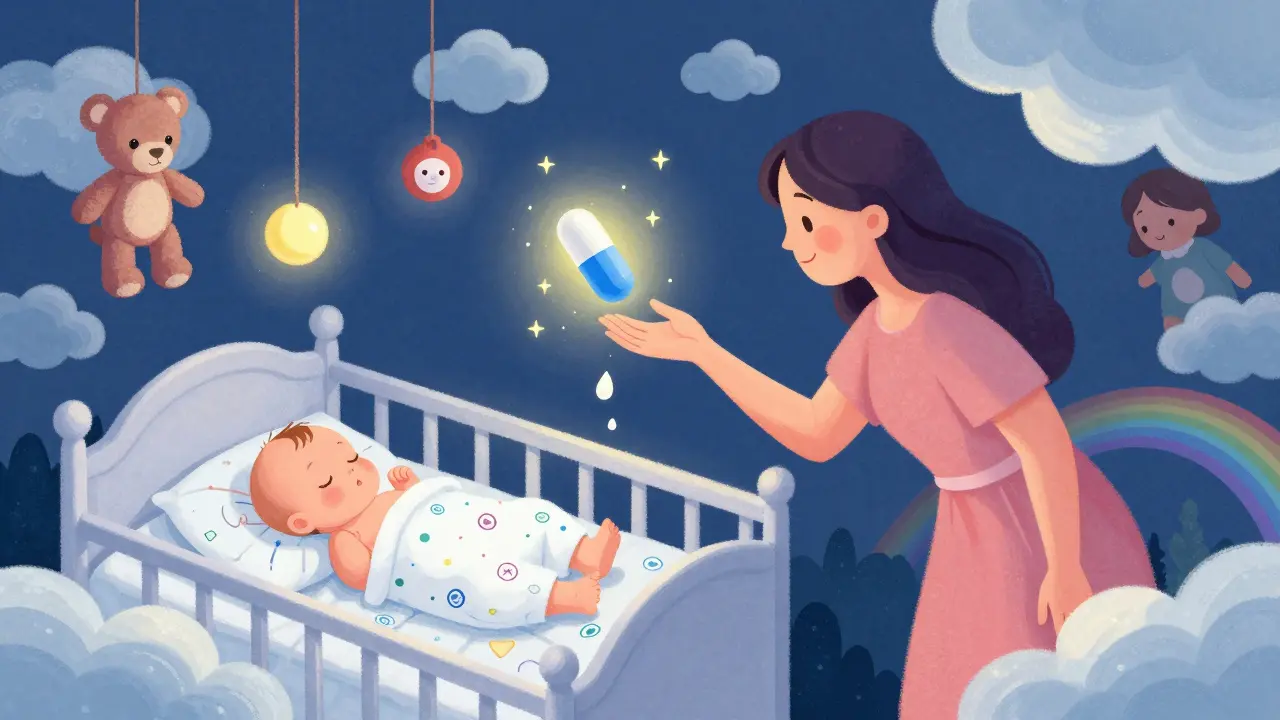
When a new mom feels overwhelmed, tearful, or disconnected from her baby, it’s easy to dismiss it as just the baby blues. But if those feelings last more than two weeks, it could be postpartum depression (PPD). About 1 in 8 women experience it after giving birth. And for many, the biggest question isn’t just how to feel better-it’s how to feel better without harming their baby while breastfeeding.
Why Treatment Can’t Wait
Untreated postpartum depression doesn’t just hurt the mother. It affects bonding, feeding, sleep patterns, and even the baby’s long-term emotional development. The American College of Obstetricians and Gynecologists (ACOG) and the CDC agree: the risks of leaving PPD untreated are far greater than the risks of taking most antidepressants while breastfeeding. A mother who can’t sleep, eat, or hold her baby isn’t helping her child. Medication, when chosen wisely, can be the bridge back to connection.Which Antidepressants Are Safest While Breastfeeding?
Not all antidepressants are created equal when it comes to breast milk transfer. The key metric is the relative infant dose (RID)-how much of the mother’s dose actually reaches the baby through milk. Anything under 10% is generally considered safe.- Sertraline is the top choice. It transfers at just 0.5-3.2% of the mother’s dose. In over 1,800 mother-infant pairs studied, 92% had undetectable levels in the baby’s blood. Most moms report no side effects in their babies.
- Paroxetine follows closely, with transfer rates of 0.9-8.6%. It’s also well-studied and rarely causes issues. Some moms notice slight drowsiness in newborns, but it usually fades.
- Citalopram has moderate transfer (3.5-8.9%). It’s generally safe, but higher doses (above 40mg) may raise concerns about heart rhythm changes in rare cases.
Antidepressants to Avoid or Use With Caution
Some medications carry higher risks-even if they work well for depression in other situations.- Fluoxetine (Prozac) has a long half-life. It builds up in the baby’s system over time. Studies show infant serum levels can reach up to 30% of the mother’s concentration. Babies may become fussy, have trouble sleeping, or develop feeding issues.
- Doxepin has been linked to serious infant reactions: apnea, cyanosis (bluish skin), and breathing pauses-even at low maternal doses like 75mg.
- Bupropion (Wellbutrin) carries a theoretical risk of seizures in infants, especially if the baby is premature or has other health conditions.
- Fluvoxamine and clomipramine have limited data and higher transfer rates. Most experts avoid them during lactation unless absolutely necessary.
What About Newer PPD Drugs Like Zurzuvae?
Zuranolone (Zurzuvae), approved by the FDA in August 2023, is the first oral drug specifically for postpartum depression. It works fast-many women feel better within days. But here’s the catch: the original clinical trials required women to stop breastfeeding during treatment. The manufacturer says there’s no data on its presence in breast milk. Yet, LactMed (the NIH’s trusted drug database) estimates the relative infant dose is only 0.5-1.5%. That’s lower than fluoxetine and similar to sertraline. So while official guidelines say “pump and dump” for one week after treatment, many specialists believe the risk is minimal. Some moms choose to breastfeed anyway after discussing it with their doctor.
What Side Effects Might the Baby Experience?
Most babies show no signs at all. But when side effects do happen, they’re usually mild and temporary:- Increased fussiness or crying
- Difficulty sleeping or frequent waking
- Slight drowsiness or lethargy
- Feeding problems (poor latch, reduced intake)
- Occasional digestive upset (gas, loose stools)
How to Minimize Baby’s Exposure
You don’t have to choose between your mental health and your baby’s safety. Here’s how to reduce exposure even further:- Take your dose right after breastfeeding. This gives your body the longest time to break down the drug before the next feeding.
- Start low, go slow. Begin with the lowest effective dose. Sertraline at 25-50mg daily is often enough.
- Monitor your baby closely for the first 2-4 weeks. Watch for changes in sleep, feeding, or mood. Keep a simple journal: “Day 3: Baby slept 5 hours straight-no fussiness.”
- Don’t stop suddenly. Stopping antidepressants abruptly can trigger a relapse. Studies show the risk of depression returning triples if you quit too fast.
When to Call the Doctor
Most side effects are harmless and temporary. But contact your pediatrician or psychiatrist if your baby shows:- Extreme sleepiness-can’t wake up for feeds
- Difficulty breathing or turning blue
- Refusing to feed for more than two consecutive meals
- Unusual tremors or seizures
Support Tools You Can Use Today
You don’t have to figure this out alone. These resources are free and reliable:- LactMed (from the National Library of Medicine): Updated weekly, free, and evidence-based. Search any medication and see its transfer rate, safety rating, and infant effects.
- InfantRisk Center: Call 806-352-2519. They answer over 3,000 questions a month about medications and breastfeeding. Their team includes pharmacists and pediatricians.
- Postpartum Support International (PSI): Offers free support groups, online forums, and a helpline. Thousands of moms share their real experiences with antidepressants and breastfeeding.
- Edinburgh Postnatal Depression Scale (EPDS): A simple 10-question screening tool. If your score is 13 or higher, talk to your provider. Many OBs and pediatricians now use it at 1, 2, 4, and 6-month checkups.
The Bigger Picture: It’s Not Just About Medication
Antidepressants aren’t magic pills. They work best with support. Therapy (especially CBT or interpersonal therapy), sleep help, partner involvement, and community connection are just as important. Some moms find that combining talk therapy with a low-dose SSRI gives them the best results-faster recovery, fewer side effects, and stronger confidence.Final Thought: You’re Not Choosing Between Two Babies
You’re not choosing between your mental health and your baby’s health. You’re choosing to be the mother your baby needs-and that means being well. Millions of women have taken antidepressants while breastfeeding. Most of their babies grew up perfectly healthy. The goal isn’t perfection. It’s connection. If medication helps you hold your baby without crying, smile during feedings, or sleep through the night, then it’s working.Can I breastfeed while taking sertraline?
Yes. Sertraline is the most recommended antidepressant for breastfeeding mothers. It transfers minimally into breast milk-usually less than 3% of the mother’s dose. Over 90% of studies show no detectable levels in infant blood, and no consistent side effects have been linked to it. Most moms report no issues with their babies’ sleep, feeding, or behavior.
What if my baby gets fussy after I start antidepressants?
Mild fussiness or sleep changes in the first few weeks are common and often temporary. Keep a daily log of your baby’s behavior and your medication timing. If it persists beyond 3-4 weeks, talk to your doctor. Switching from fluoxetine to sertraline often resolves the issue. Never stop your medication without medical guidance-sudden discontinuation can worsen your depression and make breastfeeding harder.
Is it safe to take antidepressants long-term while breastfeeding?
Yes. There’s no evidence that long-term SSRI use during breastfeeding harms infant development. Studies tracking children up to age 5 show no differences in cognitive, motor, or behavioral outcomes between those exposed to antidepressants in breast milk and those who weren’t. The key is using the lowest effective dose and choosing the safest medication-like sertraline or paroxetine.
Can antidepressants affect my milk supply?
Most antidepressants don’t reduce milk supply. In fact, treating your depression often improves breastfeeding success-because you’re more likely to feed on demand, rest, and ask for help. Paroxetine has been linked to rare cases of decreased supply, but this isn’t common. If you notice your milk drying up, talk to a lactation consultant before changing medications.
What about zuranolone (Zurzuvae)? Can I breastfeed while taking it?
Officially, manufacturers recommend avoiding breastfeeding during treatment and for one week after. However, LactMed estimates the amount that passes into milk is very low-similar to sertraline. Many specialists believe the risk is minimal, especially if your baby is healthy and full-term. If you choose to breastfeed, pump and discard milk for 24 hours after your last dose as a precaution. Always discuss this with your doctor.


Anu radha
December 17, 2025 AT 14:58Thank you for this. I was so scared to take anything while nursing. Now I feel like I can breathe again. ❤️
Kaylee Esdale
December 18, 2025 AT 15:26sertraline is the MVP of postpartum meds. my baby slept like a angel and i finally cried without feeling guilty. no joke, it saved my life. 🙏
CAROL MUTISO
December 18, 2025 AT 18:31People act like antidepressants are some kind of evil potion but honestly? If you’re too depressed to feed your kid, you’re already failing them. Medication isn’t giving up-it’s showing up. And if your baby’s fine, you did the right thing. 🤷♀️
BETH VON KAUFFMANN
December 20, 2025 AT 02:02Uhh… LactMed isn’t peer-reviewed. It’s a database run by NIH interns. And zurzuvae’s RID? That’s theoretical modeling, not real infant serum data. You’re giving moms false confidence. 🤨
Martin Spedding
December 20, 2025 AT 04:16fluoxetine bad. sertraline good. why is this even a debate? 😴
Donna Packard
December 20, 2025 AT 15:53You’re not broken. You’re healing. And that’s brave.
Victoria Rogers
December 22, 2025 AT 13:56why do we even need meds? i had 3 kids and never took anything. just pray and push through. america is so weak. you guys need to toughen up. this is why our country is falling apart.
Brooks Beveridge
December 23, 2025 AT 05:33Let’s be real: if you’re reading this, you’re already doing better than 90% of new moms. You’re researching. You’re asking questions. You’re not just winging it. That’s not weakness-that’s radical responsibility. And if your baby’s not turning blue, you’re probably doing fine. I’ve seen moms quit meds because they thought their baby was ‘acting weird’-turns out the baby was just teething. Or had gas. Or was a normal human infant. Trust the data. Trust your doctor. And for god’s sake, trust yourself. You’re not failing your baby by needing help. You’re showing them what resilience looks like.
Virginia Seitz
December 23, 2025 AT 11:59sertraline = mom superhero 🦸♀️🍼
Meghan O'Shaughnessy
December 24, 2025 AT 19:18In Japan, postpartum depression is treated with family support and rest-not pills. We don’t label mothers as broken. We wrap them in blankets and feed them soup for weeks. Maybe we’re missing something. Not saying meds are bad-but maybe we’ve made ‘recovery’ too medical and too individual. What if community is the real medicine?
Erik J
December 25, 2025 AT 21:30Has anyone tracked long-term neurodevelopment in kids exposed to sertraline via breastmilk? I’m curious about executive function at age 8.
Steven Lavoie
December 27, 2025 AT 20:50Thank you for citing LactMed. So many people cite anecdotal blogs or Reddit threads. This is evidence-based, and it matters. I’m a pediatric nurse, and I hand this out to every mom who asks. You’re not alone.
Chris Van Horn
December 28, 2025 AT 04:32THIS IS WHY AMERICA IS BROKEN. YOU’RE MEDICATING YOUR BABY TO MAKE YOURSELF FEEL BETTER. YOU’RE NOT A MOTHER, YOU’RE A CONSUMER. WHERE’S THE STRENGTH IN THAT? I RAISED THREE KIDS ON COFFEE AND PRAYER AND I NEVER TOOK A PILLS. YOUR CHILD IS A LAB RAT.
Patrick A. Ck. Trip
December 29, 2025 AT 12:01While I appreciate the empirical data presented herein, I must respectfully posit that the sociocultural context of maternal pharmacotherapy remains underexplored in the current discourse. A more holistic framework-integrating familial, economic, and systemic supports-is imperative to mitigate dependency on psychotropic agents. One cannot reduce maternal well-being to pharmacokinetic metrics alone.