
Medication Interactions: What You Need to Know Before Taking Pills Together
When you take more than one medication, you’re not just adding effects—you’re risking medication interactions, when two or more drugs react in ways that change how they work in your body. Also known as drug interactions, these can make a treatment useless, worsen side effects, or even cause serious harm. This isn’t rare. Half of all adults in the U.S. take at least one prescription drug, and nearly 20% take five or more. That means chances are high your pills are talking to each other—and not always in a good way.
NSAIDs, like ibuprofen and naproxen, commonly used for pain and inflammation can mess with blood pressure meds and increase stomach bleeding risk, especially if you’re also on blood thinners. Antidepressants, including mirtazapine and duloxetine can cause serotonin overload when mixed with certain painkillers or supplements like St. John’s wort. Even something as simple as antibiotics, such as azithromycin or cefdinir, can interfere with birth control or trigger heart rhythm issues if you have existing conditions. These aren’t hypothetical risks—they’re documented in real patients who ended up in the ER because they didn’t know their meds were clashing.
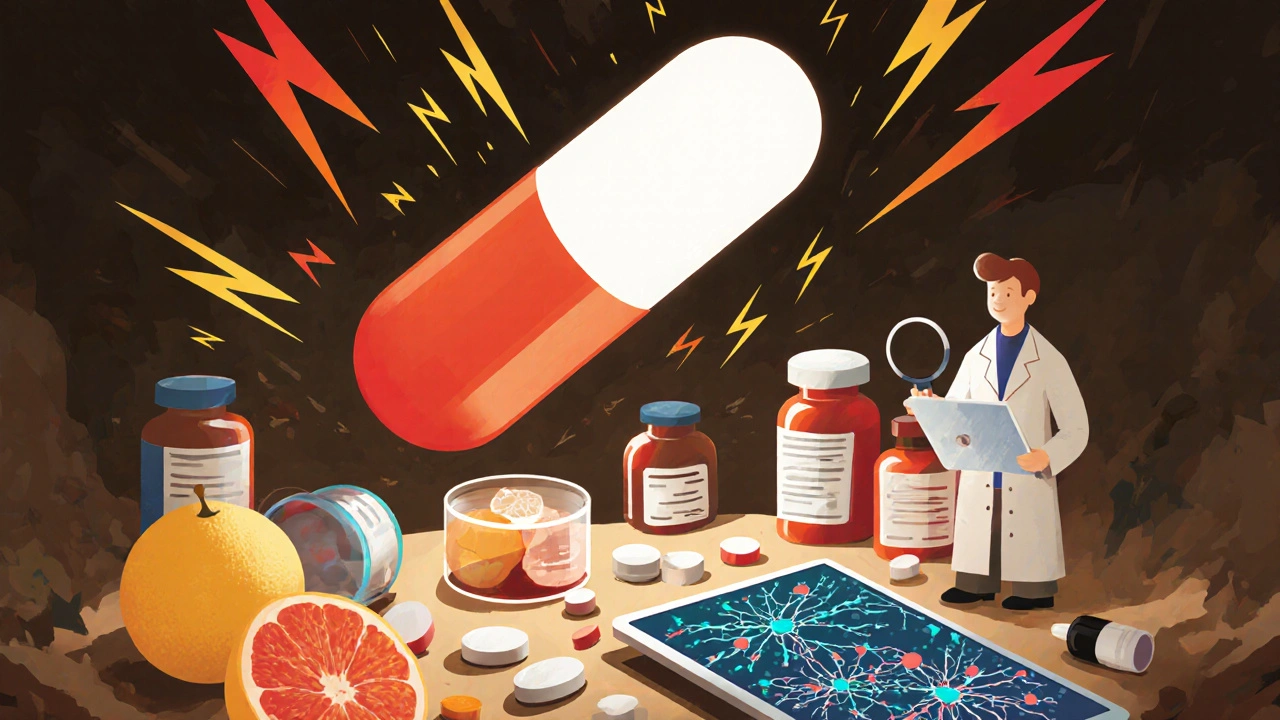
Some interactions are hidden. For example, grapefruit juice doesn’t just affect statins—it can boost levels of over 85 medications, turning a normal dose into a toxic one. Or take seizure medications, like those used for epilepsy: they can make birth control pills useless, and birth control pills can make seizures worse. It’s a loop most people never see coming. Even over-the-counter stuff like antacids, cold meds, or herbal supplements can throw off your system. A simple antihistamine like desloratadine might seem harmless, but if you’re on heart meds or liver-metabolized drugs, it can pile up and cause dizziness or worse.
What makes this worse is that most people don’t tell their doctors everything they take. They forget the turmeric capsules. They don’t think the cough syrup counts. They assume if it’s sold in a pharmacy, it’s safe with everything else. But safety isn’t about where it’s sold—it’s about how it behaves in your body. That’s why knowing your own meds matters more than ever.
The posts below break down real cases where medication interactions made a difference—sometimes life-changing, sometimes life-threatening. You’ll find out why budesonide/formoterol needs careful timing with other inhalers, how fluconazole can fail if taken with certain antivirals, and why mixing amiloride with potassium supplements is a bad idea during pregnancy. You’ll see how acetaminophen, while generally safe, can still damage your liver if paired with alcohol or certain antidepressants. And you’ll learn how to spot early signs of trouble before it’s too late.
About
Medications