That third cup of coffee at 4 PM feels like a necessary evil. You’re dragging through the afternoon slump, and caffeine seems like the only thing standing between you and total burnout. But when you finally hit the pillow at 10 PM, your mind is racing. You toss. You turn. You stare at the ceiling until the alarm goes off. If this sounds familiar, the problem isn’t just stress-it’s likely the timing of your last caffeine fix.
We often think of caffeine as a simple on/off switch for energy. It’s not. It’s a chemical that lingers in your system long after the buzz fades, actively blocking the signals your brain uses to fall asleep. Understanding caffeine cutoff times isn’t about giving up your morning latte; it’s about calculating exactly when to stop consuming it so your body can naturally wind down. Recent research has moved beyond vague advice like "avoid caffeine late in the day" to precise, science-backed windows that can transform your sleep quality overnight.
The Biology of Wakefulness: Why Caffeine Keeps You Up
To understand why timing matters, we first need to look at what caffeine actually does inside your head. Throughout the day, your body produces a neurotransmitter called adenosine. Think of adenosine as your biological pressure gauge for sleep. As you stay awake, adenosine builds up in your brain, binding to specific receptors and making you feel increasingly tired. This is known as "sleep pressure."
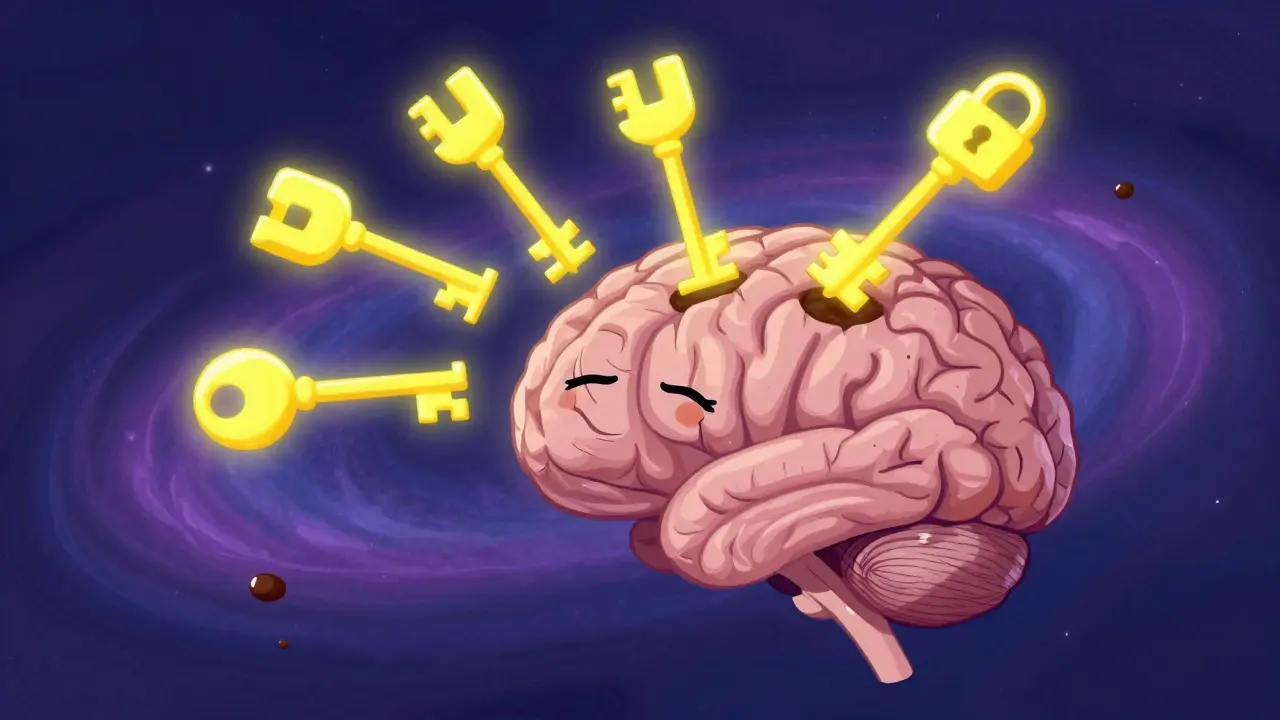
Caffeine works by hijacking this system. Structurally, caffeine molecules look very similar to adenosine molecules. Because of this resemblance, caffeine fits into those same receptors but doesn't activate them. Instead, it blocks adenosine from binding. It’s like putting a key in a lock that turns nothing, preventing the real key (adenosine) from opening the door to sleepiness. While this keeps you alert during the day, it also means that if caffeine is still present in your bloodstream when you try to sleep, your brain literally cannot receive the signal that it’s time to rest.
The critical factor here is the half-life of caffeine. The half-life is the amount of time it takes for your body to eliminate half of the consumed substance. For most adults, the FDA confirms this window is between 4 and 6 hours. However, this varies wildly based on genetics, age, and liver function. Some people are "fast metabolizers," clearing caffeine quickly. Others, particularly those with certain variants of the CYP1A2 gene, are "slow metabolizers." For these individuals, the half-life can stretch to 8 or even 12 hours. If you have a slow metabolism, a coffee at 6 PM means half of that caffeine is still circulating in your blood at midnight, and a quarter remains at 6 AM.
Calculating Your Personal Caffeine Cutoff Time
Generic advice suggests stopping caffeine 6 hours before bed. However, recent comprehensive reviews indicate this might not be enough for optimal sleep architecture. A pivotal 2021 review published in Sleep Medicine Reviews analyzed 24 studies and found that a standard cup of coffee (containing approximately 107 mg of caffeine) requires an 8.8-hour cutoff to prevent significant sleep disruption. This is nearly 9 hours before bedtime.
Let’s break this down with a concrete example. If you aim to be asleep by 10:00 PM, an 8.8-hour cutoff means your last sip of coffee should happen no later than 1:12 PM. That is much earlier than most people realize. The study also highlighted that higher doses require significantly longer windows. Pre-workout supplements often contain around 217.5 mg of caffeine per serving. To clear enough of that dose for healthy sleep, you would need a 13.2-hour cutoff. Consuming such a supplement at noon would mean waiting until 11:12 PM before attempting to sleep without residual interference.
| Beverage / Source | Avg. Caffeine Content | Recommended Cutoff Before Bed |
|---|---|---|
| Standard Coffee (250ml) | 107 mg | 8.8 hours |
| Espresso Shot | 63 mg | ~5.2 hours |
| Pre-Workout Supplement | 217.5 mg | 13.2 hours |
| Energy Drink (e.g., Red Bull) | 80 mg (250ml) | ~6.5 hours |
| Black Tea | ~40-50 mg | No definitive cutoff identified |
| Dark Chocolate (1 oz) | ~24 mg | ~3 hours |
Note that black tea is an interesting outlier. Due to its lower concentration and the presence of L-theanine (an amino acid that promotes relaxation), studies have not identified a strict cutoff time for black tea that disrupts sleep onset in the same way coffee does. However, individual sensitivity still applies.
The Hidden Cost: Sleep Efficiency vs. Sleep Onset
Many people argue, "I can drink coffee at night and still fall asleep fine." And statistically, they might be right about falling asleep. But falling asleep is only part of the equation. The real damage happens to sleep efficiency and sleep architecture.
A 2022 review in the American Journal of Managed Care (AJMC) quantified this impact precisely. Even when people managed to fall asleep after consuming caffeine, their total sleep time was diminished by an average of 45 minutes. More importantly, sleep efficiency dropped by 7%. Sleep efficiency measures the percentage of time spent in bed actually sleeping. A drop of 7% might sound small, but over a week, that’s nearly 5 hours of lost restorative sleep.
Furthermore, caffeine increases sleep onset latency-the time it takes to transition from wakefulness to sleep-by an average of 9 minutes. While 9 minutes seems trivial, combined with reduced deep sleep, the cumulative effect is severe. Newer research from Nature Communications (2025) adds a neurological layer to this. They found that caffeine induces a "broad boost in brain complexity" during Non-Rapid Eye Movement (NREM) sleep. Essentially, your brain stays more active and less synchronized, preventing the deep, restorative stages needed for physical recovery and memory consolidation. Middle-aged adults (ages 41-58) appear to be particularly sensitive to these disruptions compared to younger adults.
Factors That Shift Your Window
Your ideal cutoff time isn't static. Several variables can expand or contract the window you need to wait before bed.
- Genetics: As mentioned, the CYP1A2 gene determines how fast your liver processes caffeine. Slow metabolizers may need to adhere to a 10+ hour cutoff regardless of dosage.
- Age: Metabolism slows with age. A 50-year-old will likely retain caffeine longer than a 25-year-old. The Nature Communications study noted greater sensitivity in middle-aged groups regarding sleep latency and duration.
- Pregnancy: During pregnancy, caffeine half-life can extend dramatically, sometimes doubling. Pregnant individuals are often advised to cut off caffeine 12-24 hours before bed.
- Medications: Certain medications, including some antibiotics and oral contraceptives, can inhibit the enzymes that break down caffeine, effectively extending its half-life.
- Tobacco Use: Surprisingly, smoking speeds up caffeine metabolism. Smokers may process caffeine faster than non-smokers, though the health risks of smoking far outweigh any minor benefit to caffeine clearance.

Practical Strategies for Implementation
Knowing the science is one thing; changing habits is another. Here is how to apply these cutoff times without feeling deprived.
- Track Your Intake Accurately: Most people underestimate their caffeine consumption. Remember that caffeine hides in unexpected places: Excedrin headaches pills (65 mg per tablet), chocolate bars, and even some sodas. Use a tracking app like Caffeine Zone to log every milligram. Data shows that 68% of users significantly underestimate hidden sources.
- The 2 PM Rule: For a typical 10 PM bedtime, a hard cutoff at 2:00 PM is a safe, easy-to-remember heuristic. This aligns closely with the 8-hour guideline and accounts for moderate variability in metabolism. Users who switched their last caffeine fix from 4 PM to 2 PM reported gaining almost an hour of high-quality sleep.
- Switch to Half-Caf: If you crave the ritual of afternoon coffee, switch to half-caffeinated beans or mix regular grounds with decaf. The AJMC review noted that reducing caffeine strength in the afternoon can reduce sleep disruption by 32% compared to full-strength coffee.
- Leverage Technology: Modern wearables like Oura Ring and Fitbit now integrate caffeine logging with sleep data. They can provide personalized feedback, showing you exactly how a 3 PM coffee affected your heart rate variability and deep sleep score that night. Seeing the direct correlation often motivates behavior change better than generic advice.
- Explore Alternatives: In the afternoon, switch to herbal teas (chamomile, peppermint) which are naturally caffeine-free. Or try black tea, which has a negligible impact on sleep onset for most people due to its lower dose and L-theanine content.
The Future of Personalized Sleep Hygiene
We are moving away from one-size-fits-all guidelines toward precision sleep medicine. A 2024 study demonstrated that machine learning algorithms, when fed data on genetic markers (like CYP1A2), age, and baseline sleep patterns, could predict optimal caffeine cutoff times with 89% accuracy. Companies like 23andMe already offer reports on caffeine metabolism speed as part of their health packages.
Meanwhile, the American Academy of Sleep Medicine is updating its clinical practice guidelines to include beverage-specific recommendations, acknowledging that "avoiding caffeine late in the day" is too vague for effective public health guidance. As smart home technology evolves, we may soon see systems that adjust lighting and temperature automatically based on detected caffeine consumption patterns, helping to counteract the stimulant effects as bedtime approaches.
Until then, the math remains simple. Calculate your bedtime. Subtract 9 hours. That is your new deadline. Respect the biology of adenosine, and your sleep quality will thank you.
What is the recommended caffeine cutoff time for optimal sleep?
Research suggests a minimum of 8 to 9 hours before bedtime. For a standard cup of coffee, an 8.8-hour cutoff is recommended to prevent significant disruption to sleep architecture and efficiency.
Does black tea affect sleep onset like coffee does?
Generally, no. Black tea contains significantly less caffeine than coffee and includes L-theanine, which promotes relaxation. Studies have not identified a strict cutoff time for black tea that disrupts sleep onset in the same way coffee does.
How does caffeine half-life vary between individuals?
The average half-life is 4-6 hours, but it can range from 2 to 12 hours depending on genetics (specifically the CYP1A2 gene), age, liver function, and medication use. Slow metabolizers retain caffeine much longer than fast metabolizers.
Can I still fall asleep if I consume caffeine close to bedtime?
Yes, many people can still fall asleep. However, caffeine reduces sleep efficiency by approximately 7% and diminishes total sleep time by 45 minutes on average. It also prevents deep NREM sleep, meaning the sleep you do get is less restorative.
How much caffeine is in a pre-workout supplement compared to coffee?
A typical pre-workout supplement contains around 217.5 mg of caffeine, which is roughly double the amount in a standard 250ml cup of coffee (107 mg). Consequently, pre-workouts require a much longer cutoff time of approximately 13.2 hours before bed.