
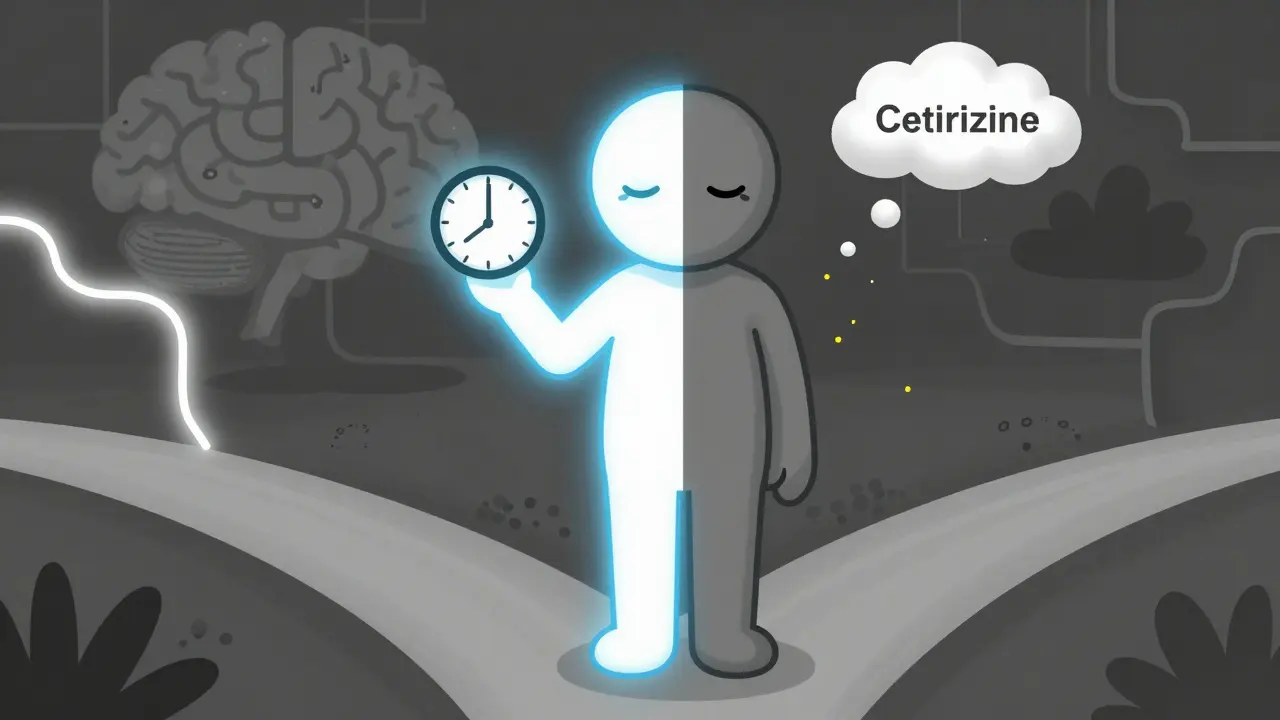
Cetirizine vs Fexofenadine Decision Tool
Which antihistamine is right for you?
This tool helps you decide between cetirizine (Zyrtec) and fexofenadine (Allegra) based on your specific situation. Both treat allergy symptoms, but they have important differences in speed, drowsiness, and interactions.
1. What's your main concern?
2. Do you need to drive or operate machinery?
3. How sensitive are you to drowsiness?
4. What's your typical medication routine?
5. Are you using it for children?
Your Recommendation
Based on your answers, we recommend:
Why this choice?
Which antihistamine is better for you - cetirizine or fexofenadine?
If you’ve ever woken up groggy after taking an allergy pill, you know how frustrating it is. You took the medicine to feel better, but now you’re too sleepy to drive, work, or even focus on your kids’ homework. That’s the big difference between cetirizine and fexofenadine. Both treat sneezing, runny nose, and itchy eyes. But one makes you tired - the other barely touches your alertness.
Let’s cut through the marketing. Zyrtec and Allegra aren’t magic pills. They’re two well-studied drugs with real trade-offs. One works faster. The other lets you stay sharp. Neither is "better" - it’s about what you need right now.
How they work - and why side effects differ
Cetirizine and fexofenadine are both second-generation antihistamines. That means they were designed to block histamine - the chemical that triggers allergy symptoms - without crossing into your brain like older drugs (think Benadryl). But they don’t do it the same way.
Cetirizine, the active ingredient in Zyrtec, is a metabolite of hydroxyzine. It still slips into your central nervous system a little - about 5-10%. That’s why some people feel drowsy. Fexofenadine, sold as Allegra, is the cleaned-up version of terfenadine. It barely enters the brain - less than 1-2%. That’s why it’s called "non-sedating" in most cases.
That tiny difference in brain penetration makes a huge difference in how you feel. A 2019 UK prescription analysis showed 14% of people on cetirizine reported drowsiness. Only 6% did on fexofenadine. That’s not a small gap. That’s the difference between getting through your workday or needing a nap by 3 p.m.
Speed of action: Who feels relief faster?
Timing matters. If you’re stuck in a pollen-filled office and your eyes are watering, you want relief now - not in two hours.
Cetirizine hits peak levels in your blood in 30 to 60 minutes. Many people feel better within 20 minutes. Fexofenadine? It takes 2 to 3 hours to kick in. That’s a big gap if you’re trying to manage sudden symptoms.
One study in the Annals of Allergy, Asthma & Immunology found cetirizine reduced runny nose and sneezing 26% more than fexofenadine at the 12-hour mark. That’s not just "a little better." It’s noticeable. But here’s the catch: that same study showed fexofenadine worked just fine for most people - just slower.
So if you need fast relief, cetirizine wins. If you can plan ahead - take it the night before a big day - fexofenadine still works. It just doesn’t feel as immediate.

The drowsiness problem: Who gets sleepy?
This is the deciding factor for most people.
The NHS says fexofenadine causes drowsiness in about 1 in 100 people. Cetirizine? Up to 1 in 7. That’s not a typo. One in seven people taking Zyrtec will feel tired, sluggish, or foggy. Some only notice it after a few days. Others feel it right away.
Real-world data backs this up. A 2022 survey of 1,892 allergy sufferers found 41% quit cetirizine within 30 days because of drowsiness. Only 12% stopped fexofenadine for the same reason. On Reddit’s r/Allergies, 62% of 147 respondents chose fexofenadine specifically because it didn’t make them crash.
But here’s the twist: not everyone gets sleepy on cetirizine. Some people take it daily and feel fine. Others can’t even try it. That’s why doctors say: "Try it once on a weekend when you don’t have to drive or work." If you feel foggy, switch. If you don’t, stick with it.
Food and drug interactions: What you can’t mix
One of the most overlooked differences is how food affects them.
Fexofenadine doesn’t like fruit juice. Grapefruit, orange, or apple juice can cut its absorption by up to 43%. That means if you take it with your morning OJ, you might as well have skipped the pill. The FDA says to take fexofenadine on an empty stomach - at least one hour before or two hours after eating. Antacids with aluminum or magnesium (like Tums or Maalox) also reduce its effect by 41% if taken too close together.
Cetirizine? No such fuss. You can take it with food, with juice, or on an empty stomach. It doesn’t care. That makes it far more convenient for busy people who don’t want to plan their pill around meals.
Also, if you drink alcohol, cetirizine can make you way more tired. One study showed alcohol triples drowsiness risk with cetirizine. Fexofenadine? Minimal interaction. If you’re someone who has a glass of wine after work, fexofenadine is the safer pick.
Who should take which one?
There’s no one-size-fits-all answer. But here’s how to decide based on your life:
- Take fexofenadine if: You drive for work, operate machinery, are a student, or have a job that needs focus. You’re sensitive to drowsiness. You take antacids or drink juice with meals. You want the "safest" option for long-term daily use.
- Take cetirizine if: You need fast relief for sudden symptoms. You don’t mind a little tiredness (or take it at night). You’re managing severe sneezing or itchy eyes. You don’t want to plan your pill around meals. You’re pregnant or breastfeeding - cetirizine has more safety data.
Parents of young kids? Cetirizine is more commonly prescribed for children 2 and up because there’s over 20 years of safety data. Fexofenadine is approved for kids too, but fewer studies exist.
People with kidney problems? Both need dose adjustments. Fexofenadine drops to 60 mg daily if your kidney function is below 30. Cetirizine drops to 5 mg. Your doctor will check this.

Price, availability, and real-world ratings
Both are cheap. Generic cetirizine costs about $7.50 for 30 pills. Generic fexofenadine? Around $6.85. That’s less than 25 cents a day.
On Drugs.com, cetirizine has a 7.8/10 rating from over 1,200 reviews. Fexofenadine sits at 7.1/10 from nearly 1,000. Why? Cetirizine users praise how fast it works. Fexofenadine users praise how clear-headed they feel.
But here’s what the numbers don’t show: people who switch from cetirizine to fexofenadine often say, "I didn’t realize I was this tired all day." And people who switch back say, "I thought I was fine with fexofenadine - until I realized I was still sneezing every morning."
It’s not about which drug is "stronger." It’s about which one lets you live your life without side effects.
What’s new in 2025?
Both drugs are stable, but there’s one big change: safety warnings.
In 2023, the FDA and EMA added rare cardiac warnings for both. Cetirizine has a 0.0014% risk of QT prolongation. Fexofenadine’s is even lower at 0.0008%. That’s extremely rare - far less likely than being hit by lightning. But if you have a heart condition or take other medications that affect your heart rhythm, talk to your doctor before choosing either.
There’s also a new extended-release version of fexofenadine (Allegra 12 HR). But Consumer Labs found it doesn’t offer much more relief than the regular 180 mg dose. So unless you’re forgetting pills, stick with the standard.
For now, the choice hasn’t changed: cetirizine for speed and strength. Fexofenadine for safety and alertness.
Can I take cetirizine and fexofenadine together?
No. Both are antihistamines that work the same way. Taking them together doesn’t make you feel better - it just increases your risk of side effects like dizziness, dry mouth, or an irregular heartbeat. Stick to one. If one isn’t working, talk to your doctor about switching or adding a nasal spray.
Is fexofenadine really non-drowsy?
For most people, yes. Studies show less than 6% of users feel drowsy. But "non-drowsy" doesn’t mean "no effect." Some people - especially those who are very sensitive - still feel a little tired. It’s much less common than with cetirizine, but not impossible.
Which one is better for children?
Cetirizine has more safety data in kids. Over 200 studies have tracked its use in children as young as 6 months. Fexofenadine is approved for kids 2 and older, but fewer long-term studies exist. Most pediatric allergists recommend cetirizine first for children under 12.
Can I take fexofenadine with grapefruit juice?
No. Grapefruit juice can reduce fexofenadine’s absorption by up to 43%, making it much less effective. Even orange juice can cut it by 30%. Take it with water, on an empty stomach, at least one hour before or two hours after eating.
Why do some people say cetirizine doesn’t work for them?
It’s not that it doesn’t work - it’s that they can’t tolerate the drowsiness. Many people stop taking it after a few days because they feel too tired. Others take it at night and find it works great for morning symptoms. If you’re tired on cetirizine, don’t assume it’s ineffective. Try fexofenadine. You might be surprised.
Are there any long-term risks with either drug?
Both are considered safe for long-term daily use. Decades of data show no increased risk of cancer, liver damage, or cognitive decline. The biggest long-term issue is drowsiness with cetirizine - which can affect safety and quality of life. Fexofenadine has fewer side effects over time, making it a better choice for people who need daily allergy control without feeling foggy.
Final decision: What should you do?
Here’s the simplest way to choose:
- If you need relief fast and don’t mind being a little tired - try cetirizine.
- If you need to stay alert all day, drive, or work with precision - try fexofenadine.
- If you’re not sure, start with fexofenadine. It’s the safer default.
- If you’ve tried fexofenadine and still feel symptoms, switch to cetirizine - and take it at night.
Neither drug is perfect. But both are far better than the old-school antihistamines that knocked you out. The goal isn’t to find the strongest pill. It’s to find the one that lets you live your life - without side effects getting in the way.

Greg Quinn
December 28, 2025 AT 23:23Aliza Efraimov
December 29, 2025 AT 22:19Paige Shipe
December 31, 2025 AT 16:50Tamar Dunlop
January 2, 2026 AT 10:26David Chase
January 3, 2026 AT 14:11Emma Duquemin
January 4, 2026 AT 18:25Kevin Lopez
January 5, 2026 AT 14:59Duncan Careless
January 6, 2026 AT 21:32Samar Khan
January 7, 2026 AT 22:39Russell Thomas
January 9, 2026 AT 10:03Joe Kwon
January 11, 2026 AT 04:10Nicole K.
January 11, 2026 AT 10:07Amy Cannon
January 11, 2026 AT 15:14Himanshu Singh
January 12, 2026 AT 22:41Jasmine Yule
January 13, 2026 AT 12:25