

Managing Diabetes During Pregnancy: What You Need to Know
If you’re pregnant and have diabetes-whether it’s type 1, type 2, or gestational diabetes-you’re probably wondering which medications are safe. The short answer: insulin is the gold standard. But it’s not the only option. Oral meds like metformin are used too, though with important limits. The goal isn’t just to control your blood sugar-it’s to protect your baby from complications like being born too large, having low blood sugar at birth, or even facing long-term metabolic risks.
Why Blood Sugar Targets Are Tighter During Pregnancy
Your body changes a lot when you’re pregnant. Hormones from the placenta make you more resistant to insulin, especially after the first trimester. That means even if your blood sugar was fine before, it can spike quickly once you’re pregnant.
Doctors don’t use the same targets for pregnant women as they do for non-pregnant adults. The current standard, backed by the Endocrine Society and ACOG in 2023, is:
- Fasting: under 95 mg/dL (5.3 mmol/L)
- One hour after eating: under 140 mg/dL (7.8 mmol/L)
- Two hours after eating: under 120 mg/dL (6.7 mmol/L)
These numbers aren’t arbitrary. Sticking to them cuts the risk of having a baby weighing over 9 pounds (macrosomia), which increases chances of shoulder injury during birth, C-sections, and future obesity in the child. It also lowers your own risk of preeclampsia and preterm labor.
Insulin: The Most Trusted Choice
Insulin has been used safely in pregnancy for over 90 years. It doesn’t cross the placenta, so your baby isn’t directly exposed to it. That’s why it’s the first-line treatment for both preexisting diabetes and gestational diabetes that won’t respond to diet and exercise alone.
Not all insulins are equal here. Rapid-acting analogs-like insulin lispro and insulin aspart-are preferred over regular human insulin because they work faster and clear quicker. That means fewer low-blood-sugar episodes after meals, which is a big deal when you’re already tired and nauseous.
For background insulin, insulin detemir and NPH are the most studied. Insulin glargine is also considered safe based on multiple studies involving over 700 pregnant women. But insulin glulisine and degludec? Not recommended. There’s just not enough data to say they’re safe.
Some women use insulin pumps (CSII). Studies show they can lower HbA1c and reduce total insulin needs by delivery. But the big picture? Babies do just as well whether mom uses pumps or multiple daily injections. So if you’re comfortable with shots, there’s no need to switch.
Metformin: A Common Oral Option-With Caveats
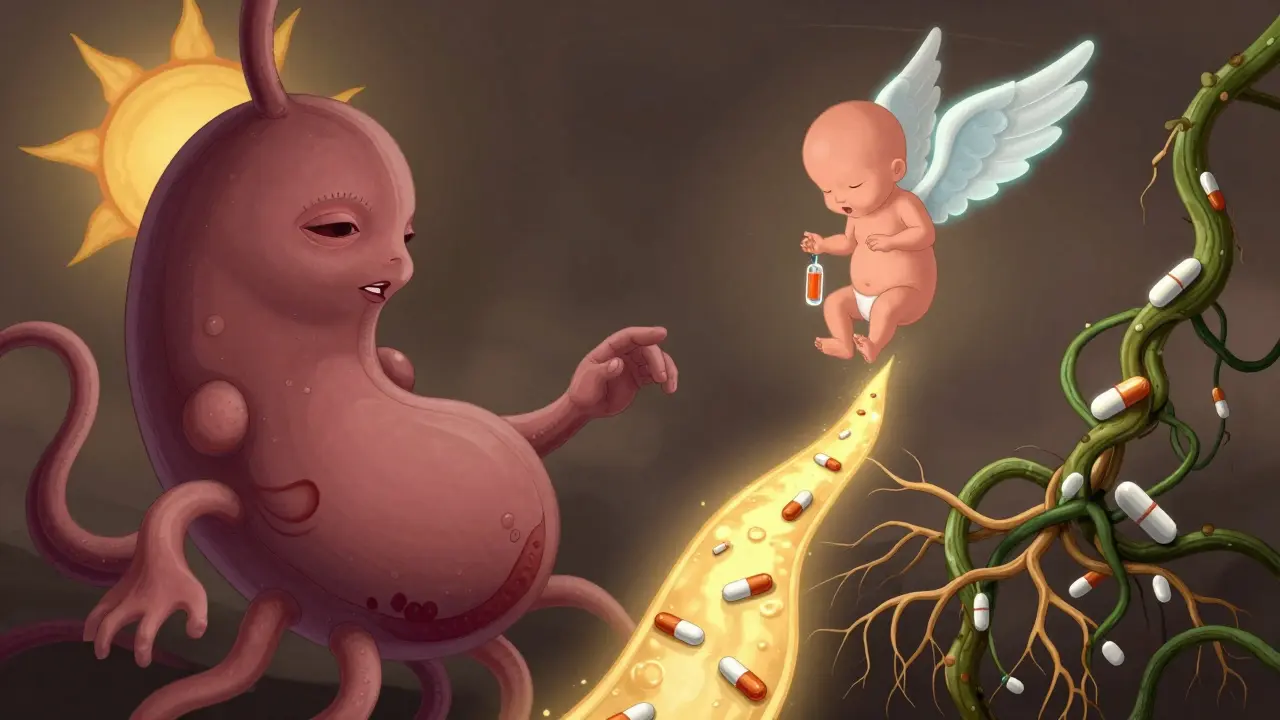
Metformin is an oral pill that helps your body use insulin better. It’s widely used for type 2 diabetes and is often prescribed for gestational diabetes, especially in the UK and Europe.
Research shows metformin may be better than insulin in some ways. One large analysis found women taking metformin had:
- 35% lower chance of having a large baby
- Lower risk of preeclampsia
- Less neonatal hypoglycemia
- Fewer NICU admissions
But here’s the catch: about half of women on metformin end up needing insulin anyway. The pill alone often isn’t enough to hit those tight blood sugar targets, especially later in pregnancy.
Another concern: metformin crosses the placenta. That means your baby is exposed to it. Long-term studies on children exposed to metformin in the womb show they may be slightly leaner at birth and have lower BMI in early childhood. But whether that’s good or bad long-term? Still unclear. Some worry it could affect metabolic programming.
The Endocrine Society (2023) says metformin can be used for gestational diabetes, but not to add to insulin in type 2 diabetes. Why? Because it increases the risk of having a small baby without clear benefits. Joslin Diabetes Center goes further: they say metformin shouldn’t be used beyond the first trimester or instead of insulin.
What Medications Are Off-Limits?
There’s a long list of diabetes drugs you need to stop before or as soon as you find out you’re pregnant.
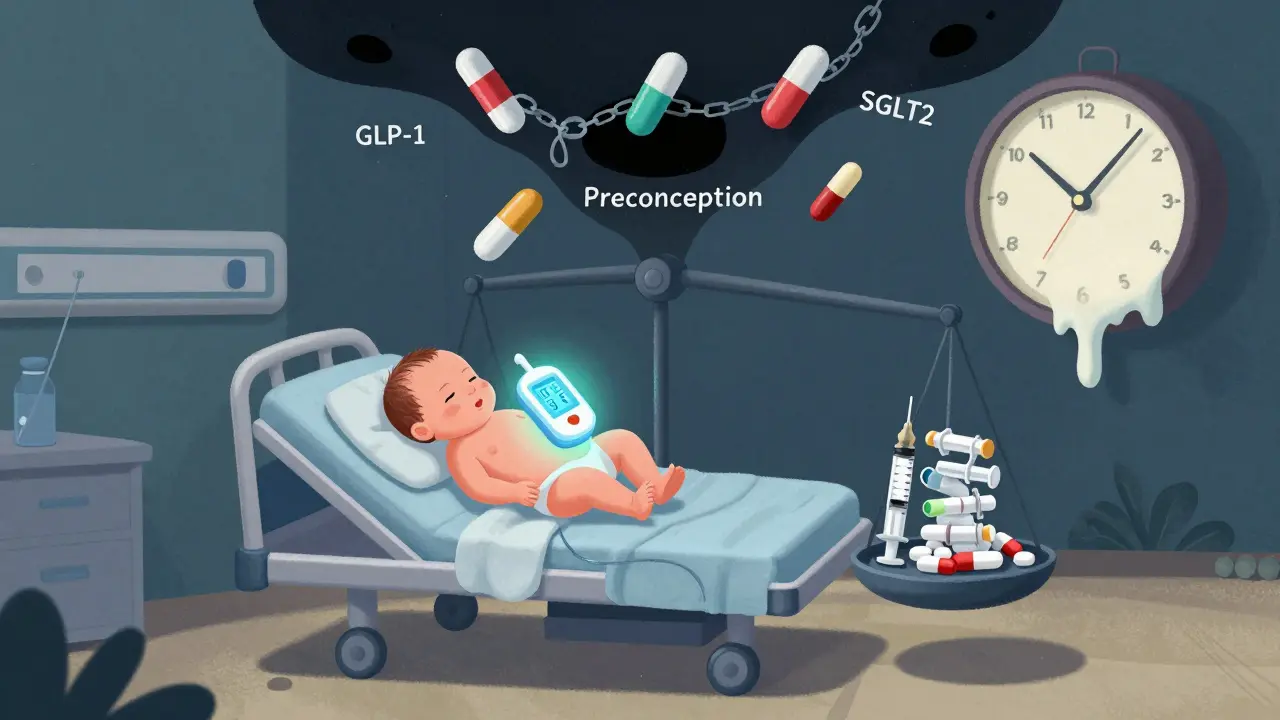
- GLP-1 receptor agonists (like semaglutide, liraglutide): These are linked to potential fetal risks in animal studies. Guidelines now say stop them before conception-not just in the first trimester.
- SGLT2 inhibitors (like dapagliflozin, empagliflozin): These can cause dehydration and ketoacidosis in pregnancy. No safety data. Avoid.
- DPP-4 inhibitors (like sitagliptin): Too little research. Don’t use.
- Alpha-glucosidase inhibitors (like acarbose): Not studied in pregnancy. Skip them.
If you’re on any of these for type 2 diabetes, you should be planning ahead. If you’re trying to get pregnant, switch to insulin or metformin (if appropriate) at least 3 months before conception. Don’t wait until you’re already pregnant.
Preconception Planning Is Critical
One of the biggest mistakes? Waiting until you’re pregnant to fix your diabetes. Your baby’s organs form in the first 8 weeks-often before you even know you’re pregnant. High blood sugar during that time increases the risk of serious birth defects.
Experts agree: aim for an HbA1c under 6.5% before you conceive. If your HbA1c is over 10%, you’re at high risk. In that case, strong advice is to delay pregnancy and use long-acting birth control (like an IUD or implant) while you get your numbers under control.
Also, start taking low-dose aspirin (81-100 mg daily) at 12 weeks. This reduces your risk of preeclampsia by about 25%, according to ACOG and Joslin guidelines.
What Happens During Labor and After Delivery?
During labor, your blood sugar can swing wildly. Hospitals monitor it hourly. You might need an IV insulin drip to keep it stable. Your baby’s blood sugar will be checked right after birth-low blood sugar is common in babies of diabetic mothers.
After delivery, things change fast. Your insulin needs drop sharply-sometimes to pre-pregnancy levels or even lower. You’ll need close monitoring in the first 24-48 hours to avoid lows.
And here’s good news: if you had gestational diabetes, you can usually stop all medications right after birth. Your body usually resets. But you’re at higher risk for type 2 diabetes later, so get tested 6-12 weeks postpartum and then every 1-3 years.
If you had type 1 or type 2 diabetes before pregnancy, you’ll likely resume your pre-pregnancy regimen-but under your doctor’s guidance. Don’t just restart your old dose. You might need less than before.
What About Breastfeeding?
Good news: most diabetes medications are safe while breastfeeding.
Insulin? Perfectly safe. It doesn’t pass into breast milk.
Metformin? Small amounts get into milk, but studies show no harmful effects on babies. The American Academy of Pediatrics considers it compatible with breastfeeding.
Other oral meds? Avoid them. No data. Stick to insulin or metformin if you’re on one.
Bottom Line: What Should You Do?
- If you’re planning pregnancy: Get your HbA1c under 6.5%, stop unsafe meds, and talk to your endocrinologist.
- If you’re pregnant and need meds: Insulin is your safest bet. Metformin is an option for gestational diabetes but often needs backup insulin.
- Avoid all newer oral drugs-GLP-1s, SGLT2s, DPP-4s-during pregnancy.
- After birth: Monitor your blood sugar closely. You may need much less insulin.
- While breastfeeding: Insulin and metformin are fine. Others? Skip them.
There’s no perfect solution. Insulin requires injections and careful timing. Metformin is easier to take but might not be enough. The key is working with a team-your OB, endocrinologist, and diabetes educator-to find the balance that keeps you and your baby safe.
Is metformin safe during pregnancy?
Metformin is used during pregnancy, especially for gestational diabetes, and studies show it may reduce risks like large babies and preeclampsia compared to insulin. But about half of women need extra insulin because metformin alone isn’t strong enough. It crosses the placenta, so long-term effects on the baby are still being studied. Experts recommend it for GDM but not as a replacement for insulin in type 2 diabetes.
Can I use insulin pumps while pregnant?
Yes, insulin pumps (CSII) are safe during pregnancy and may help lower HbA1c and reduce insulin needs by delivery. Babies do just as well as with multiple daily injections. If you’re already using a pump and it works for you, you can continue. Just make sure your team monitors you closely, especially as your insulin needs change through each trimester.
What diabetes meds should I stop before getting pregnant?
Stop GLP-1 receptor agonists (like Ozempic, Wegovy) and SGLT2 inhibitors (like Jardiance, Farxiga) at least 3 months before trying to conceive. DPP-4 inhibitors and alpha-glucosidase inhibitors should also be avoided-there’s not enough safety data. Insulin and metformin are the only oral/injectable options with strong safety profiles for pregnancy planning.
Can I breastfeed if I’m on diabetes medication?
Yes. Insulin is safe-it doesn’t enter breast milk. Metformin passes into milk in very small amounts, but studies show no harm to babies. The American Academy of Pediatrics says it’s compatible with breastfeeding. Avoid other diabetes pills like semaglutide or dapagliflozin-there’s no safety data for them while nursing.
Do I need to keep taking insulin after my baby is born?
If you had gestational diabetes, you’ll likely stop all insulin right after delivery. Your body usually returns to normal. But if you had type 1 or type 2 diabetes before pregnancy, you’ll need to resume insulin-but your dose will probably be much lower than during pregnancy. Check your blood sugar often in the first few days postpartum and work with your doctor to adjust your dose. Don’t guess-you could have dangerous lows.

Glendon Cone
December 31, 2025 AT 10:25Hayley Ash
January 1, 2026 AT 15:54kelly tracy
January 2, 2026 AT 15:10srishti Jain
January 3, 2026 AT 14:24Colin L
January 4, 2026 AT 11:29Nadia Spira
January 6, 2026 AT 08:56henry mateo
January 6, 2026 AT 18:58Henry Ward
January 6, 2026 AT 23:50Shae Chapman
January 8, 2026 AT 07:48Cheyenne Sims
January 9, 2026 AT 21:53Kunal Karakoti
January 10, 2026 AT 20:10Kelly Gerrard
January 11, 2026 AT 20:13