
Drug Withdrawal Timeline Calculator
How long will it take to withdraw your drug?
Calculate the time between confirmatory study results and FDA withdrawal under old and new regulatory systems.
Results will appear here after calculation
When a drug you’ve been taking suddenly disappears from pharmacies, it’s not just a supply issue-it’s a safety alarm. Between 2010 and 2020, about 12.7% of drugs approved through the FDA’s accelerated pathway were eventually pulled from the market. These aren’t rare mistakes. They’re systemic delays that put real people at risk.
Why Do Drugs Get Withdrawn?
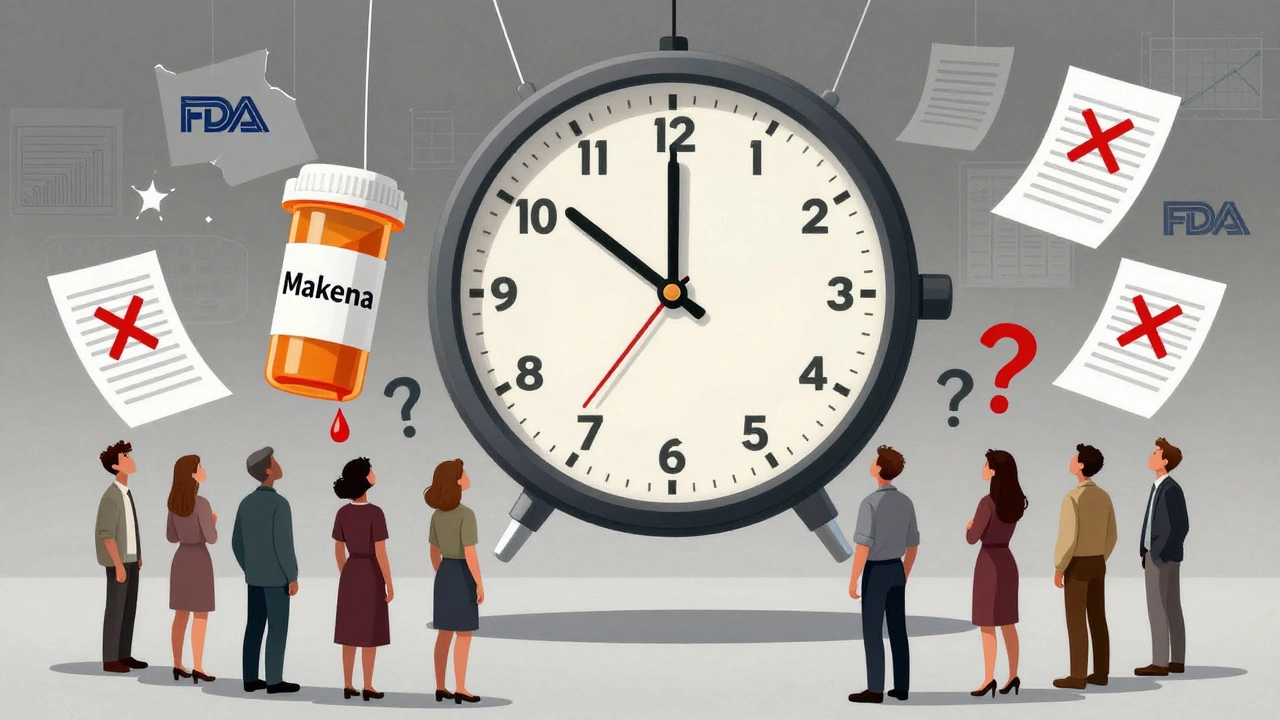
Drugs don’t vanish because companies change their minds. They’re removed because evidence shows they don’t work-or worse, they harm patients. The FDA distinguishes between two main reasons: safety and effectiveness. About 60% of withdrawals happen because of safety risks like liver damage, heart problems, or deadly side effects. The rest are pulled because clinical trials prove the drug doesn’t deliver the promised benefit. Take Makena, a drug approved in 2011 to prevent premature birth. It was based on a small study using a surrogate marker-not direct outcomes. Ten years later, a large confirmatory trial showed it had no real effect. But the FDA didn’t withdraw it until 2022. During that 11-year gap, around 150,000 women received a drug that didn’t help. That’s not an outlier. In small cell lung cancer, 41% of eligible patients got drugs later pulled for lack of effectiveness.The Old System: Too Slow, Too Silent
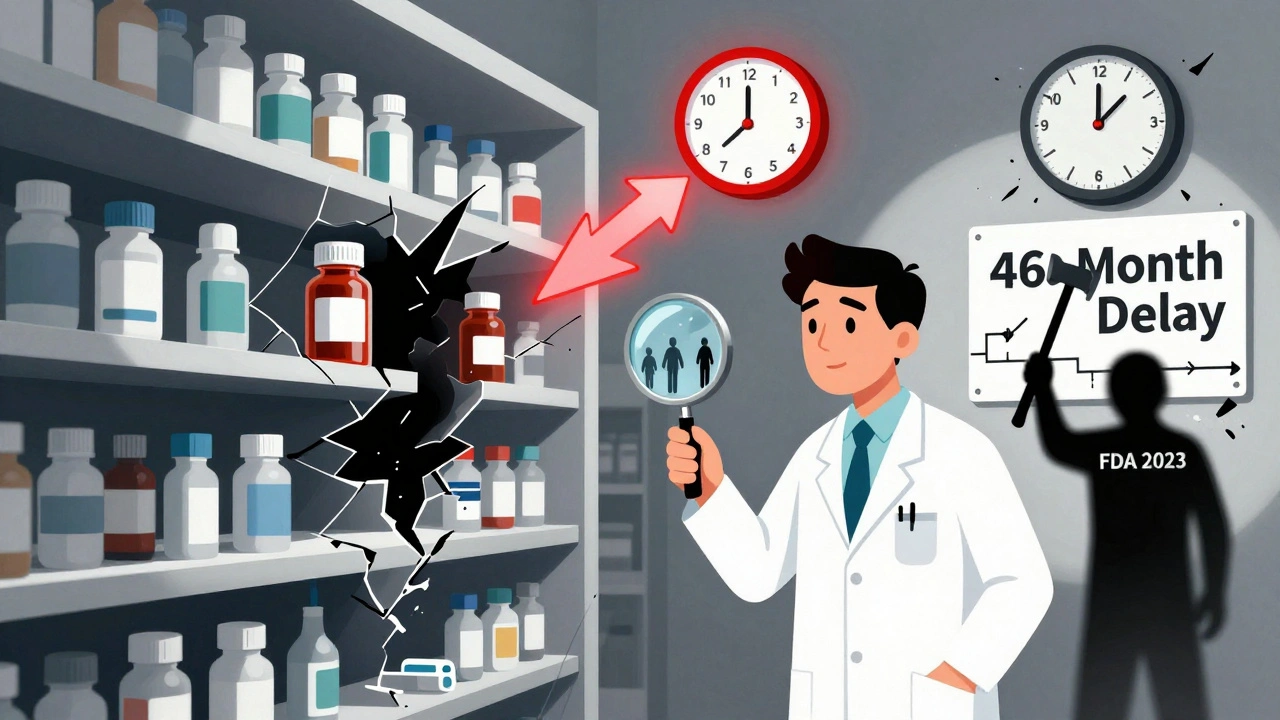
Before 2023, the FDA had no clear timeline to pull a drug after evidence of failure emerged. On average, it took 46 months-almost four years-to remove a drug that failed its confirmatory trial. Meanwhile, the approval process for these same drugs often took less than a year. That’s a 7.2-to-1 ratio: fast to approve, painfully slow to pull. Why the delay? The process was opaque. Sponsors weren’t forced to act quickly. The FDA didn’t have clear authority to move fast. And patients? They kept getting prescriptions. A 2022 study found that 30% of oncology patients on accelerated approval drugs were still taking them-even after trials proved they didn’t work. Pharmacists struggled too. A 2022 survey showed 63% had trouble reading the FDA’s Orange Book to tell if a drug had been officially withdrawn. Doctors didn’t always know. Patients found out from online forums or second opinions. One breast cancer patient wrote on a support board: “I was on it for 18 months. My oncologist said it was standard. Now we know it didn’t help.”The 2023 Fix: Faster, Clearer, Stronger
The Consolidated Appropriations Act of 2023 changed everything. For the first time, the FDA got real power to speed up withdrawals for drugs approved under the accelerated pathway. Now, if a sponsor fails to conduct required post-market studies, or if those studies prove the drug doesn’t work, the FDA can move quickly. The new process has clear steps:- The FDA sends a formal notice to the drug maker-within 30 days, the company must respond.
- A meeting with FDA leadership can be requested within 60 days.
- The final decision must come within 180 days of the initial proposal.
How Withdrawals Work: Voluntary vs. Mandatory
Not all withdrawals are the same. There are two types:- Voluntary withdrawal: The company stops selling the drug-maybe because sales are low, or they found a better version. But if they stop because of safety or effectiveness concerns, it counts as a withdrawal under FDA rules.
- Mandatory withdrawal: The FDA orders it. This happens when the drug is proven unsafe or ineffective, and the company won’t act.
Who’s Affected-and How?
It’s not just patients. Doctors, pharmacists, insurers, and hospitals all scramble when a drug is pulled. Oncology clinics report it takes an average of 72 hours to switch a patient to a new treatment. That’s time when a cancer patient’s condition could worsen. Insurance companies face unexpected costs. A drug that was covered under a formulary suddenly becomes ineligible. Pharmacists have to update systems, retrain staff, and explain the change to patients who trusted the medication. And the emotional toll? It’s huge. Reddit threads like “How many of you have been on drugs later withdrawn?” get hundreds of comments. Most express fear: “What if my next prescription gets pulled too?”Global Differences: U.S. vs. Europe
The U.S. used to be an outlier. The European Medicines Agency (EMA) and Health Canada have long used “conditional approval,” where drugs are approved with strict requirements to prove benefit within a set time. If the sponsor doesn’t deliver, the drug is pulled automatically. The FDA didn’t have that structure. It relied on Postmarketing Required studies (PMRs), which were often delayed or ignored. The 2023 law borrowed from this model. Now, the FDA can tie approval to specific, time-bound commitments-and enforce them.What’s Next? Real-World Evidence and More Transparency
The FDA is now testing real-world data to spot problems faster. In January 2024, it launched a pilot using Flatiron Health’s database of cancer patient records. Instead of waiting years for a formal trial, they can now track how patients do in real life. If a drug shows no benefit across thousands of cases, the FDA can act before the next study even finishes. The goal? Reduce the gap between evidence and action. Evaluate Pharma predicts withdrawal actions will rise 25% between 2023 and 2027. That’s not a failure-it’s a correction. The system is finally catching up to the science.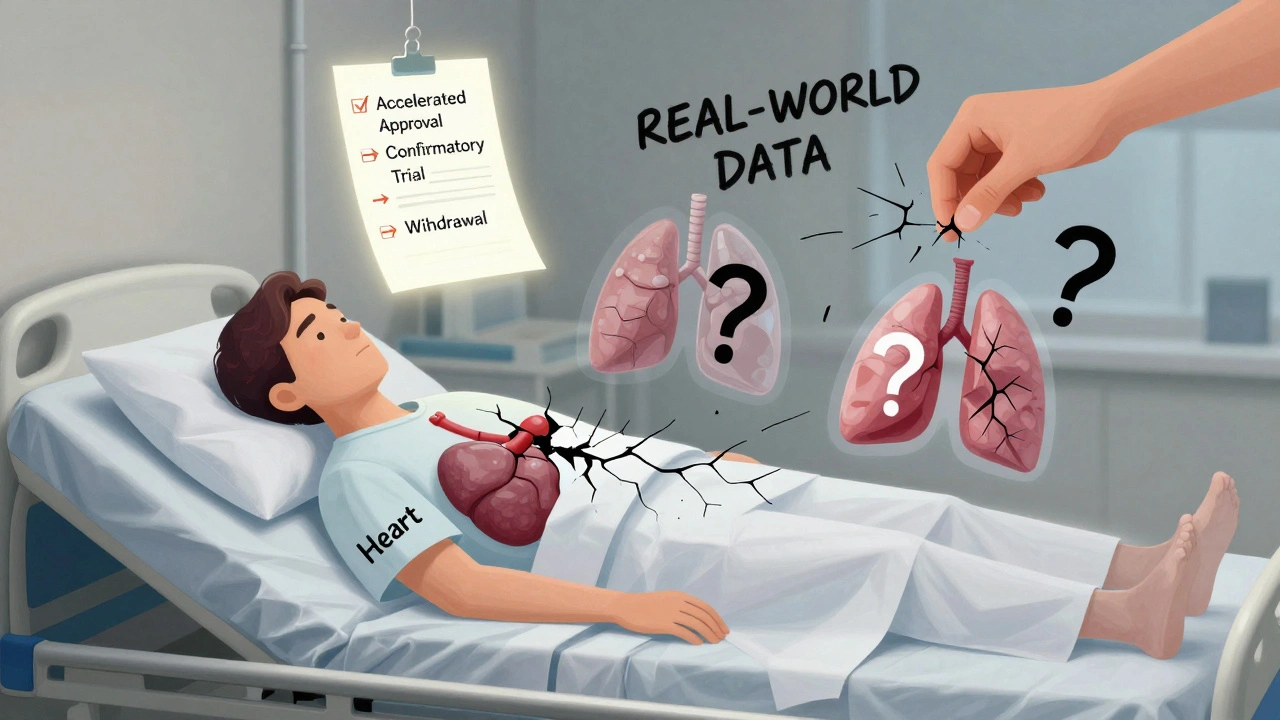
Is This Too Aggressive?
Some drug makers warn that faster withdrawals could scare off innovation. Companies developing treatments for rare diseases might hesitate if they fear a single failed trial could kill their product. The Biotechnology Innovation Organization (BIO) argues that “overly aggressive withdrawal procedures could discourage innovation.” But patient advocates push back. The Cancer Research Institute called the 2023 changes “a crucial step toward protecting patients.” The National Organization for Rare Disorders says the real test is “how quickly the FDA acts when confronted with definitive evidence of ineffectiveness.” The truth? We’ve spent decades letting patients take drugs that don’t work. The old system prioritized speed to market over safety after approval. The new one balances both.What You Should Do If Your Drug Is Withdrawn
If your medication disappears from the shelf:- Don’t stop cold turkey-contact your doctor. Some drugs need gradual tapering.
- Check the FDA’s Determination of Safety or Effectiveness list in the Federal Register. It’s public and updated monthly.
- Ask your pharmacist to confirm whether the withdrawal was for safety, effectiveness, or commercial reasons.
- Search patient forums like Smart Patients or Cancer Commons. Real stories help you understand what others faced.
Final Thoughts: A System That Finally Listens
Drug withdrawals aren’t failures of science-they’re failures of process. For too long, the FDA had the power to approve drugs fast but not to remove them fast enough. Patients paid the price. The 2023 reforms didn’t fix everything. But they fixed the biggest flaw: the delay. Now, if a drug doesn’t deliver, the system has a chance to act before the next patient is exposed. This isn’t about fear. It’s about trust. Patients deserve to know that when a drug is on the market, it’s because it works-and if it stops working, it won’t stay there for years.What’s the difference between a drug recall and a drug withdrawal?
A recall is usually temporary and happens when a specific batch of a drug has a problem-like contamination or mislabeling. The drug itself is still considered safe and effective. A withdrawal means the FDA or the company has decided the entire drug should no longer be sold because it’s unsafe or ineffective. Withdrawals are permanent unless the company reapplies for approval with new data.
Can a drug be withdrawn even if it’s still being sold by other companies?
Yes. If a brand-name drug is withdrawn for safety or effectiveness reasons, all generic versions of that drug are also pulled. The FDA’s Orange Book tracks which drugs can be used as reference products for generics. Once a brand is withdrawn, generics lose their legal basis to be sold-even if they’re made by a different company.
How do I know if a drug I’m taking has been withdrawn?
Check the FDA’s official list of drugs withdrawn for safety or effectiveness, published monthly in the Federal Register. Your pharmacist can also look up the drug in the Orange Book. If your prescription suddenly becomes unavailable and your doctor says it’s been pulled, ask for the official reason. Don’t rely on pharmacy notices alone-they’re not always updated in real time.
Why do some drugs get approved if they’re later proven ineffective?
The FDA sometimes approves drugs under “accelerated approval” based on early evidence-like tumor shrinkage-that’s believed to predict clinical benefit. But that’s not always true. The company must later prove the drug improves survival or quality of life. If they don’t, the drug gets pulled. This system was designed to get life-saving drugs to patients faster, but without strong follow-up, it risks exposing people to ineffective treatments.
How long does it take for a withdrawn drug to disappear from pharmacies?
Once the FDA announces a withdrawal, manufacturers have a short window-usually a few weeks-to stop distribution. Pharmacies and hospitals then have to clear existing stock. But because prescriptions can be refilled until inventory runs out, some patients may still get the drug for months after the official withdrawal date. That’s why it’s critical to check with your doctor, not just your pharmacy.
Katherine Liu-Bevan
December 11, 2025 AT 23:39The FDA’s 2023 reforms are long overdue. For years, patients were left in the dark while drugs with no proven benefit stayed on shelves. The 46-month delay between evidence and action was indefensible. Now, with mandatory timelines and a dedicated team, the system finally has teeth. This isn’t about punishing pharma-it’s about protecting people who trusted the system to keep them safe.
It’s also worth noting how many doctors and pharmacists were flying blind. The Orange Book wasn’t user-friendly, and many didn’t know how to interpret withdrawal notices. Standardizing communication and requiring clearer labeling would help even more.
The real win? Real-world data from Flatiron Health. Waiting for randomized trials in rare diseases takes too long. If thousands of patients show no improvement in real life, that’s data-and it should be enough to act.
This isn’t perfection, but it’s progress. And in drug safety, progress is everything.
Aileen Ferris
December 13, 2025 AT 10:49so like… the fda just now figured out that drugs should work before people take them?? wow. who knew. 10/10 article, i’m crying tears of joy. 🤡
Courtney Blake
December 14, 2025 AT 02:30Of course the FDA waited until after the election to do something meaningful. This isn’t about safety-it’s about optics. They knew they’d get applause for pulling bad drugs, so they finally fixed a broken system they could’ve fixed 15 years ago. Classic political theater. Meanwhile, the same agencies that let Makena stay on the market for 11 years are now patting themselves on the back.
And don’t get me started on how they’ll use this power to silence small biotechs. Next thing you know, they’ll pull every drug that doesn’t hit a 90% success rate in Phase 3. Innovation doesn’t survive under micromanagement.
They call this progress? It’s just another power grab disguised as patient care.
Kristi Pope
December 14, 2025 AT 15:45Hey, I just wanted to say thank you for writing this. I’ve been on a drug that got pulled last year and it was terrifying-not because the medicine was dangerous, but because no one told me why it vanished. I felt abandoned.
Now I know it was because the trial showed it didn’t work. That’s actually kind of comforting. I wish more people understood the difference between a recall and a withdrawal. I’ve seen so many panic posts online thinking their meds were contaminated.
It’s okay to be scared. But it’s also okay to trust that change is possible. The system was broken, but now it’s learning. And that matters.
For anyone else going through this: you’re not alone. Reach out. Ask questions. Your voice helps push these reforms forward.
Ben Greening
December 16, 2025 AT 01:39It’s interesting to see how the U.S. has now aligned more closely with European regulatory frameworks. The conditional approval model has been in place in the EU for decades, and while it’s not flawless, it does enforce accountability. The key difference here is enforcement: previously, PMRs were treated as suggestions. Now, they’re binding. That’s the real shift.
One area still underdeveloped is global coordination. If a drug is withdrawn in the U.S., it should trigger automatic review in Canada and the EU. Right now, that doesn’t happen consistently. Harmonization would prevent patients from being exposed to withdrawn drugs simply because they live in a country with slower regulatory updates.
Frank Nouwens
December 17, 2025 AT 22:00Thank you for this comprehensive overview. The distinction between voluntary and mandatory withdrawals is often misunderstood. Many assume a drug’s disappearance means it’s dangerous, when in fact, it may simply be unprofitable. The FDA’s clarification in 2018 was a step in the right direction, but public awareness remains low.
It’s also worth noting that the accelerated approval pathway was never meant to be a backdoor to market. It was designed for life-threatening conditions with no alternatives. When applied to conditions like premature birth prevention, the risk-benefit calculus becomes far more complex-and the consequences of failure more widespread.
Still, the new 180-day deadline is a meaningful improvement. I hope it’s applied consistently across all therapeutic areas.
Sarah Clifford
December 19, 2025 AT 09:12so like… why are we even still using drugs? why not just eat kale and pray? 🙃
Michelle Edwards
December 19, 2025 AT 14:53I’m a nurse in oncology. We had a patient on a drug that got pulled last year. She was so confused. Her oncologist said, ‘It’s still the standard.’ We didn’t know it was withdrawn until we checked the FDA site ourselves. It took us three days to switch her.
Patients don’t know how to ask. They trust us. We have to be better at checking the updates ourselves-not just relying on pharmacy alerts.
Thank you for highlighting the human side of this. It’s not just policy. It’s someone’s mom, their brother, their friend. We owe them more than silence.
Regan Mears
December 20, 2025 AT 10:37I’ve been following this issue for years-especially after my sister was on a drug that got pulled after 14 months. She had no idea it didn’t work. The doctor never mentioned it. The pharmacist didn’t warn her. We only found out because we stumbled on a Reddit thread.
That’s the real failure: communication. The FDA’s new timeline is good, but it means nothing if patients and providers aren’t informed in real time. I’d love to see an automated alert system tied to EHRs-like a flag that pops up when a prescribed drug has been withdrawn.
Also, let’s stop pretending that “accelerated approval” is always noble. Sometimes it’s just a way to get drugs to market before the science is ready. We need to stop glorifying speed over safety. Patients aren’t guinea pigs.
And yes, I know some companies will be scared. But if your drug doesn’t work, you shouldn’t be selling it. Period.
Rebecca Dong
December 22, 2025 AT 08:16EVERYTHING IS A LIE. The FDA is owned by Big Pharma. The ‘withdrawals’ are just PR moves to make people think they’re doing something. Meanwhile, they’re quietly approving new drugs with the same flaws-just under different names. You think Makena was the only one? There are 30 more out there. They’re just waiting for the next ‘emergency’ to bury the evidence again. Wake up. This isn’t reform-it’s a distraction.
Katherine Liu-Bevan
December 22, 2025 AT 10:51Regan Mears raises a critical point: the system needs real-time integration with electronic health records. Right now, pharmacists are still manually checking the FDA’s monthly Federal Register updates. That’s 20th-century thinking. A simple API alert tied to prescription systems could prevent thousands of unnecessary exposures.
And yes-this isn’t just about patients. It’s about providers who are being set up to fail. If we’re going to demand accountability from pharma, we must also equip clinicians with the tools to act on that accountability.
Let’s not stop at faster withdrawals. Let’s build a system that prevents the problem in the first place.