
It is 2 a.m. Your child has a fever, you are tired, and the bottle of medicine in your hand looks like it was written in code. You see numbers for age, numbers for weight, milliliters, teaspoons, and warnings that seem to contradict each other. Getting this wrong can lead to an emergency room visit-medication errors cause about 1.4 million ER visits for children every year in the United States alone.
The good news? The rules have gotten much clearer. Since the FDA updated labeling standards in 2011 and again in recent years, reading these labels is less about guessing and more about following a simple, safe process. This guide will walk you through exactly how to decode those labels so you can treat your child safely at home.
Why Weight Matters More Than Age
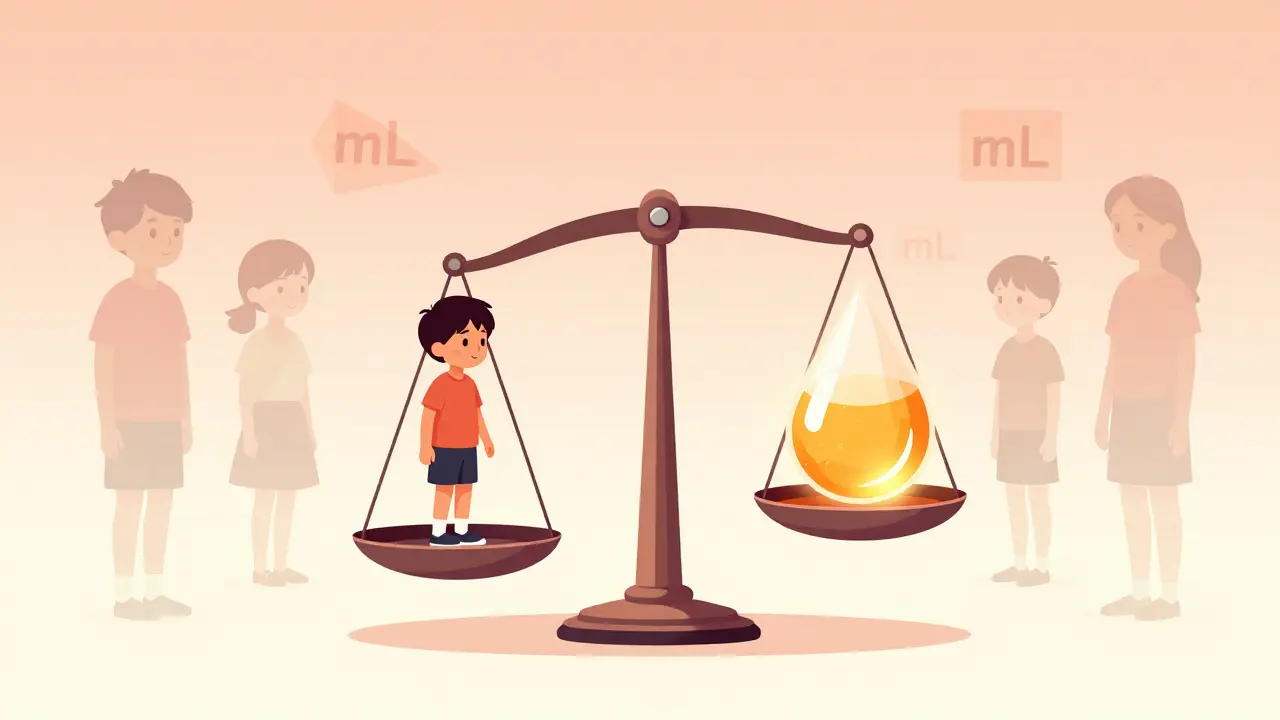
Here is the most important rule to remember: weight determines the dose, not age. While labels show both, age is just a rough estimate. A tall, heavy five-year-old needs more medicine than a small, light five-year-old. Using age alone can lead to underdosing (which doesn't help) or overdosing (which is dangerous) in nearly one-quarter of cases.
If you know your child's current weight, use the weight column on the label. If you do not know their exact weight, you can use the age column as a backup, but weigh them at their next doctor's appointment to get accurate numbers for future doses. For infants under two years old, always check with your pediatrician before giving any medication, especially if they are under three months old.
| Child's Weight | Acetaminophen (160mg/5mL) | Ibuprofen (100mg/5mL) |
|---|---|---|
| 12-17 lbs (5.5-7.5 kg) | 1.25 mL | Do not use |
| 18-23 lbs (8-10.5 kg) | 2.5 mL | 2.5 mL |
| 24-35 lbs (11-16 kg) | 5 mL | 5 mL |
| 36-47 lbs (16.5-21.5 kg) | 7.5 mL | 7.5 mL |
| 48-59 lbs (22-27 kg) | 10 mL | 10 mL |
| 60-71 lbs (27.5-32 kg) | 10 mL | 10 mL |
Note: These are general guidelines based on standard concentrations. Always read the specific label on your product, as formulations can vary slightly.
Decoding the Units: Milliliters vs. Teaspoons
This is where most mistakes happen. In 2011, the FDA required all liquid children's medications to be labeled exclusively in milliliters (mL). You might still see "tsp" (teaspoon) or "tbsp" (tablespoon) on older bottles or in instructions, but modern medical devices measure in mL.
Here is the conversion you need to know:
- 1 teaspoon (tsp) equals approximately 5 mL.
- 1 tablespoon (tbsp) equals approximately 15 mL.
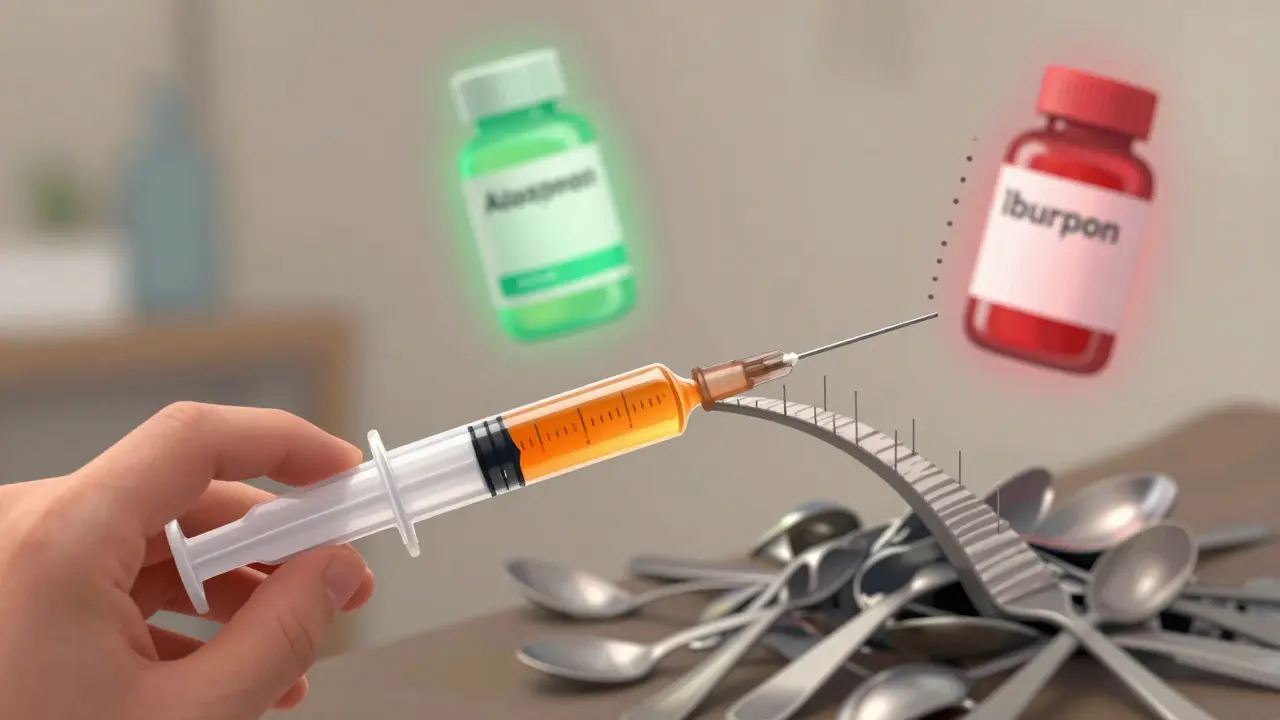
Never use a kitchen spoon. A standard household teaspoon holds about 4.93 mL, but they vary wildly. One parent reported using a kitchen spoon that held 7 mL instead of 5 mL, accidentally giving their child 40% more medicine than intended. Kitchen spoons are not precise medical tools. Use only the dosing syringe, oral syringe, or marked cup that comes with the medicine.
Acetaminophen vs. Ibuprofen: Key Differences
Most parents keep two main medicines on hand: acetaminophen (often known by brand names like Tylenol) and ibuprofen (Advil or Motrin). They work differently and have different safety rules.
Acetaminophen is a pain reliever and fever reducer that is gentle on the stomach but hard on the liver if overdosed. It can be given every 4 hours as needed, but you must never exceed 5 doses in 24 hours. It is generally safe for infants over 2 months old with a doctor's approval.
Ibuprofen is a nonsteroidal anti-inflammatory drug (NSAID) that reduces inflammation, pain, and fever. It can be given every 6 to 8 hours. Crucially, ibuprofen should never be given to children under 6 months old unless specifically directed by a doctor. It can irritate the stomach lining, so give it with food or milk if possible.
A common mistake is mixing these up or doubling doses because one didn't work fast enough. Do not alternate them without explicit instruction from your pediatrician, as it is easy to lose track of timing and overdose.
Critical Warnings to Look For
Labels include bold warnings for a reason. Scan for these specific phrases before administering any dose:
- "Do not use for children under [age]": For ibuprofen, this is usually 6 months. For some cough and cold medicines, it may be 2 years or older.
- "Liver Warning": Acetaminophen products now require bold liver warnings. Overdose is the leading cause of acute liver failure in children. If you give acetaminophen, do not give any other medicine containing acetaminophen (like multi-symptom cold remedies).
- "Concentrated": Some infant drops are highly concentrated (e.g., 80 mg per 0.8 mL). These look similar to regular liquid medicine but require tiny amounts. Confusing concentrated drops with regular liquid is a major cause of accidental overdose. Check the concentration strength (mg/mL) on the front label.
Tools You Should Have on Hand
To read and follow labels correctly, you need the right equipment. Throw away the plastic cup that came with a bottle three years ago if it doesn't have clear mL markings. Instead, invest in:
- An Oral Syringe: This is the gold standard. It allows for precise measurement down to 0.2 mL increments. Look for ones with clear black lines and numbers on the barrel, not just the plunger.
- A Digital Baby Scale: Knowing your child's exact weight in pounds or kilograms removes the guesswork. Weigh them once a month during growth spurts.
- A Notebook or App: Write down the time and amount of every dose. This prevents double-dosing when you forget if you gave medicine an hour ago or four hours ago.
Common Pitfalls to Avoid
Even experienced parents make mistakes. Here are the top three errors to watch out for:
1. Mixing Up Formulations
Children's acetaminophen comes in different strengths. "Infant Drops" are often more concentrated than "Children's Liquid." Always check the "Active Ingredient" box. If it says 160 mg per 5 mL, that is the standard concentration. If it says 80 mg per 0.8 mL, that is concentrated. Using the same volume for both results in a massive overdose.
2. Ignoring Multi-Symptom Meds
Cold and flu medicines often contain acetaminophen or ibuprofen along with decongestants. If you give a fever reducer AND a cold medicine, you might be giving double the dose of acetaminophen. Read the "Drug Facts" panel carefully. If you only need to treat a fever, stick to single-ingredient medicines.
3. Rounding Up Weight
If your child weighs 23.5 lbs, and the chart has categories for 18-23 lbs and 24-35 lbs, round down to the lower category (18-23 lbs). It is safer to slightly underdose than to risk an overdose. When in doubt, call your pharmacist or pediatrician.
When to Call the Doctor
Meditation labels are guides, not substitutes for professional advice. Call your healthcare provider if:
- Your child is under 3 months old and has a fever.
- The fever lasts more than 2 days (for children under 2) or 3 days (for older children).
- Your child shows signs of dehydration, rash, or difficulty breathing.
- You suspect an overdose. Contact Poison Control immediately at 1-800-222-1222 in the US or your local emergency number.
Can I use a kitchen spoon to measure children's medicine?
No, you should never use a kitchen spoon. Household teaspoons vary significantly in size, holding anywhere from 4 mL to 7 mL. This variability can lead to underdosing or dangerous overdosing. Always use the oral syringe or dosing cup provided with the medication, which is calibrated in milliliters (mL).
Is it safe to alternate acetaminophen and ibuprofen?
Alternating these medications is generally not recommended unless specifically instructed by your pediatrician. It increases the risk of dosing errors and confusion regarding timing. Stick to one medication at a time, following the interval guidelines on the label (every 4-6 hours for acetaminophen, every 6-8 hours for ibuprofen).
What is the difference between infant drops and children's liquid?
The primary difference is concentration. Infant drops are often more concentrated, meaning a smaller volume contains the same amount of active ingredient as a larger volume of children's liquid. For example, acetaminophen infant drops might be 80 mg per 0.8 mL, while children's liquid is 160 mg per 5 mL. Always check the concentration on the label to avoid accidental overdose.
How do I know if my child's weight falls between dosing categories?
If your child's weight falls between two categories on the dosing chart, always round down to the lower weight category. For example, if your child weighs 23.5 lbs and the categories are 18-23 lbs and 24-35 lbs, use the dose for 18-23 lbs. It is safer to slightly underdose than to risk an overdose.
Can I give ibuprofen to a baby under 6 months old?
No, ibuprofen should not be given to infants under 6 months of age unless explicitly directed by a pediatrician. Acetaminophen is typically the preferred option for younger infants, but you should always consult your doctor before giving any medication to a baby under 2 years old, especially those under 3 months.