
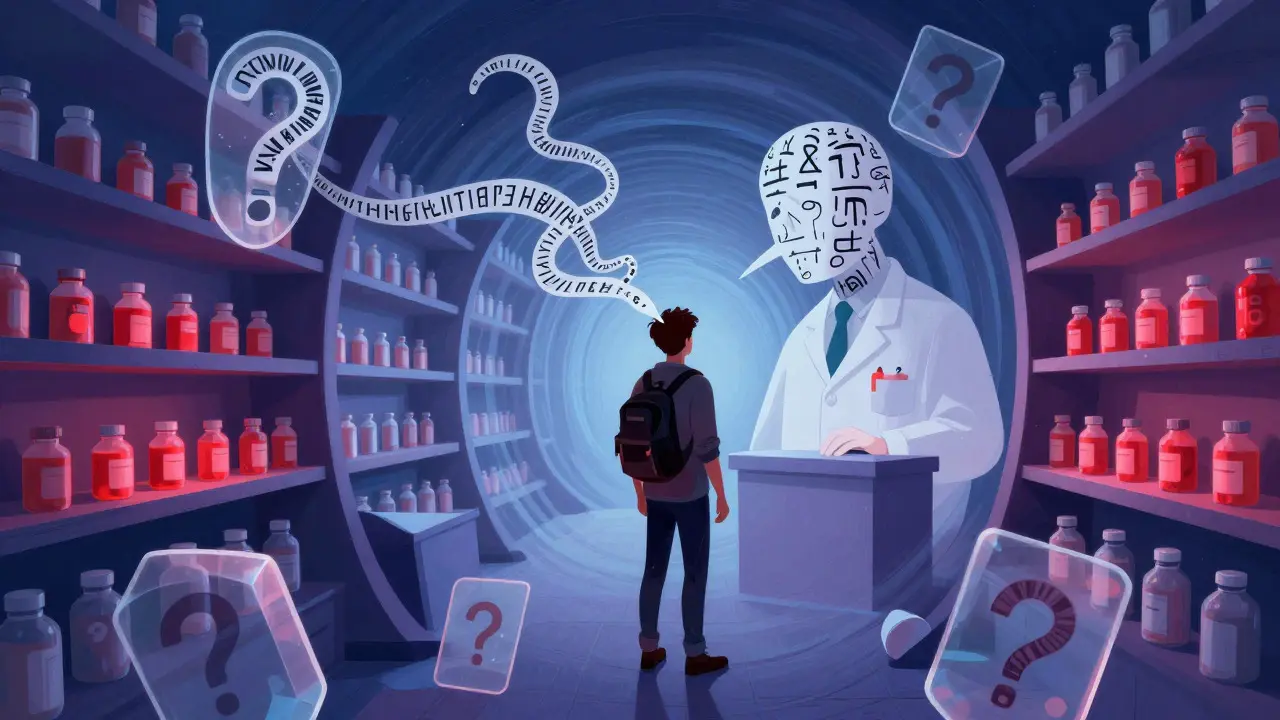
You are standing in a pharmacy in Paris, Tokyo, or Mexico City. You need your daily heart medication, but the pharmacist is speaking a language you don’t understand, and the box on the shelf has a name you’ve never seen. This isn't just an inconvenience; it is a potential medical emergency. According to data from First Databank, medication non-adherence costs the healthcare system billions annually, largely because patients simply do not understand what they are taking or how to take it safely when language barriers arise.
Traveling with prescription drugs requires more than just packing them in your carry-on. It demands a strategy for translating names, verifying doses, and navigating local regulations. Here is exactly how to handle medication translation for foreign pharmacies to keep yourself safe.
Understanding the Brand vs. Generic Name Problem
The biggest hurdle you will face is that drugs have different names in different countries. A manufacturer can sell the same active ingredient under various brand names globally. For example, the pain reliever known as Advil in the United States is called Ibuprofène in France and Abfen in Poland. If you walk into a French pharmacy asking for "Advil," the pharmacist might be confused. If you ask for Ibuprofène, they will know exactly what you need.
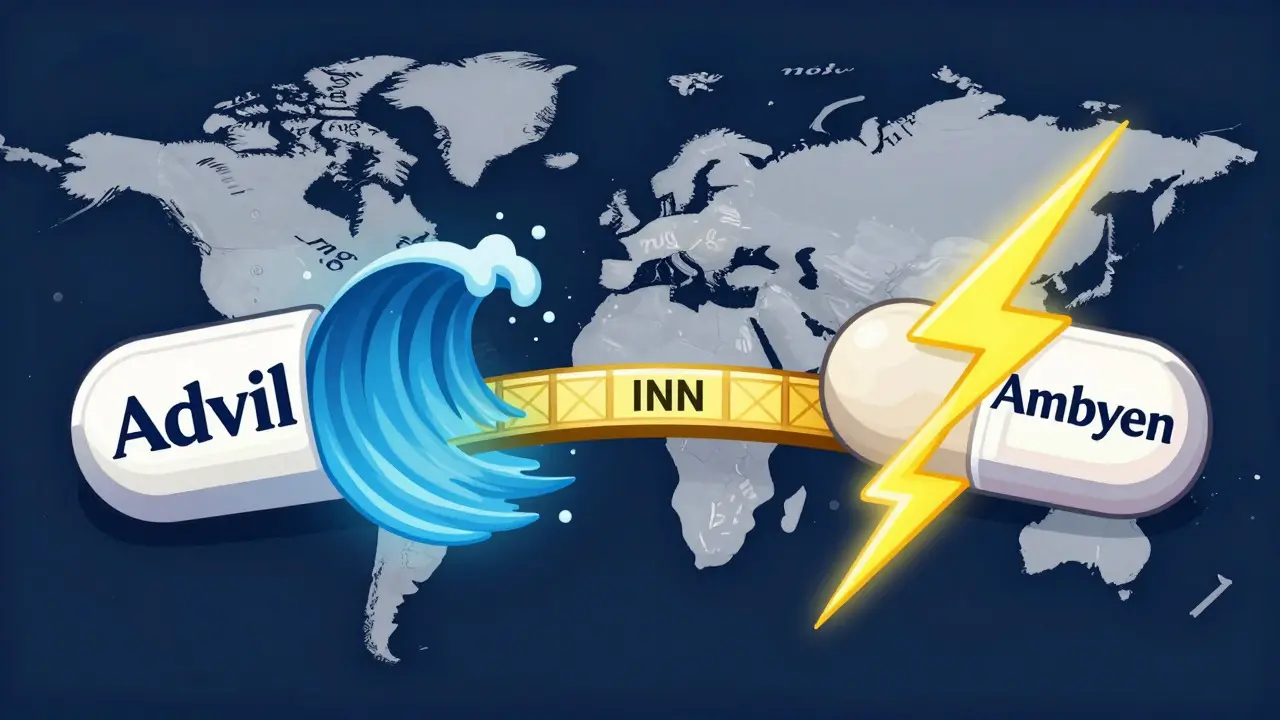
This distinction becomes dangerous when brand names sound similar but treat completely different conditions. Consider the case of Ambyen, a medication used for irregular heartbeat in Great Britain, versus Ambien, a popular sleep aid in the United States. Confusing these two due to a lack of precise translation or verification could lead to severe health consequences. Always rely on the generic name, also known as the International Nonproprietary Name (INN), established by the World Health Organization. The INN provides a standardized identifier for the active substance regardless of the country or brand.
| Active Ingredient (Generic) | US Brand Example | European/Other Brand Example | Primary Use |
|---|---|---|---|
| Ibuprofen | Advil, Motrin | Ibuprofène (France), Nurofen (UK/EU) | Pain relief, inflammation |
| Omeprazole | Prilosec | Losec (Sweden/Globally), Omeprazol (Germany) | Acid reflux, ulcers |
| Metformin | Glucophage | Diabex (Japan), Formet (India) | Type 2 Diabetes management |
| Atorvastatin | Lipitor | Tahor (EU), Atorva (India) | Cholesterol reduction |
Decoding Dosage and Measurement Systems
Translating the name is only half the battle. You must also translate the dose. Medical abbreviations and measurement systems vary significantly. In many European countries, milligrams are written as "mg" while others might use different shorthand. More critically, decimal points and commas can be swapped. In the US, we write 1.5 mg. In parts of Europe and South America, this might be written as 1,5 mg. Misreading a comma as a period can result in a tenfold dosage error.
Pill sizes and strengths are also labeled differently. A tablet that is 500 mg in one country might be sold as 0.5 g in another. While mathematically identical, seeing "1g" instead of "1000mg" on a foreign label can cause panic or confusion about strength. When showing your prescription to a foreign pharmacist, ensure the document clearly states the active ingredient, the exact strength per pill, and the frequency of administration. Avoid vague terms like "take as needed" without specifying limits, as cultural interpretations of "as needed" vary.
Essential Documents to Carry Before You Travel
Never rely on memory or a photo of a bottle alone. Prepare specific documents at least two weeks before departure. These documents serve as your bridge between your home doctor and the foreign pharmacist.
- A Letter from Your Doctor: This should be on official letterhead, signed, and dated. It must list your diagnosis, the generic name of each medication, the dosage, and the frequency. Include your doctor’s contact information in case the foreign pharmacist needs to verify details.
- A Translation of the Prescription: Have your doctor’s letter translated into the local language of your destination. Professional medical translation services are preferred over general AI tools for this step. Services like RxTran or Stepes offer certified translations that adhere to pharmaceutical terminology standards, reducing the risk of misinterpretation.
- A Copy of Your Original Prescription: Bring the actual script or a clear photocopy. Some countries require the original signature for controlled substances.
- An Inventory List: Write down every medication you are carrying, including over-the-counter drugs and supplements. Note the ingredients to avoid accidental double-dosing if you buy local equivalents.
Navigating Local Pharmacy Regulations
Not all medications available in your home country are legal or accessible abroad. Some drugs considered over-the-counter in the US, such as pseudoephedrine (used for congestion), may require a prescription in other nations or be banned entirely. Conversely, some countries have stricter controls on antidepressants, ADHD medications, and painkillers.
Before you leave, check the regulatory status of your medications in your destination country. The U.S. Department of State often provides country-specific health advice. In places like Dubai, where hospitals serve patients from dozens of countries, pharmacists are accustomed to foreign prescriptions, but they still require proof of identity and a clear description of the drug. In contrast, rural pharmacies in smaller towns may have limited stock and less experience with international brands. Establishing a relationship with a certified translation service that offers 24/7 phone interpreting can provide immediate clarification if a local pharmacist questions your documentation.
Using Technology Wisely: Apps and Databases
Technology can be a powerful ally, but it has limitations. Apps like Drugs.com/international allow you to search for medication equivalents by country. This is useful for quick checks, but always cross-reference with a professional source. AI translation tools like Google Translate are improving, but they lack the pharmaceutical precision required for safety. As noted by experts at Johns Hopkins Hospital, misinterpreting a single dosage instruction due to poor translation can lead to adverse reactions with high mortality rates in vulnerable populations.
For critical translations, use specialized platforms. First Databank and RxTran integrate with pharmacy management systems to provide accurate translations of Patient Instructions (SIGs) and Warning Labels in over 30 languages. While these enterprise solutions are primarily for pharmacies, understanding their existence highlights the complexity of the task. For travelers, using a reputable medical dictionary app or consulting a travel medicine clinic for pre-trip translation is safer than relying on real-time AI interpretation at the counter.
What to Do When You Arrive
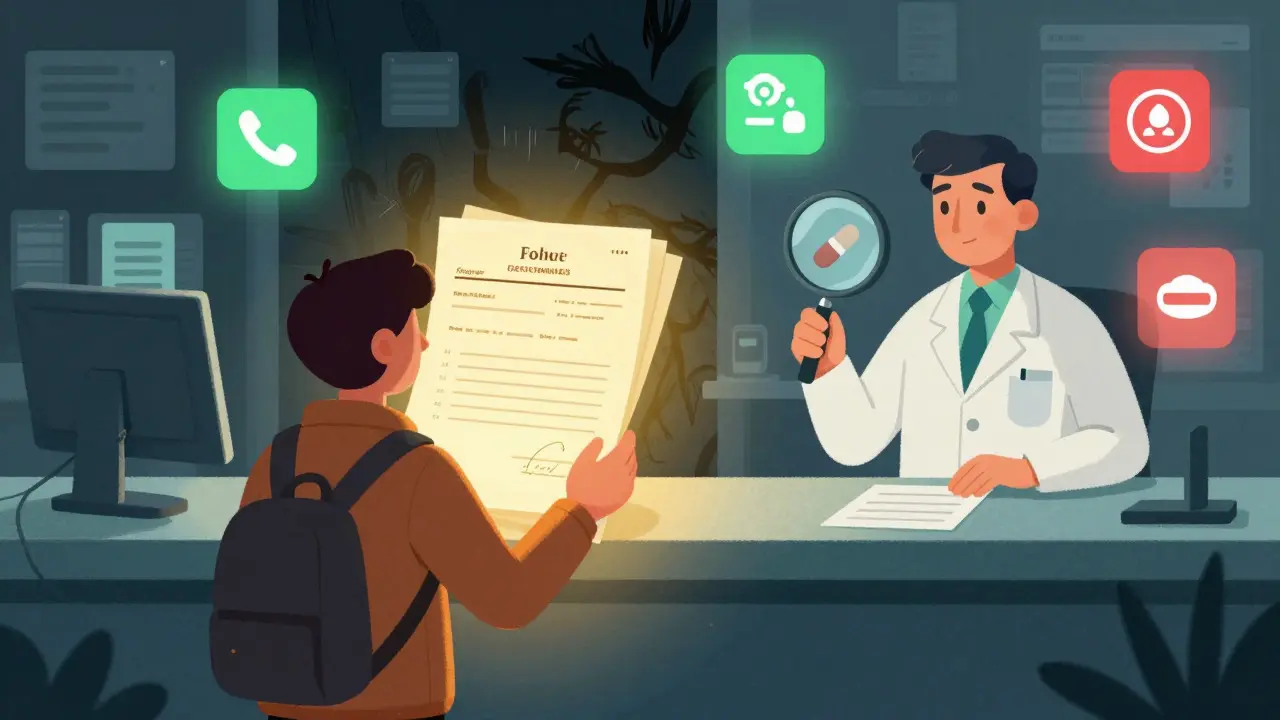
When you enter a foreign pharmacy, stay calm and organized. Present your documents in this order: your ID, your doctor’s letter (translated), and your original prescription. Point to the generic name on the letter and then to the box on the shelf. Ask the pharmacist to confirm the active ingredient and the dose aloud. If they hesitate or look confused, do not force the sale. Seek another pharmacy or contact your translation service for remote assistance.
If you cannot find an exact equivalent, ask the pharmacist for a therapeutic alternative with the same active ingredient. Ensure you understand the new brand name and any differences in dosing schedules. Keep all packaging and leaflets until you return home, as they may contain important safety information in the local language that you can translate later for future reference.
Common Pitfalls to Avoid
Many travelers make the mistake of assuming that similar-looking pills are the same. Never guess based on color or shape. Packaging designs change frequently, and manufacturers often reuse colors for different drugs. Another common error is ignoring expiration dates. Heat and humidity during travel can degrade medications faster than expected. Store your meds in a cool, dry place, and check expiration dates before you go.
Finally, do not split your medications. Keep them in their original containers with labels intact. Loose pills in ziplock bags raise red flags for customs officials and pharmacists alike, who may suspect illicit substances. Transparency is key to smooth transactions and personal safety.
Can I use Google Translate for my prescription?
It is risky. While Google Translate can help with basic words, it often fails with complex medical terminology, dosage abbreviations, and context. A mistranslated dosage instruction can be dangerous. For critical medications, use a certified medical translator or a service like RxTran that specializes in pharmaceutical accuracy.
Do I need a translation for over-the-counter medicines?
Ideally, yes. Even OTC drugs can interact with prescription medications or have different strengths abroad. Having a translated list of ingredients helps the pharmacist advise you on safe alternatives and prevents accidental overdosing if you buy multiple products with the same active ingredient.
What if my medication is banned in the country I am visiting?
Check restrictions before you travel. If your medication is banned, consult your doctor for a temporary alternative that is legal in the destination country. Carry a letter from your doctor explaining your condition and why the medication was necessary, which may help with customs officials if you have a small supply for personal use.
How far in advance should I prepare my translations?
At least two weeks before departure. This gives you time to get a doctor’s letter, arrange professional translation if needed, and research local pharmacy laws. Rushing at the last minute increases the chance of errors and stress.
Is it safe to buy medication from street vendors or unofficial shops?
No. Stick to licensed pharmacies. Unofficial sources may sell counterfeit drugs with incorrect dosages or inactive ingredients. Licensed pharmacies have trained staff who can verify your prescription and provide genuine medications with proper labeling.
Morikeoluwa Ayodeji
August 10, 2026 AT 13:26Great info here but let me add something from my experience in Nigeria and traveling around Africa. The generic name is king, absolutely king. I always carry a printed list of the INN names because brand names change every week in some places. Also, don't forget that humidity destroys pills faster than you think if they are not in blister packs. Keep them dry!
Dennis Leeftink
August 12, 2026 AT 01:34Most people just dont read labels anyway so this is useless to them. They walk in asking for ibuprofen like its magic beans. If you cant even find the pharmacy you deserve to get sick. Simple as that.
Traci Bobbitt
August 13, 2026 AT 20:15I mean yeah it's good advice but honestly? Just use Google Translate on your phone. It works fine for basic stuff. You don't need a whole letter from your doctor unless you're bringing like ten kilos of opioids or something. People make it way too complicated. I went to Spain last year and just showed the bottle and pointed. Done.
Michelle Alavaski
August 15, 2026 AT 01:16One must consider that pharmaceutical corporations deliberately obfuscate nomenclature to prevent cross-border price arbitrage. The confusion is manufactured. They want you dependent on their specific brand ecosystem. Do not trust the 'generic' equivalence tables provided by industry-funded databases. Verify with independent chemical analysis if possible, though unlikely for the average traveler. The system is rigged against the consumer.
Veronica Agbanyim
August 15, 2026 AT 10:57It is a moral failing of our society when we expect individuals to navigate complex medical bureaucracies while abroad without proper support systems. We should be advocating for universal health coverage that includes travel provisions rather than placing the burden on the patient to become a translation expert. But until then, yes, carry your documents. It is the least you can do for your own safety and the sanity of the local pharmacist who is likely overworked and underpaid.
jackie healey
August 15, 2026 AT 20:31Oh my goodness! This is such an important topic!!! I cannot stress enough how vital it is to have that doctor's letter!!! I once saw someone try to buy insulin in Italy without any documentation and they were turned away at three different pharmacies!!! Please please please get your prescription translated professionally!!! It saves so much stress!!!
Anna Salamon
August 16, 2026 AT 19:09When I travel to Asia, I always make sure to check the local regulations beforehand. In Japan, for example, you need to declare certain medications upon entry. It is not just about the pharmacy counter; it is about customs too. Having a clear inventory list helps avoid any awkward situations with immigration officers. Be prepared and respectful of local laws.
Sansaray Jones
August 18, 2026 AT 00:53i usually just take photos of the bottles before i leave. seems to work most of the time. no need for fancy letters unless you are carrying controlled substances. keep it simple.
Lilith Stepanyan
August 20, 2026 AT 00:02The article ignores the elephant in the room which is that many foreign pharmacies are actually fronts for counterfeit operations especially in tourist areas. You think you are getting real metformin but you are getting chalk and dye. The FDA warnings are buried in small print. Most travelers are naive sheep walking into slaughterhouses. Check the packaging seals carefully or better yet bring your own supply regardless of what the embassy says.
Josh Atkinson
August 20, 2026 AT 19:40Look, I've been traveling for twenty years and let me tell you something :D The key is not just the paper but the attitude. You walk in there looking confused and weak and they will rip you off or give you garbage. Stand tall. Speak clearly. Show the generic name. If the pharmacist looks bored or dismissive, leave immediately. There is always another pharmacy down the street. Don't be afraid to shop around. Knowledge is power and confidence is currency. Trust me on this one. :)