
Hair Loss Recovery Calculator
It’s not just stress or genetics that can make your hair thin out. Sometimes, the culprit is something you’re taking to get better - a pill, a shot, or an IV. Medication-induced hair loss is more common than most people realize, and it’s not always permanent. If you’ve noticed more hair in your brush, on your pillow, or in the shower drain after starting a new drug, you’re not alone. About 1 in 10 people on certain medications experience this side effect. The good news? In most cases, your hair will grow back - if you know what to do and when to do it.
How Medications Make Your Hair Fall Out
Your hair doesn’t just stop growing overnight. It goes through cycles: growth, rest, and shedding. Medications can throw this cycle off in two main ways - and each one looks and acts differently.
The first, and most common, is called telogen effluvium. This happens when a drug tricks your hair follicles into skipping the growth phase and jumping straight into resting. Think of it like hitting pause on your hair. You won’t notice anything for a few months - then suddenly, you’re losing way more hair than usual. This usually starts 2 to 4 months after you begin the medication. It’s the reason people on antidepressants, blood pressure pills, or birth control sometimes wake up one day with a thinner ponytail.
The second type is anagen effluvium. This one is more dramatic. It happens during the active growth phase, and it’s mostly seen with chemotherapy drugs. Within days of starting treatment, hair starts falling out in clumps. It’s not just scalp hair - eyebrows, eyelashes, and body hair can go too. About 65% of people on chemo experience this. But here’s the twist: because the follicles aren’t destroyed, hair often comes back faster than with telogen effluvium.
Which Medications Are Most Likely to Cause It?
Not all drugs cause hair loss. But some are known offenders. Here’s what the data shows:
- Antidepressants - like sertraline (Zoloft) or fluoxetine (Prozac) - affect 5% to 7% of users. Reddit users report that after stopping, hair usually starts coming back in 7 months on average.
- Blood pressure meds - beta-blockers (like metoprolol) and ACE inhibitors (like lisinopril) - can trigger telogen effluvium in a small number of people.
- Birth control pills and hormone therapy - especially if they have a strong androgen effect - can cause shedding in sensitive individuals.
- Retinoids - including acne pills like isotretinoin - affect around 18% of users. Hair loss here can be stubborn and slow to reverse.
- Methotrexate and leflunomide - used for rheumatoid arthritis - cause hair thinning in 1% to 10% of patients. Taking folic acid alongside can reduce the severity by up to 25%.
- Chemotherapy drugs - taxanes, anthracyclines - cause the most severe loss. But even here, there are tools to help.
If you started a new drug within the last 7 months and noticed hair loss, that’s your prime suspect. Dermatologists call this the “7-month rule.”
What You Can Do - Step by Step
First, don’t panic. And don’t quit your medication cold turkey. Talk to your doctor. But here’s what actually works:
1. Wait - Seriously
For telogen effluvium, the body fixes itself. About 85% of cases resolve on their own within 6 months after stopping the drug. That’s why dermatologists recommend waiting at least 3 months before trying anything else. Jumping into treatments too early is a waste of time and money.
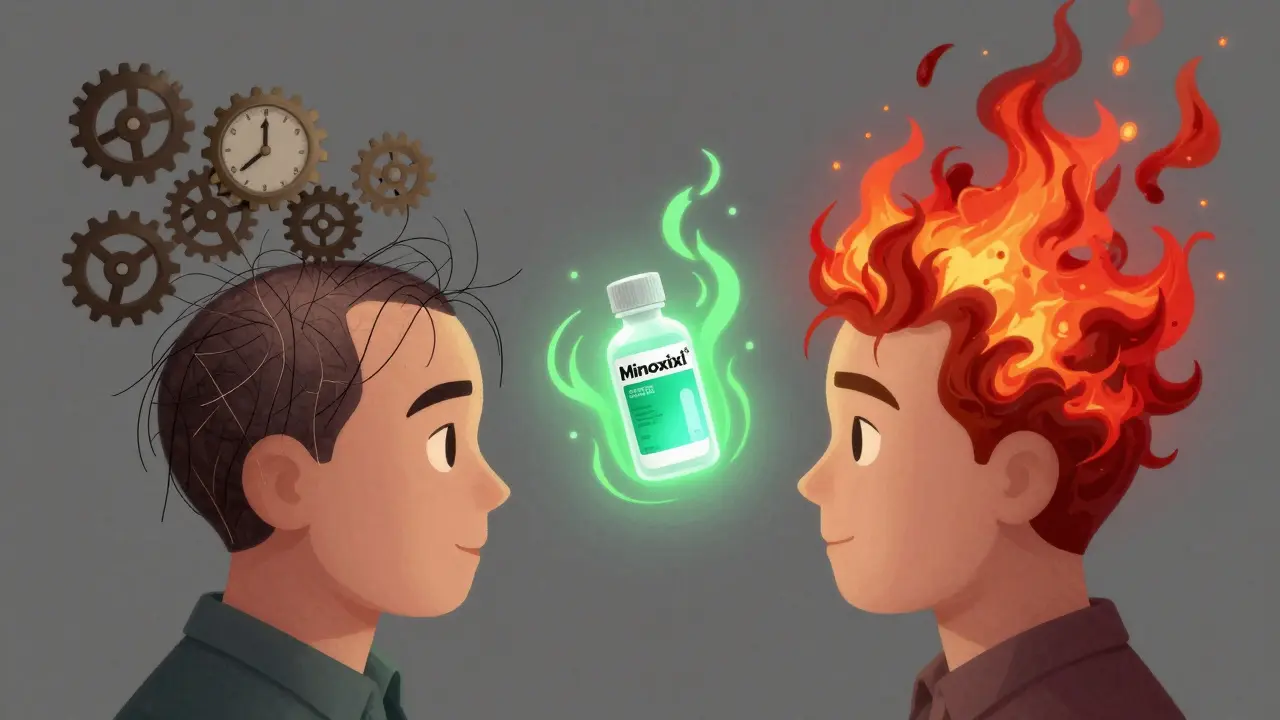
2. Try Minoxidil (Rogaine)
This is the most proven over-the-counter fix. The 5% solution (for men) or 2% (for women) applied twice daily can improve hair density by 40% to 50% after 6 months. But here’s the catch: 89% of users experience more shedding in the first 2 to 8 weeks. That’s not a sign it’s not working - it’s part of the process. Your hair is clearing out the weak ones so new ones can grow. Stick with it. Most people who quit before month 4 never see results.
3. Consider Finasteride or Dutasteride
If your hair loss has an androgen component - meaning it looks like male or female pattern thinning - finasteride (Propecia) can help. It’s 60% to 65% effective at stopping loss and promoting regrowth. Dutasteride (Avodart) works even better - 70% to 75% - but it comes with more side effects. Both are prescription-only. Talk to a dermatologist before starting.
4. Try Low-Level Laser Therapy
Devices like the iRestore Elite 780 or Capillus82 are FDA-cleared and backed by real studies. They don’t work overnight. You need daily 20- to 30-minute sessions for at least 26 weeks. But in clinical trials, users saw 65% to 90% improvement in hair density. It’s not magic, but it’s science.
5. For Chemo Patients - Try Scalp Cooling
If you’re on chemotherapy, ask your oncologist about scalp cooling systems like DigniCap. Used before, during, and after infusion, it cuts hair loss by 50% to 65%. It’s uncomfortable - patients report 7.2/10 pain levels - but many say it’s worth it. The FDA approved it in 2015, and over 1,400 patients have shown success with it.
Supplements That Might Help
Don’t waste money on every product you see on Amazon. But some nutrients matter:
- Biotin - 5,000 mcg daily - supports keratin production.
- Zinc - 15 mg daily - helps repair follicles.
- Iron - only if your ferritin is below 70 ng/mL. Low iron is a hidden cause of shedding.
- Marine collagen, ashwagandha, curcumin - found in supplements like Nutrafol - show improvement in 63% of users after 6 months, according to Amazon reviews from over 3,400 people.
These aren’t cures. But if you’re deficient, correcting it can help your body recover faster.
What Doesn’t Work
Many people try expensive shampoos, essential oils, or “miracle” hair growth serums. None of these have strong evidence for drug-induced hair loss. The same goes for hair transplants - unless the follicles are permanently damaged (rare), they’re not needed. And don’t stop your meds without talking to your doctor. Sometimes, switching to a different drug in the same class can solve the problem without losing your health benefits.

When to See a Dermatologist
See a specialist if:
- Your hair loss lasts longer than 6 months after stopping the drug
- You’re losing patches of hair (not just thinning)
- You have other symptoms like scalp redness, itching, or scaling
- You’re unsure which medication is causing it
A dermatologist can do a pull test, check your ferritin and thyroid levels, and sometimes even do a scalp biopsy to rule out other causes. Don’t assume it’s just the meds - sometimes there’s more going on.
The Psychological Toll
It’s not just about looks. In a 2023 survey of 4,852 people, 82% said hair loss from medication hurt their self-esteem. Nearly half withdrew from social events. If you’re feeling this way, you’re not alone. Talk to someone - a therapist, a support group, even a Reddit community like r/HairLoss. You’re not just losing hair. You’re losing confidence. And that’s real.
What to Expect Long-Term
Most people get their hair back. Telogen effluvium? Usually full regrowth in 9 to 12 months. Chemo? Hair often returns in 3 to 6 weeks after treatment ends - though it might be curlier, finer, or a different color at first. That’s normal. Your follicles are resetting.
And if it doesn’t come back? That’s rare. But even then, there are options - from advanced therapies like exosome treatments (still in trials) to cosmetic solutions like scalp micropigmentation. The key is not giving up too soon.


Natasha Rodríguez Lara
March 24, 2026 AT 09:13Caroline Bonner
March 25, 2026 AT 11:48peter vencken
March 27, 2026 AT 06:38James Moreau
March 27, 2026 AT 23:34J. Murphy
March 29, 2026 AT 21:57Jesse Hall
March 30, 2026 AT 07:29Sean Bechtelheimer
March 31, 2026 AT 11:41Alex Arcilla
April 2, 2026 AT 08:06Brandon Shatley
April 2, 2026 AT 13:42Blessing Ogboso
April 4, 2026 AT 02:17Kenneth Jones
April 5, 2026 AT 19:09Darlene Gomez
April 6, 2026 AT 05:46Katie Putbrese
April 6, 2026 AT 09:46Jacob Hessler
April 6, 2026 AT 15:38Amber Gray
April 7, 2026 AT 02:31