
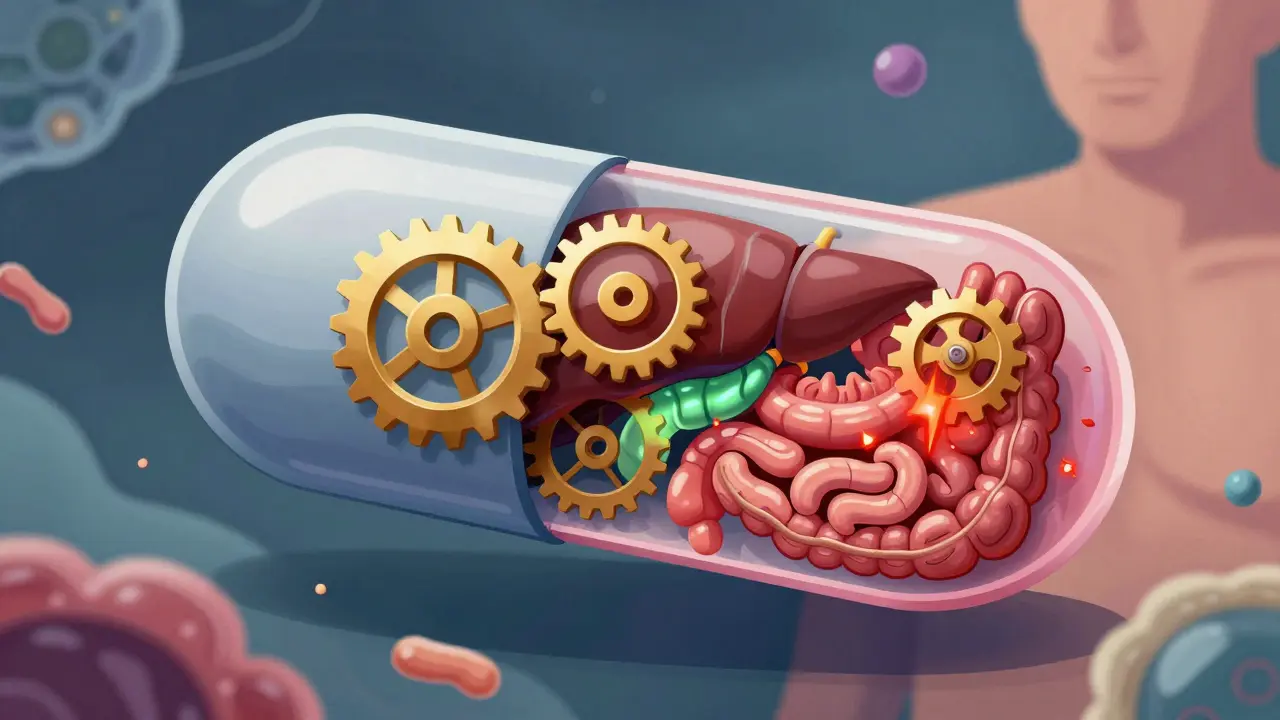
On-Target vs Off-Target Side Effect Quiz
Test your understanding of on-target vs off-target drug side effects. Based on the article content, select whether each side effect is likely on-target or off-target. This quiz will help you recognize the difference between side effects that are an expected consequence of the drug's intended action versus unexpected interactions with other targets.
Question 1
A patient taking metformin for diabetes experiences diarrhea. Is this an on-target or off-target effect?
Question 2
A patient taking thalidomide for multiple myeloma develops a rash. Is this an on-target or off-target effect?
Question 3
A patient taking a kinase inhibitor (like imatinib) experiences swelling in their eyes and legs. Is this an on-target or off-target effect?
Question 4
A patient taking statins (like atorvastatin) develops muscle pain. Is this an on-target or off-target effect?
Question 5
A patient taking a biologic drug (like a monoclonal antibody) experiences severe allergic reactions. Is this an on-target or off-target effect?
Question 6
A patient taking chloroquine for malaria reports heart rhythm problems. Is this an on-target or off-target effect?
When you take a pill for high blood pressure, diabetes, or cancer, you expect it to help. But sometimes, it causes nausea, rashes, or muscle pain you didn’t sign up for. Why? Not all side effects are created equal. Some come from the drug doing its job too well in the wrong place. Others come from the drug accidentally hitting something else entirely. These are called on-target and off-target effects-and understanding the difference changes how doctors treat you and how new drugs are made.
What Are On-Target Effects?
On-target effects happen when a drug hits its intended target, but the result isn’t always good. Think of it like turning up the volume on a speaker too high-it still works, but now it’s blaring. The same mechanism that fixes your disease can also mess up healthy tissue. Take metformin, a common diabetes drug. It works by making your liver produce less glucose and helping your muscles absorb more sugar. That’s the goal. But in your gut? That same action can cause diarrhea, bloating, and cramps. That’s not a bug-it’s a feature. The drug is working exactly as designed, just in a place you didn’t want it to. About 70% of people on metformin get this. It’s not dangerous, but it’s annoying. In cancer treatment, on-target side effects are even more common. Drugs like EGFR inhibitors block a protein that helps tumors grow. But that same protein is in your skin and hair follicles. So patients often get severe rashes, dry skin, and acne-like breakouts. At Memorial Sloan Kettering, doctors found that 68% of patients on these drugs developed skin issues. Nearly a quarter had to lower their dose because of it. These aren’t mistakes. They’re predictable, expected consequences of hitting the right target in the wrong place. Even heart drugs can cause on-target problems. Statins lower cholesterol by blocking HMG-CoA reductase. That’s their target. But that enzyme is also in muscle cells. So some people get muscle pain or weakness-not because the drug is broken, but because it’s doing its job too aggressively in muscle tissue. This is why doctors check CPK levels before and after starting statins. It’s not about toxicity-it’s about dosage balance.What Are Off-Target Effects?
Off-target effects are the surprise guests at the party. The drug walks in to shake hands with one protein, but ends up hugging three others it wasn’t supposed to. These interactions are unpredictable, often rare, and sometimes dangerous. A classic example is thalidomide. In the 1950s, it was prescribed for morning sickness. But it accidentally interfered with blood vessel formation in developing limbs. Babies were born with missing or shortened arms and legs. That wasn’t the drug’s target-it was an off-target disaster. Thalidomide was pulled from shelves… until decades later, when scientists realized it could calm the immune system in multiple myeloma. Now it’s a lifesaver for cancer patients. One drug. Two targets. Two completely different outcomes. Kinase inhibitors, used in many cancers, are notorious for off-target effects. Imatinib (Gleevec) blocks BCR-ABL, a protein driving leukemia. But it also hits c-KIT, which helps regulate blood cells and gut function. That’s why patients get swelling in their eyes and legs-it’s not cancer spreading. It’s the drug hitting a second target. Studies show that small molecule drugs, on average, interact with six or more unintended proteins at therapeutic doses. Kinase inhibitors? They bind to 25-30 different kinases. That’s not a flaw-it’s how most small molecules behave. Even drugs you think are precise can surprise you. Chloroquine and hydroxychloroquine were marketed as antimalarials and later used for autoimmune diseases. But research showed they didn’t really work through their known targets. Instead, they disrupted the acid balance inside lysosomes and endosomes-organelles that clean up cellular waste. That’s off-target. And it’s why they caused heart rhythm problems in some COVID-19 patients. The effect wasn’t linked to the disease they were meant to treat. It was a hidden side effect of a hidden interaction.Why Do Some Drugs Have More Off-Target Effects Than Others?
Not all drugs are equally messy. Small molecules-like pills and capsules-are usually the culprits. They’re tiny, flexible, and can slip into places big molecules can’t. On average, they bind to 6.3 unintended targets. That’s why you hear more about side effects from pills than from injections. Biologics-like monoclonal antibodies-are different. Trastuzumab (Herceptin), used for HER2-positive breast cancer, is designed to latch onto one specific protein on cancer cells. It’s like a key that only fits one lock. These drugs average just 1.2 off-target interactions. That’s why their side effect profile is cleaner. But they’re not perfect. They can still cause on-target toxicity-like heart damage from blocking HER2 in healthy heart tissue. The bigger the molecule, the more specific it tends to be. That’s why antibody drugs are becoming more popular in oncology and autoimmune diseases. But they’re expensive, need injections, and can trigger immune reactions. So there’s a trade-off. Kinase inhibitors are the worst offenders. They make up 42% of all off-target toxicity reports in the FDA’s database from 2015-2020. Why? Because kinases are a huge family of proteins-over 500 in the human body. They all look similar. A drug designed to block one can easily slip into another. That’s why companies like Genentech and Novartis spend millions building tools like KinomeScan to test new compounds against hundreds of kinases before they even reach humans.
How Do Scientists Find Off-Target Effects Before People Take the Drug?
Back in the 1990s, drug companies mostly tested for safety in rats. If the rat didn’t die, they moved on. That didn’t work. Many drugs failed in human trials because of side effects no one saw coming. Today, it’s a multi-layered process. First, they use chemical proteomics-basically, they stick the drug to a bead and see what proteins in a human cell sample stick to it. That tells them what else it might bind to. Then they use transcriptomics. They treat human cells with the drug and look at which genes turn on or off. If the pattern matches what happens when you knock out the main target with CRISPR, it’s likely on-target. If it’s different? That’s off-target. One study on statins showed that gene-level changes varied wildly between cell types. But when they looked at pathways-like inflammation or cholesterol metabolism-they saw consistent patterns. That’s the key insight: don’t just look at single genes. Look at the bigger picture. The European Medicines Agency now requires at least two different methods to check for off-target effects before a drug can enter clinical trials. That’s a big shift. And it’s working. Companies using these advanced screening tools have 22% higher success rates in clinical trials.Can Off-Target Effects Be Good?
Absolutely. Sometimes, the side effect is the cure. Sildenafil (Viagra) was originally developed for angina. It was supposed to relax blood vessels in the heart. But in trials, men reported something else: erections. That wasn’t the goal. But scientists realized the drug was also relaxing blood vessels in the penis. They repurposed it. Today, Viagra is worth billions. Thalidomide, as mentioned, went from banned to blockbuster. Another example is minoxidil. It was an oral blood pressure drug. But patients grew hair where they didn’t expect it. That led to Rogaine-the first FDA-approved hair loss treatment. Even some cancer drugs have off-target benefits. Imatinib’s effect on c-KIT helps treat gastrointestinal stromal tumors. That wasn’t the original target. But it turned out to be life-saving for a different group of patients. This is why some researchers now favor phenotypic screening-testing compounds in whole cells or animals without assuming the target. It’s messier, but it often finds drugs that work in complex ways. About 60% of first-in-class drugs approved between 1999 and 2013 came from this approach.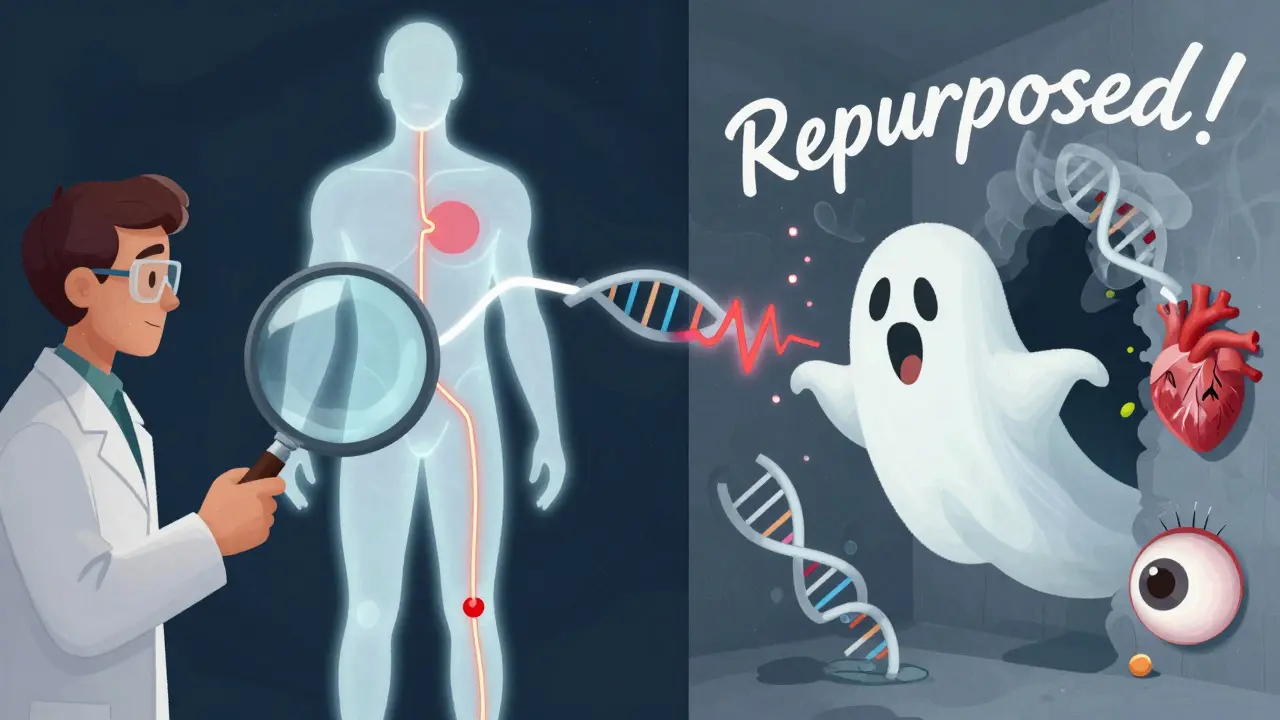


steve ker
January 13, 2026 AT 10:22On-target effects are just the drug being too good at its job
Off-target? That's the drug being a sloppy drunk at a party you didn't invite it to
George Bridges
January 13, 2026 AT 23:52I've seen patients on metformin struggle with the gut stuff-so many quit because they think it's 'toxic' when it's literally the mechanism working. Doctors need to explain this better. It's not a failure, it's biology.
Lauren Warner
January 14, 2026 AT 01:17Of course you're going to get side effects-drugs are blunt instruments in a precision world. The real scandal is how long it took pharma to admit this. They spent decades pretending pills were surgical tools. Now they're scrambling to catch up with proteomics and transcriptomics like it's 2023 and not 1998. Pathetic.
Craig Wright
January 15, 2026 AT 00:36As a British citizen, I find it deeply concerning that American pharmaceutical companies still rely on such crude screening methods. In the UK, we have the NHS pharmacovigilance system-rigorous, data-driven, and patient-centred. Your reliance on corporate-funded trials is a recipe for disaster. Thalidomide happened here too, you know. We learned. You didn't.
Lelia Battle
January 16, 2026 AT 03:00It’s fascinating how we treat side effects as failures rather than signals. The body isn’t broken-it’s communicating. On-target effects are the drug whispering, 'I’m here.' Off-target are it shouting, 'I don’t belong here!' Maybe we should stop seeing drugs as perfect solutions and start seeing them as complex conversations with biology. We’re not controlling systems-we’re negotiating with them.
Rinky Tandon
January 16, 2026 AT 14:49Let’s be real-most pharma companies don’t care about off-target effects until the FDA slaps them with a black box warning. They’re chasing ROI, not patient safety. Kinase inhibitors? 25+ off-targets? That’s not science-that’s chemical roulette. And don’t get me started on how they market these as 'precision medicine' while giving patients a shotgun blast of unintended consequences. The industry is a house of cards built on hype and half-baked AI models.
Ben Kono
January 16, 2026 AT 15:17Viagra was meant for angina and ended up changing the world
That’s the beauty of off-target
Stop fearing side effects
Start chasing them
Cassie Widders
January 18, 2026 AT 00:09I’ve been on statins for 8 years. Muscle pain? Yeah. But I also know it’s keeping my heart alive. I don’t blame the drug. I blame the lack of warning. If someone had just said, 'This might make your legs feel heavy,' I wouldn’t have panicked and quit after two weeks. Simple talk saves lives.
Konika Choudhury
January 18, 2026 AT 14:48India has been using traditional medicine for centuries without knowing any of this molecular stuff
People lived longer
Why do we need all this fancy tech to fix what nature already solved
Darryl Perry
January 19, 2026 AT 01:4478% of companies now do off-target screening. That’s progress. But 22% still don’t. That’s criminal. One bad drug can kill hundreds. We’re not talking about minor rashes. We’re talking about sudden cardiac arrest. This isn’t a suggestion. It’s a mandate.
Windie Wilson
January 20, 2026 AT 11:49So let me get this straight-pharma spends $2B to develop a drug, then finds out it accidentally makes people grow hair or get erections… and suddenly that’s a billion-dollar product?
What if they just… threw random chemicals at walls and saw what stuck?
At this point, I’m convinced the entire industry is just a glorified science fair.
Daniel Pate
January 21, 2026 AT 13:59It’s ironic-we call it 'precision medicine' when we design drugs to hit one target, but then we realize every small molecule is a molecular sledgehammer. Maybe precision isn’t about hitting one target-it’s about understanding the entire network of interactions. The body isn’t a lock-and-key system. It’s a symphony. And we’re still learning how to conduct it.
Amanda Eichstaedt
January 22, 2026 AT 13:31I love how this post frames side effects as clues instead of errors. My mom’s rheumatoid arthritis drug gave her weird numbness in her fingers. She thought it was nerve damage. Turns out it was an off-target effect on a potassium channel. Her doctor didn’t know either. But once they figured it out, they adjusted the dose and now she’s pain-free. Side effects aren’t the enemy-they’re the map. We just need better guides.