
Opioid Adrenal Insufficiency Risk Calculator
This tool helps determine your risk of opioid-induced adrenal insufficiency (OIAI) based on your duration of opioid use and daily dose. OIAI is a rare but dangerous side effect that can lead to adrenal crisis if undiagnosed.
Risk Assessment Results
Most people know opioids can cause constipation, drowsiness, or dependence. But few realize they can also shut down your body’s natural stress response - leading to a condition so dangerous, it can kill you if unnoticed. This is opioid-induced adrenal insufficiency (OIAI), a rare but real side effect of long-term opioid use that’s slipping through the cracks in clinics across the U.S. and the U.K.
What Actually Happens When Opioids Hit Your Hormones?
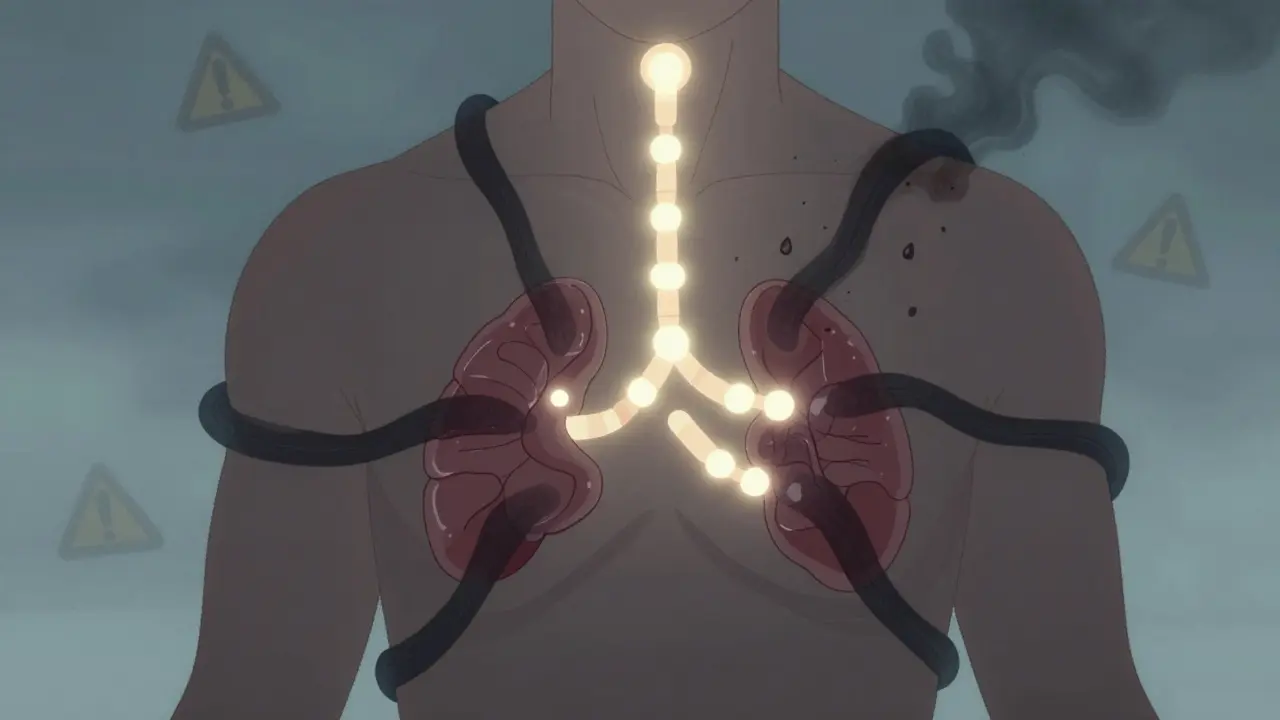
Your body has a built-in stress system called the HPA axis - hypothalamus, pituitary, adrenal glands. When you’re under pressure - whether from infection, surgery, or even emotional shock - this system kicks in. The hypothalamus sends a signal to the pituitary, which tells your adrenal glands: release cortisol. Cortisol keeps your blood pressure up, your blood sugar stable, and your immune system in check.
Opioids don’t just block pain signals. They also bind to receptors in the hypothalamus and pituitary, effectively silencing the message to your adrenals. No signal = no cortisol. Over time, your body forgets how to make its own. That’s not damage to the glands - it’s suppression. And when cortisol drops too low, you’re at risk of an adrenal crisis.
How Common Is This?
It’s not common - but it’s not rare either. Studies show about 5% of people on long-term opioid therapy develop this condition. That sounds small, but consider this: over 5% of the U.S. population is prescribed chronic opioids. Multiply that by the millions of people on these drugs worldwide, and you’re looking at tens of thousands at risk.
One study of 162 adults taking opioids for more than 90 days found 5% had adrenal insufficiency. Another looked at 16,000 patients and confirmed the link. The risk goes up sharply with dose. People taking more than 20 morphine milligram equivalents (MME) per day are far more likely to be affected. Some studies found over 20% of long-term users failed adrenal stimulation tests - compared to 0% in people not on opioids.
What Are the Symptoms? (And Why They’re Easy to Miss)
Here’s the problem: the signs of adrenal insufficiency look a lot like the side effects of chronic pain - or even depression.
- Constant fatigue, even after sleeping
- Nausea, vomiting, or loss of appetite
- Dizziness when standing up
- Low blood pressure
- Unexplained weight loss
- Muscle weakness
- Darkening of skin (in advanced cases)
If you’re on opioids for back pain or arthritis, you might assume your tiredness is from the pain. Or if you’re recovering from surgery, you might blame nausea on the meds. But if these symptoms show up out of nowhere - or get worse without explanation - it’s time to ask: Could this be my adrenals?
How Is It Diagnosed?
Doctors don’t test for this routinely. That’s the danger. But if you’ve been on high-dose opioids for months - and you have unexplained symptoms - ask for a morning cortisol test. A level below 3 mcg/dL (100 nmol/L) is a red flag. The next step is an ACTH stimulation test: you get a shot of synthetic ACTH, and your cortisol is measured 30 and 60 minutes later. If your peak cortisol stays below 18 mcg/dL (500 nmol/L), your adrenals aren’t responding.
Some newer research suggests even lower thresholds might be needed. One study found people with OIAI had cortisol levels as low as 2.1 mcg/dL - well under the old cutoff. That’s why some experts now say: Don’t wait for textbook numbers. If the clinical picture fits, test.
What Happens If It’s Not Treated?
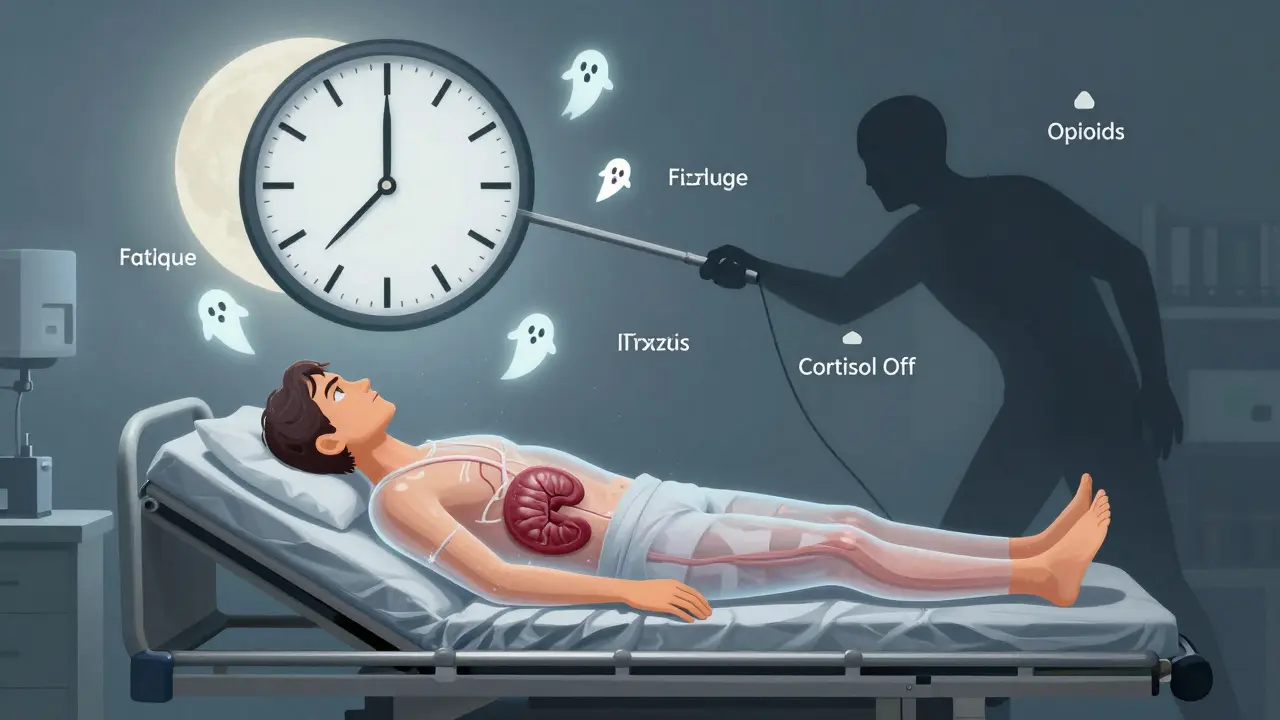
Adrenal insufficiency can lie quiet for months. Then - boom - something stressful happens. A cold turns into pneumonia. You have an accident. You need surgery. Your body can’t ramp up cortisol to handle the stress. Blood pressure crashes. You go into shock. You can die.
This isn’t theoretical. Case reports show patients with undiagnosed OIAI collapsing during minor procedures, developing severe infections, or even dying after routine surgeries. One 25-year-old man developed life-threatening hypercalcemia after a critical illness - only to find out his methadone had suppressed his cortisol. He survived because doctors caught it. Many don’t.
Can It Be Reversed?
Yes. And that’s the good news.
In every documented case where opioids were tapered or stopped, adrenal function returned - sometimes within weeks, sometimes within months. One patient’s cortisol levels normalized after 6 months of being off methadone. Another recovered fully after switching to a non-opioid pain regimen.
But here’s the catch: you can’t just stop opioids cold. Abrupt withdrawal can trigger adrenal crisis in someone with OIAI. Treatment requires a careful balance: glucocorticoid replacement (like hydrocortisone) during the taper, followed by gradual reduction of the opioid. It’s not something you do on your own. It needs a team - pain specialist, endocrinologist, and pharmacist working together.
Who’s at Highest Risk?
- People on daily opioids for more than 3 months
- Those taking over 20 MME per day
- Patients on methadone or buprenorphine for pain (not just addiction)
- Anyone with other hormonal issues - like low testosterone or thyroid problems
- People with chronic illnesses like kidney disease, liver disease, or cancer
It’s not just cancer patients or addicts. We’re talking about someone with chronic back pain on long-term oxycodone. Or a young person with fibromyalgia on tramadol. Or an elderly person on morphine after a hip fracture. These are the hidden cases.
Why Isn’t This Routine Screening?
Because it’s not in the guidelines. Most pain management protocols focus on addiction risk, constipation, or respiratory depression. Endocrine side effects? Almost never mentioned. A 2024 review in Frontiers in Endocrinology called this a "frequent underappreciation" among clinicians.
Doctors aren’t ignoring it - they just don’t know to look. Medical training barely touches opioid-induced endocrine suppression. And when patients don’t complain of "adrenal symptoms," it slips by.
But here’s the shift happening: more experts are now saying - if you’re on chronic high-dose opioids, you should get your cortisol checked. Just once. Especially before any surgery or major illness. It’s a simple blood test. No radiation. No needles beyond the usual. It could save your life.
What Should You Do?
If you’re on opioids long-term - especially at higher doses - here’s what to do:
- Ask your doctor: "Could my opioid therapy be affecting my adrenal function?"
- Request a morning cortisol test if you have unexplained fatigue, nausea, or dizziness.
- If cortisol is low, ask for an ACTH stimulation test.
- Don’t stop opioids on your own. Work with your care team to taper safely - with cortisol support if needed.
- Carry a medical alert card or bracelet if diagnosed - especially if you’re on replacement therapy.
And if you’re a clinician? Start asking. Test when the signs fit. Don’t wait for textbook cases. OIAI doesn’t announce itself. It whispers - until it’s too late.
Final Thought: It’s Not About Fear - It’s About Awareness
Opioids save lives. They relieve unbearable pain. But like all powerful tools, they come with hidden costs. Adrenal insufficiency isn’t common. But it’s real. And it’s preventable.
One simple blood test, asked at the right time, can turn a silent, deadly risk into a manageable condition. We don’t need more drugs. We need more awareness.
Can short-term opioid use cause adrenal insufficiency?
No, adrenal insufficiency from opioids typically only develops after long-term use - usually more than 3 months. Short-term use, like after surgery or injury, doesn’t suppress the HPA axis enough to cause this condition. The risk starts climbing significantly after 90 days of daily use, especially at doses above 20 MME per day.
Is adrenal insufficiency from opioids the same as Addison’s disease?
It’s similar but not the same. Addison’s disease is caused by damage to the adrenal glands themselves - often from autoimmune disease. Opioid-induced adrenal insufficiency (OIAI) is caused by the brain and pituitary being suppressed, so the adrenals aren’t told to make cortisol. The glands are healthy - they’re just silent. That’s why OIAI is reversible when opioids are stopped.
Do all opioids cause this?
Research shows it happens with most opioids, including morphine, oxycodone, hydrocodone, methadone, and buprenorphine. The effect isn’t tied to one specific drug - it’s about how opioids interact with brain receptors that control the HPA axis. Higher doses and longer use increase the risk, regardless of the opioid type.
Can I test for this at home?
No. There are no reliable home tests for adrenal insufficiency. Diagnosis requires a blood test for morning cortisol and, if needed, an ACTH stimulation test done in a clinic or hospital. These tests measure how your body responds to hormone signals - something you can’t simulate at home.
If I’m diagnosed with OIAI, will I need to take steroids forever?
Not necessarily. Because OIAI is caused by suppression - not gland damage - your adrenal function usually returns once opioids are tapered or stopped. You may need short-term steroid replacement (like hydrocortisone) during the taper to prevent crisis. But most patients can stop steroids entirely after a few months, once their natural cortisol production restarts. Your doctor will monitor you with repeat tests.
Does OIAI affect other hormones too?
Yes. Opioids also suppress the hypothalamic-pituitary-gonadal axis. That means they can lower testosterone in men and estrogen in women, leading to low libido, fatigue, and menstrual changes. This is separate from adrenal issues but often happens at the same time. If you’re on long-term opioids and have unexplained sexual or energy changes, ask about both adrenal and sex hormone levels.
Is there a way to prevent OIAI without stopping opioids?
There’s no proven way to prevent it while continuing opioids. The only sure prevention is reducing the dose, switching to non-opioid pain management, or using the lowest effective dose. Some studies suggest rotating opioids might help, but evidence is weak. The best strategy is early screening - catch it before it becomes a crisis.
What should I do if I feel faint or dizzy while on opioids?
Don’t ignore it. Low blood pressure and dizziness are classic signs of low cortisol. If you’re on long-term opioids and suddenly feel faint, especially with nausea or confusion, seek medical attention immediately. It could be an early sign of adrenal crisis. Tell your doctor you’re on opioids - that clue can change everything.
Morgan Dodgen
March 10, 2026 AT 12:32They don't even need to kill you, just make your body forget how to survive stress. Brilliant. I'm sure Big Pharma didn't engineer this on purpose.
Meanwhile, doctors are still prescribing these like candy because the FDA says 'it's not addiction if it's for pain'.
And now we're supposed to ask for a cortisol test? Like it's a Starbucks order. Bro, I'm on 40 MME and my energy is gone, but my PCP says 'it's just aging'.
They don't test because they don't want to admit they've been poisoning people for decades.
It's not rare. It's systemic. And they'll keep ignoring it until someone dies on their watch.
And then? Another 'oops' press release. #OpioidCrisisPart2
Stephen Rudd
March 11, 2026 AT 10:19Erica Santos
March 13, 2026 AT 01:23Meanwhile, the same doctors who told me 'just push through the pain' are now handing me a cortisol script like it's a coupon. I don't want replacement hormones. I want my body back. But apparently, that's too much to ask.
APRIL HARRINGTON
March 13, 2026 AT 22:23Then I got sick with the flu and almost passed out in the shower - ER doc asked if I was on opioids and I was like 'wait what?'
They did the test and my cortisol was 2.8 - like a ghost. I cried. I was so scared.
But we tapered me slow with hydrocortisone and after 5 months I'm basically human again!!
DO NOT IGNORE FATIGUE. IT'S NOT JUST PAIN. IT'S YOUR BODY GIVING UP. I'M LIVING PROOF. ❤️
Leon Hallal
March 14, 2026 AT 13:52Judith Manzano
March 16, 2026 AT 09:16rafeq khlo
March 17, 2026 AT 16:03Philip Mattawashish
March 18, 2026 AT 08:55Tom Sanders
March 19, 2026 AT 21:42