
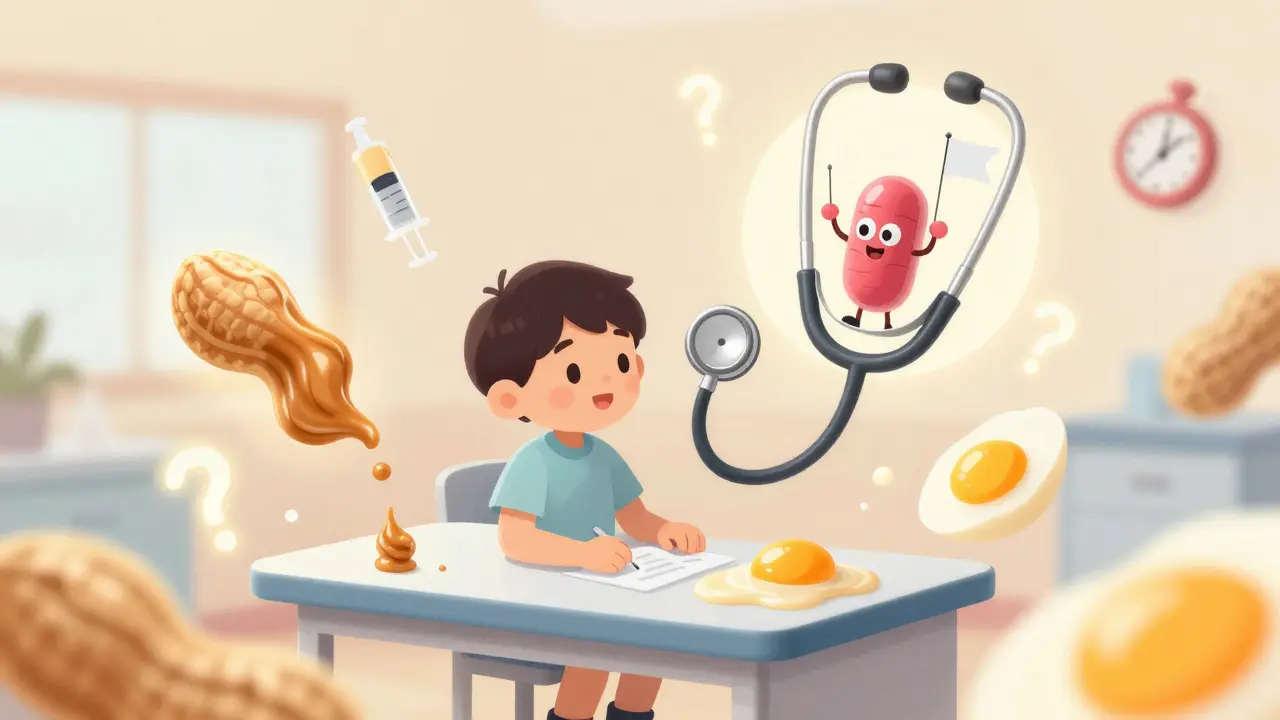
When a child breaks out in hives after eating peanut butter, or an adult gets stomach cramps after a bite of milk chocolate, it’s tempting to assume they’re allergic. But here’s the truth: oral food challenge is the only way to know for sure. Skin tests and blood work can point you in the right direction, but they’re wrong nearly half the time. That’s why doctors rely on the oral food challenge - not as a last resort, but as the gold standard.
Why Your Allergy Test Might Be Lying
Skin prick tests and blood tests for IgE antibodies are common first steps. But they don’t tell you if you’ll actually react when you eat the food. They only show your immune system has *heard* of the allergen. That’s not the same as being allergic. A positive skin test for egg might mean you’ve been exposed before - not that you’ll go into anaphylaxis if you eat a scrambled egg. Studies show these tests have a 50-60% accuracy rate for common allergens like peanut and egg. Even the most advanced blood tests, like component-resolved diagnostics, only get you to about 85% accuracy. That leaves a dangerous gap. Someone might avoid milk for years because of a false positive - losing out on nutrition, social meals, and peace of mind.The oral food challenge closes that gap. It doesn’t guess. It watches. It lets your body respond in real time, under medical supervision. If you don’t react, you’re not allergic. If you do, you know exactly how much it takes to trigger a reaction. That’s powerful.
What Happens During an Oral Food Challenge?
You walk into a clinic, not a lab. The room has oxygen, epinephrine, and at least two trained staff members - one doctor, one nurse. You’re not alone. The food is weighed out in tiny amounts - sometimes as little as 1-2 milligrams. That’s a speck. For peanut, it’s about 1/1000th of a teaspoon of peanut butter. You eat it. You wait. For 15 to 30 minutes, the team watches your skin, your breathing, your heart rate. No symptoms? You get a slightly bigger dose. And again. And again. The whole process takes 3 to 6 hours. Most of that time is just waiting - but it’s waiting with purpose.The food can be disguised. A child might eat it baked into a cookie. An adult might swallow it in a capsule. This isn’t trickery - it’s to reduce fear. If you think you’re eating peanut, your body might react just from anxiety. Blinding the test - where neither you nor the doctor knows if it’s the real food or a placebo - is the most accurate method. But it’s rare. Over 90% of challenges are open, because the goal is real-world clarity, not research perfection.
Is It Safe?
It’s not risk-free. But it’s safer than you think. About 40-60% of challenges result in mild reactions - a few hives, a flushed face, maybe a little itch. These are handled right there in the room. Antihistamines, steroids, or a quick dose of epinephrine if needed. Severe reactions requiring epinephrine happen in only 1-2% of cases when protocols are followed. That’s lower than the risk of a car ride to the clinic. The key is preparation. You must be healthy. No colds, no asthma flare-ups. No antihistamines for 5 to 7 days before. You can’t mask symptoms and expect accurate results.Parents often worry about their child crying, panicking, or refusing to eat. That’s normal. One parent on a food allergy forum said, “My son screamed through the whole thing. But when they told us he could eat peanut butter again, he hugged me so hard I cried.” That’s the flip side. The fear is real - but so is the relief.
Who Benefits Most?
Not everyone needs one. If you’ve had a clear, severe reaction to shellfish last year - don’t schedule a challenge. That’s not the point. But if your history is messy - if you had a rash once, but never again - it’s perfect. Especially for kids. About 65% of children outgrow milk or egg allergies by age 5. Without a challenge, parents might keep them off these foods for years, even decades, unnecessarily. That’s not just inconvenient. It’s harmful. Kids need calcium. They need protein. They need to eat like everyone else.Adults benefit too. Maybe you avoided nuts for 10 years because your mom was scared. Or you stopped eating seafood after a bad dinner. An oral food challenge can free you from lifelong restrictions based on a single bad experience. Dr. Matthew Greenhawt of the American College of Allergy says these challenges prevent unnecessary dietary restrictions in 25-30% of cases. That’s one in four people who don’t need to live in fear.
What You Need to Know Before You Go
Preparation matters more than you realize. Don’t show up tired. Don’t show up sick. Bring your child’s favorite book, tablet, or stuffed animal. Wear loose clothes. Don’t bring siblings unless they’re being watched - distractions are key. The staff will explain everything, but it helps if you’ve done your homework. Know what the food looks like in its challenge form. Ask if they’ll use disguised or pure food. Ask what the stop criteria are. If your child gets two hives, do they stop? What if they vomit? What if they just cry? These are questions you should ask ahead of time.And remember - this isn’t a test you pass or fail. It’s a conversation between your body and your doctor. The goal isn’t to eat the whole serving. The goal is to find out what your body can handle. Sometimes that’s nothing. Sometimes that’s a whole peanut butter sandwich. Either way, you get clarity.

Why This Isn’t Going Away
There are new blood tests. New biomarkers. Companies are trying to sell you a cheaper, faster alternative. But none of them match the oral food challenge. The European Academy of Allergy and Clinical Immunology says it bluntly: no in vitro test can replace it. The NIH, the American Academy of Allergy, the Italian Society of Pediatric Allergy - they all agree. It’s the only way to know for sure.And the need is growing. Food allergies have increased 50% in children since the 1990s. More people are being diagnosed. More parents are questioning whether those diagnoses are right. More doctors are recommending challenges. In major hospitals, they’re doing 500 to 1,000 challenges a year. Private allergists do 50 to 200. That’s not a trend. That’s a shift in practice. People are realizing that avoiding food isn’t always the answer. Sometimes, the answer is eating it - safely, slowly, under care.
Home-based challenges are now being studied. For low-risk cases, like a child with mild egg allergy who hasn’t reacted in years, some clinics are letting parents do small doses at home with phone check-ins. It’s not mainstream yet. But it’s coming. The goal isn’t to make it easier. It’s to make it accessible. So more people get the truth - not a guess, not a lab result, but a real answer.
What Comes After
If the challenge is negative - you’re not allergic - you’re told to eat the food regularly. Not just once. Not just once a month. At least once a week. Otherwise, your body forgets. Allergy isn’t just about immune memory. It’s about tolerance. You have to keep feeding it to keep it away.If it’s positive - you get a plan. How much you can tolerate. What to avoid. What to carry. What to tell your school, your workplace, your friends. You don’t leave empty-handed. You leave with a roadmap.
The oral food challenge doesn’t just diagnose. It transforms. It turns fear into freedom. It turns guessing into knowing. And in a world full of uncertainty, that’s worth every hour, every dose, every moment of anxiety.
Are oral food challenges painful?
No, oral food challenges aren’t painful. You swallow small amounts of food, like you would normally. The discomfort comes from anxiety, not physical pain. Some people feel mild itching or stomach upset if they react, but those symptoms are managed immediately by the medical team. Most describe it as a long, nerve-wracking wait - not a painful procedure.
Can adults have oral food challenges too?
Yes, adults can and do have oral food challenges. While they’re often used for children who may outgrow allergies, adults use them to confirm or rule out allergies they’ve lived with for years. Many adults discover they’re not allergic to foods they’ve avoided since childhood - like milk, eggs, or wheat - and regain the ability to eat them safely.
How long does an oral food challenge take?
Most oral food challenges last between 3 and 6 hours. The first 1 to 2 hours involve gradually increasing the amount of food, given every 15 to 30 minutes. After the final dose, you’re monitored for another 2 to 3 hours to watch for delayed reactions. You’ll need to plan for a full morning or afternoon.
What if I react during the challenge?
Reactions are expected and managed. If you develop hives, vomiting, or breathing trouble, the medical team stops the challenge and treats you immediately with antihistamines, steroids, or epinephrine. Most reactions are mild and resolve quickly. Severe reactions requiring epinephrine happen in only 1-2% of cases when done properly. The whole point of doing it in a clinic is to handle these reactions safely.
Do I need to stop my medications before the challenge?
Yes. You must stop antihistamines for 5 to 7 days before the challenge, as they can hide early signs of a reaction. Other allergy medications like nasal sprays or asthma inhalers are usually okay, but always check with your allergist. You should also avoid any medications that might interfere with your body’s natural response, like certain painkillers or supplements.
Is an oral food challenge covered by insurance?
Most insurance plans cover oral food challenges when ordered by a board-certified allergist, especially if there’s uncertainty in diagnosis. Coverage varies by plan, but since it’s considered the gold standard for diagnosis, it’s typically treated as medically necessary. Always check with your provider beforehand and ask your clinic to help with pre-authorization if needed.
Can I do an oral food challenge at home?
Home-based challenges are still experimental and only recommended in very low-risk cases under strict medical supervision. Some clinics are piloting programs where parents give small doses at home with daily check-ins via video call. But this is not standard practice. Most challenges must be done in a medical setting with emergency equipment and trained staff on-site.
What foods are commonly tested in oral food challenges?
The most common foods tested are milk, egg, peanut, tree nuts, soy, wheat, fish, and shellfish - the eight major allergens responsible for 90% of reactions. Less common foods like sesame, mustard, or celery are also tested when history suggests an allergy. The food is prepared in a form that’s safe and measurable - often pure, baked into a muffin, or encapsulated to hide taste or texture.


Beth Cooper
January 30, 2026 AT 06:02Okay but have you heard about the FDA’s secret 2018 memo that says oral food challenges are just a way to push pharma sales? I know a mom whose kid got diagnosed with a peanut allergy after a challenge - then their insurance started covering $2000 epinephrine pens every 6 months. Coincidence? I think not. The whole system’s rigged. They want you scared so you keep coming back. And don’t even get me started on how they disguise the food - that’s classic mind control. You think you’re eating a cookie, but it’s a trap.
Donna Fleetwood
January 30, 2026 AT 15:27This is honestly one of the most hopeful things I’ve read all year. I used to avoid dairy because of a rash I got at 12 - turned out I was never allergic. Got my challenge done last year and now I eat ice cream like it’s my job. My kid even started asking for yogurt at school. It’s not just about food - it’s about freedom. Thank you for writing this. People need to know this isn’t some scary test, it’s a gift.
Melissa Cogswell
January 31, 2026 AT 10:42Just wanted to add a practical note: if you’re prepping for a challenge, bring a snack you know is safe to eat after. The waiting is brutal, and hunger makes anxiety worse. Also, ask if they use the pure allergen or baked form - some kids tolerate baked egg better, and it gives you a better baseline. I’ve seen parents panic because their kid cried - but crying doesn’t mean reaction. It’s just a 5-year-old being overwhelmed. The team knows how to read the real signs.
Bobbi Van Riet
February 1, 2026 AT 21:54I’ve been through this twice - once for my daughter’s egg allergy, then again for her milk after we thought she outgrew it. The anxiety is real, no lie. I sat there gripping my phone like it was a lifeline, watching the nurse’s face every 15 minutes like it was a horror movie. But when they said ‘she’s fine, she can eat scrambled eggs now,’ I just collapsed in the chair and cried. Not because it was scary - because it was so simple. We’d been avoiding eggs for four years. Four years of pretending she couldn’t have birthday cake. That’s the real cost of a false positive. And honestly? The staff were so calm. They made it feel like a routine thing, not a life-or-death moment. That’s what you need: not a lab, not a test, but a team that treats you like a person, not a case file.
Holly Robin
February 2, 2026 AT 18:05THEY’RE LYING TO YOU. EVERY SINGLE TIME. The whole ‘gold standard’ thing? That’s a lie sold by Big Allergy™. Did you know the AMA got funding from a company that makes epinephrine auto-injectors? And guess what? They profit more when you’re scared. The ‘1-2% severe reaction’ stat? That’s cherry-picked. What about the kids who develop anaphylaxis 12 hours later? They don’t count those. And the ‘disguised food’? That’s gaslighting. You think you’re eating a cookie, but it’s engineered to trigger a reaction so they can say ‘see? We told you!’ They don’t want you to be free. They want you dependent. Wake up.
Shubham Dixit
February 3, 2026 AT 11:11India has been doing this for decades with Ayurvedic food tolerance tests - no needles, no labs, just observation, pulse reading, and herbal detox. But Western medicine insists on their expensive, time-consuming, overhyped challenges. Why? Because they don’t want to admit traditional systems work. They’d rather keep you hooked on clinics and epinephrine pens. Look at how many people in rural India never get diagnosed with food allergies - and yet they live longer, healthier lives. Maybe the problem isn’t the food. Maybe it’s the modern diet, stress, and chemicals. But no, let’s just keep testing people like lab rats. Classic colonial science.
KATHRYN JOHNSON
February 3, 2026 AT 16:29Oral food challenges are not a diagnostic tool. They are a liability management protocol designed to shift responsibility from the allergist to the patient. The 1-2% severe reaction rate is statistically insignificant only if you ignore the psychological trauma inflicted on children and families. This procedure is not ‘safe’ - it is merely *managed*. The language used here is dangerously misleading. The goal is not ‘clarity.’ It is revenue generation disguised as medical necessity. Insurance coverage is not a validation of efficacy - it is a reflection of regulatory capture.
Sazzy De
February 4, 2026 AT 21:34My kid did this last year. Took 4 hours. He didn’t cry once. We brought his favorite dinosaur book. He ate the peanut butter cookie. No reaction. We cried. Then we went for ice cream. That’s it. No big drama. Just… freedom.
Lily Steele
February 6, 2026 AT 15:58Just want to say thank you for writing this like a human. I read so many medical articles that sound like they were written by robots. This felt like my allergist sitting with me over coffee. I had a false positive for shellfish for 12 years. I didn’t know I could eat shrimp until I did the challenge. Now I order it every Friday. It’s not about the food. It’s about not living in fear anymore. You’re right - it’s a conversation. Not a test.
Sidhanth SY
February 8, 2026 AT 08:20From a systems biology perspective, the oral food challenge is the only method that operationalizes phenotypic tolerance in vivo, bypassing the epistemic limitations of IgE serology which conflates sensitization with clinical reactivity. The immune system’s memory is context-dependent - allergen exposure in a non-inflammatory milieu (e.g., baked forms) can induce regulatory T-cell pathways that suppress Th2 responses. This is why baked egg challenges have a 70% success rate in outgrowing egg allergy. The challenge isn’t just diagnostic - it’s immunomodulatory. We’re not just testing for reactivity; we’re re-educating the immune system through controlled, graded exposure. The real innovation isn’t the procedure - it’s the paradigm shift from avoidance to tolerance induction.
Adarsh Uttral
February 9, 2026 AT 08:54my friend did this for peanut and it was chill. he ate like 3 tiny bits and was fine. now he eats peanut butter on toast every morning. no big deal. the clinic was nice. they had cartoons for kids. i think more people should try it if they’re unsure. stop avoiding stuff just because some test said so.
April Allen
February 9, 2026 AT 19:24One thing no one talks about: the placebo effect in open challenges. If you believe you’re allergic, your autonomic nervous system can amplify minor somatic sensations - a dry throat, a fluttering heart - into perceived symptoms. That’s why double-blind, placebo-controlled challenges are the true gold standard. But they’re rarely done because they’re logistically complex and ethically fraught when you’re dealing with children. The open challenge isn’t just about diagnostic accuracy - it’s about ecological validity. You’re testing how the body reacts in the real world, not in a lab under artificial conditions. The trade-off? Reduced control, increased realism. And that’s exactly why it works.