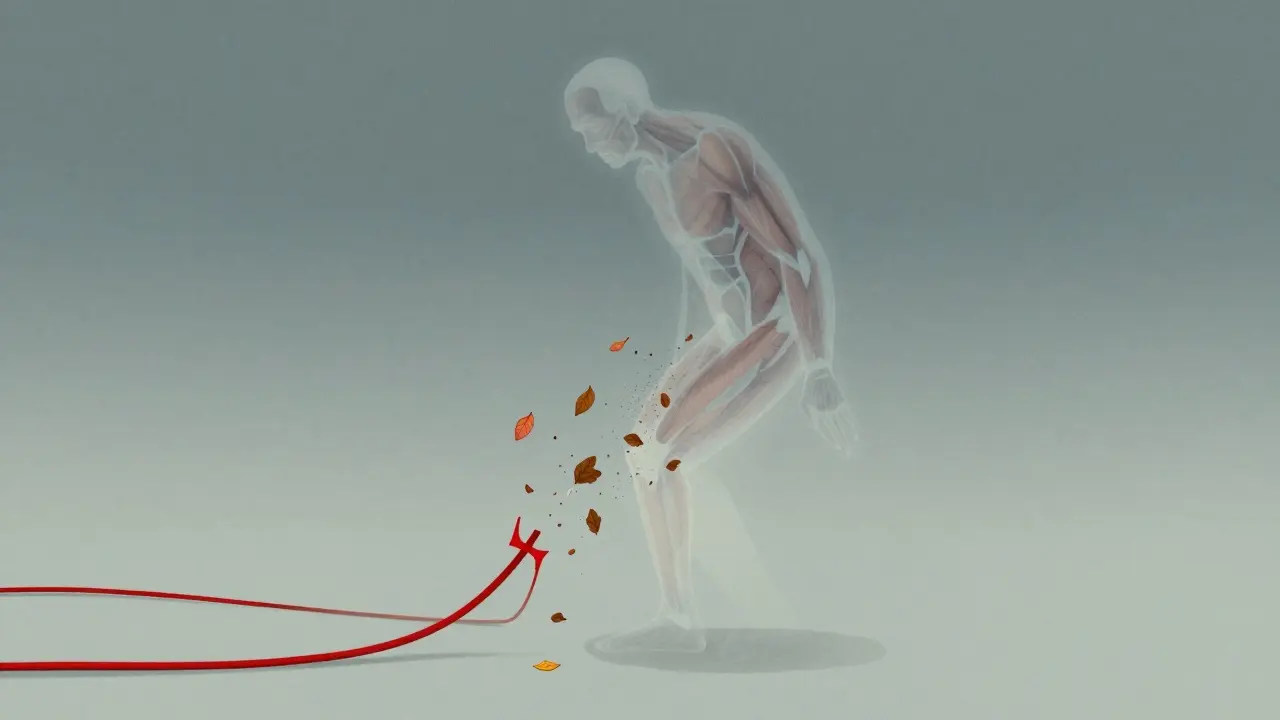
You might think muscle loss is just an inevitable part of getting older. You see it in your parents or grandparents-their steps get slower, their grip weakens, and they struggle to lift a grocery bag. But here’s the truth: this isn’t just "aging." It’s a specific condition called sarcopenia, which is the progressive, age-related decline in skeletal muscle mass, strength, and physical function. And unlike gray hair or wrinkles, you can actually fight back against it.
Sarcopenia begins earlier than most people realize. While it becomes more obvious after 65, the clock starts ticking in your 30s and 40s. By the time you reach your 70s, you could have lost up to 30% of your muscle mass if you haven’t taken action. The good news? Science shows that strength training is the single most effective tool to stop-and even reverse-this process. Let’s break down what sarcopenia really is, how to spot it, and exactly how to build a workout plan that works for aging bodies.
What Is Sarcopenia and Why Does It Happen?
To understand how to fix the problem, we first need to know what’s breaking. Sarcopenia wasn’t always recognized as a distinct medical condition. Dr. Irwin Rosenberg coined the term in 1989, but it took decades for major health organizations like the European Working Group on Sarcopenia in Older People (EWGSOP) to establish clear diagnostic criteria. Today, we know it affects about 10% of adults over 60, jumping to 50% of those over 80.
It’s not just about looking thinner. Sarcopenia involves complex physiological changes:
- Motor neuron loss: After age 60, you lose 3-5% of motor neurons each year. These are the nerves that tell your muscles to contract.
- Fiber atrophy: Type II (fast-twitch) muscle fibers shrink by 30-40% by age 80. These are the fibers responsible for quick movements and power.
- Inflammation: Chronic low-grade inflammation increases levels of proteins like IL-6 and TNF-α by 30-50%, which actively breaks down muscle tissue.
This differs from general muscular atrophy caused by disuse (like sitting in bed for weeks). Sarcopenia is systemic and gradual. It also differs from cachexia, which involves severe weight loss due to disease. If you have both low muscle mass and high body fat, you may have sarcopenic obesity, a condition affecting 15-20% of older adults that significantly raises health risks.
How to Spot the Signs Early
Many people ignore early signs because they assume they’re just "getting old." But sarcopenia has measurable markers. According to EWGSOP3 guidelines (2023), clinicians diagnose it using three key tests:
- Handgrip strength: Below 27kg for men or 16kg for women.
- Gait speed: Walking slower than 0.8 meters per second.
- Muscle mass: Appendicular lean mass below 7.0kg/m² for men or 5.5kg/m² for women (measured via DXA scan).
You don’t need a hospital visit to check these. Ask yourself: Can you rise from a chair without using your arms? Do you stumble when walking on uneven ground? Have you noticed your clothes fitting looser around the thighs while your waist stays the same? These are red flags. A 2022 survey found that 75% of older adults who started strength training maintained independence in daily activities, compared to only 58% of non-exercisers. Early detection saves mobility.
Why Strength Training Is the Gold Standard Treatment
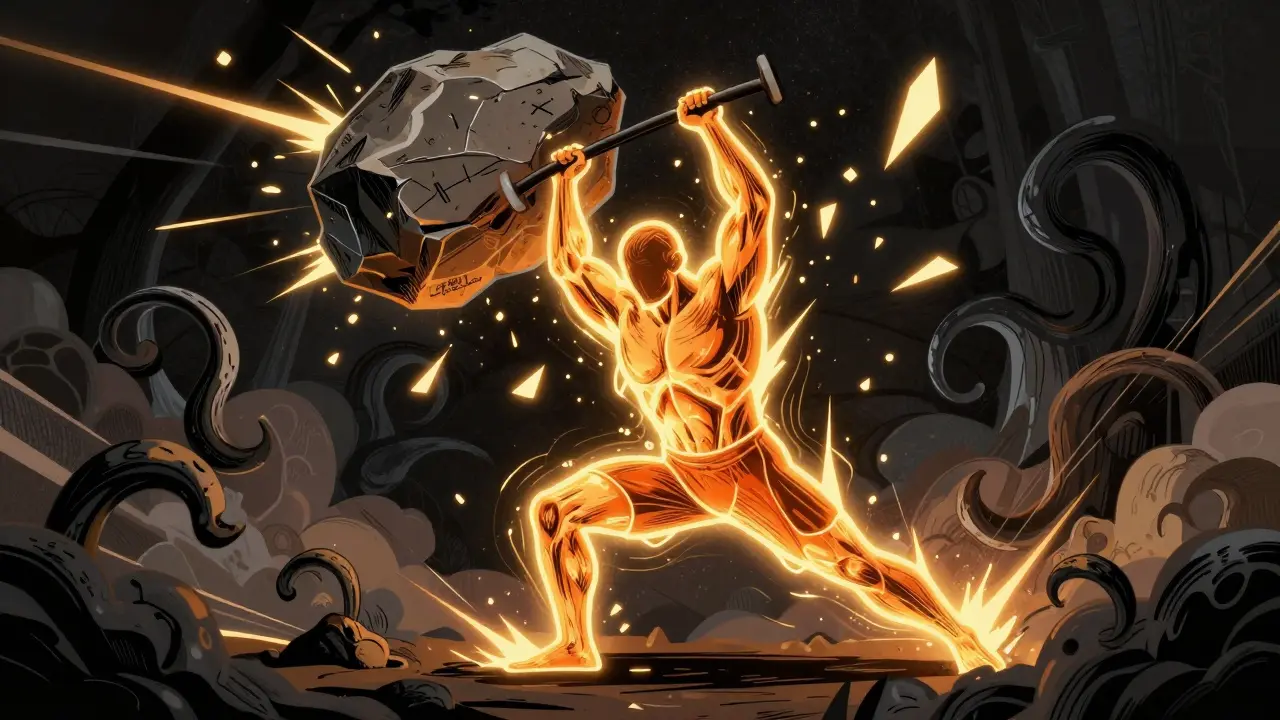
Diet helps, but it’s not enough. You can eat all the protein in the world, but without mechanical tension, your muscles won’t grow. This is where strength training comes in. Dr. Jeremy D. Walston from Johns Hopkins University noted that resistance exercise can increase muscle mass by 1-2kg and strength by 25-30% in older adults within just 12-16 weeks.
The American College of Sports Medicine (ACSM) recommends specific parameters for seniors:
- Frequency: 2-3 sessions per week.
- Volume: 1-3 sets of 8-12 repetitions.
- Intensity: 60-80% of your one-repetition maximum (1RM).
- Recovery: At least 48 hours between sessions targeting the same muscle groups.
Dr. Anne B. Newman from the University of Pittsburgh emphasized that progressive resistance training twice weekly improves gait speed by 0.1-0.2m/s and reduces fall risk by 30-40%. Falls are a leading cause of injury in seniors; building muscle is literally building safety.
| Exercise Type | Muscle Growth Potential | Bone Density Impact | Best For |
|---|---|---|---|
| Strength Training | High | High | Reversing muscle loss, improving balance |
| Aerobic Exercise (Walking) | Low | Moderate | Heart health, calorie burning |
| Yoga/Pilates | Moderate | Low | Flexibility, core stability |
Building Your First Strength Routine Safely
If you’ve never lifted weights, starting can feel intimidating. Joint pain affects 30-40% of beginners, and fear of injury is common. The CDC’s 2023 guidelines suggest a phased approach:
Phase 1: Bodyweight Foundation (Weeks 1-4)
Start with movements that require no equipment. Focus on form, not weight.
- Chair Squats: Sit down and stand up from a sturdy chair. Keep your chest up and knees behind toes.
- Wall Push-Ups: Stand arm-length from a wall, lean in, and push back. This builds upper body strength without straining wrists.
- Heel Raises: Hold onto a counter and lift your heels off the ground. This strengthens calves for better balance.
Phase 2: Resistance Bands (Weeks 5-8)
Once bodyweight feels easy, add resistance bands (like TheraBand levels 1-3). They provide variable resistance that’s easier on joints than free weights.
- Band Rows: Anchor the band at chest height and pull toward your torso. This combats slouching posture.
- Seated Leg Presses: Sit on a chair and press the band away with your feet. Great for quads without knee impact.
Phase 3: Weight Machines (Weeks 9+)
Machines guide your movement path, reducing the risk of improper form. Start at 50-60% of your max effort for 10-15 reps.
- Leg Press Machine: Targets large leg muscles safely.
- Chest Press Machine: Builds pushing strength for opening jars and doors.
Key tip: Always exhale during the exertion phase (when you push or pull). Holding your breath can spike blood pressure dangerously.
Nutrition: Fueling Muscle Repair
Exercise creates the stimulus, but nutrition provides the building blocks. Older adults often suffer from "anabolic resistance," meaning their bodies become less efficient at using protein to build muscle. To counteract this:
- Protein Timing: Consume 20-30g of high-quality protein within 45 minutes post-workout. Sources include whey isolate, eggs, or Greek yogurt.
- Daily Intake: Aim for 1.2-1.6g of protein per kilogram of body weight daily. For a 70kg person, that’s 84-112g of protein.
- Vitamin D: Deficiency is linked to weaker muscles. Most seniors need 800-1000 IU daily, often via supplementation.
Don’t skip breakfast. Studies show spreading protein evenly across meals (rather than loading it all at dinner) maximizes muscle synthesis throughout the day.

Overcoming Common Barriers
Even with the best plan, adherence is tough. Dr. Emanuele Marzetti noted that 40-60% of older adults drop out due to joint pain or perceived exertion. Here’s how to stay consistent:
Joint Pain: If knees hurt, switch from squats to seated leg extensions. Use machines with reduced range of motion (20-30 degrees less) to protect joints while still stimulating muscle.
Balance Issues: Perform exercises seated initially. As confidence grows, transition to standing with support (holding a wall or chair).
Motivation: Social accountability works. Joining a group like SilverSneakers increases adherence by 35-40%. Many Medicare Advantage plans cover these programs for free. In 2022, 4.2 million seniors used SilverSneakers, resulting in a 37% boost in strength training participation.
Cost: You don’t need a fancy gym. Resistance bands cost $10-$20. Water bottles filled with sand make cheap dumbbells. Consistency matters more than equipment.
The Future of Sarcopenia Care
While strength training remains the cornerstone, new tools are emerging. The FDA approved RT001 in 2023 for clinical trials-a mitochondrial-targeted therapy that aims to improve energy production in muscle cells. Meanwhile, AI-driven apps like Exer AI are showing 25% greater adherence by providing real-time feedback on form via smartphone cameras.
However, technology can’t replace effort. With 72.1 million Americans projected to be over 65 by 2030, scalable solutions like telehealth-delivered training (shown to be 85% as effective as in-person care) will be critical. But until then, the most powerful prescription is still simple: move heavy things, regularly.
Can sarcopenia be reversed completely?
While you cannot return to the peak muscle mass of your 20s, you can significantly reverse functional decline. Studies show that consistent strength training can restore muscle strength and improve physical performance, allowing many seniors to regain independence in daily activities.
Is it too late to start strength training if I’m over 70?
Absolutely not. Research confirms that older adults, even those in their 80s and 90s, can build muscle and strength. The key is starting slowly with proper supervision to ensure safety and correct form.
Do I need to take protein supplements?
Not necessarily, but they help. If you struggle to get enough protein from food alone, supplements like whey or plant-based powders can bridge the gap. Aim for 20-30g post-workout to maximize muscle repair.
How do I know if my joint pain is normal soreness or injury?
Muscle soreness usually peaks 24-48 hours after exercise and feels like a dull ache. Joint pain is sharp, localized, and worsens with movement. If you experience sharp pain, stop immediately and consult a physical therapist.
What is the difference between sarcopenia and dynapenia?
Dynapenia refers to age-related loss of muscle strength without significant loss of muscle mass. Sarcopenia involves both loss of mass and function. Dynapenia can precede sarcopenia, making early strength training crucial to prevent progression.