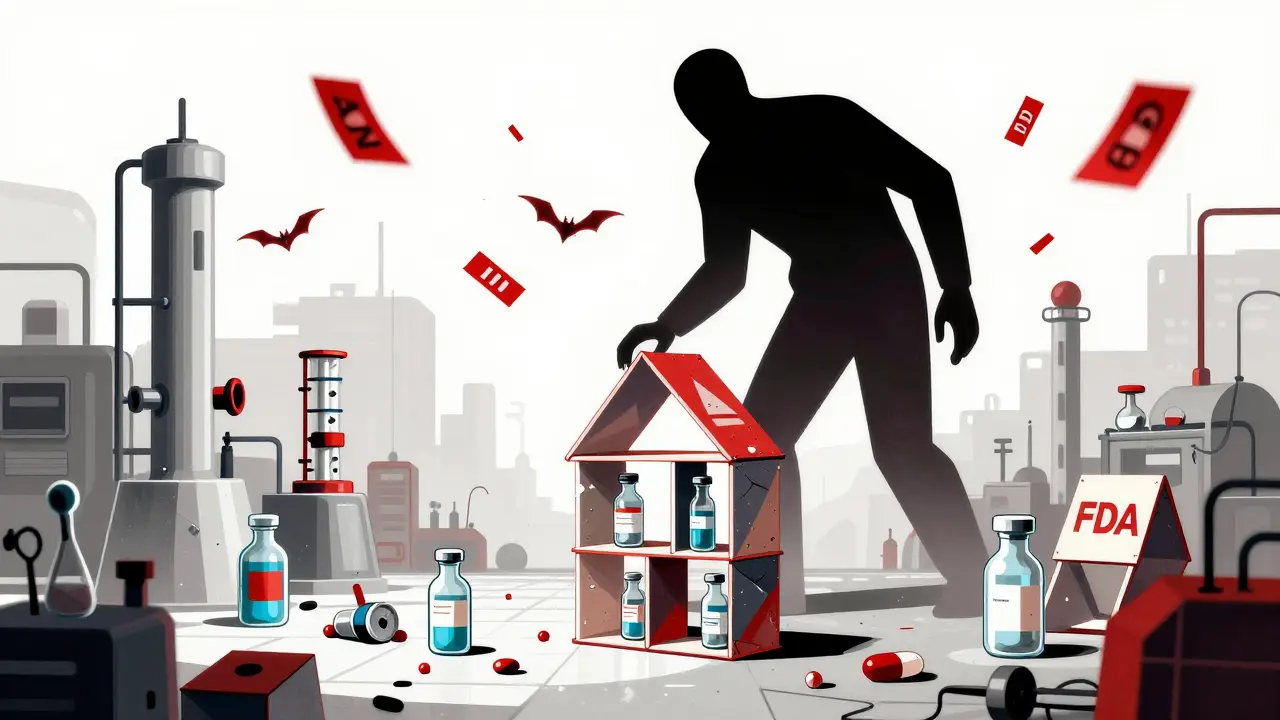
Imagine spending millions on a new drug or medical device, only to have the FDA block your products from entering the U.S. market because of a paperwork error or a dirty lab bench. It sounds like a nightmare, but it is becoming reality for many manufacturers. In 2025, the U.S. Food and Drug Administration (FDA) is intensifying its scrutiny of global pharmaceutical and medical device facilities, issuing 32% more quality system warning letters than in the same period last year. This isn't just about bureaucracy; it's about patient safety. The agency’s enforcement actions are rooted in the Federal Food, Drug, and Cosmetic Act of 1938, but the modern application under Title 21 of the Code of Federal Regulations (CFR) is stricter than ever. If you are in manufacturing, understanding these common deficiencies is no longer optional-it is critical for survival.
The Core Problem: A Crisis of Quality Culture
Before diving into specific technical failures, we need to address the root cause. Dr. David Lim, a principal consultant at Compliance Architects, identified a stark trend in his November 2025 analysis: 78% of facilities cited in warning letters showed leadership prioritizing production schedules over compliance. This is what regulators call a poor Quality Culture an organizational environment where quality is valued equally with speed and cost. When management pushes for output without providing the resources for proper checks, systemic failures follow. The FDA has shifted from looking for simple technical glitches to assessing this cultural foundation. Their Quality Management Maturity (QMM) initiative, launched in January 2024, now engages 87 manufacturers in voluntary assessments. By Q2 2026, these assessment results may directly influence how often the FDA inspects your facility. If your culture treats Good Manufacturing Practices (GMP) as a hurdle rather than a standard, you are already at risk.
Aseptic Processing Controls: The Most Frequent Citation
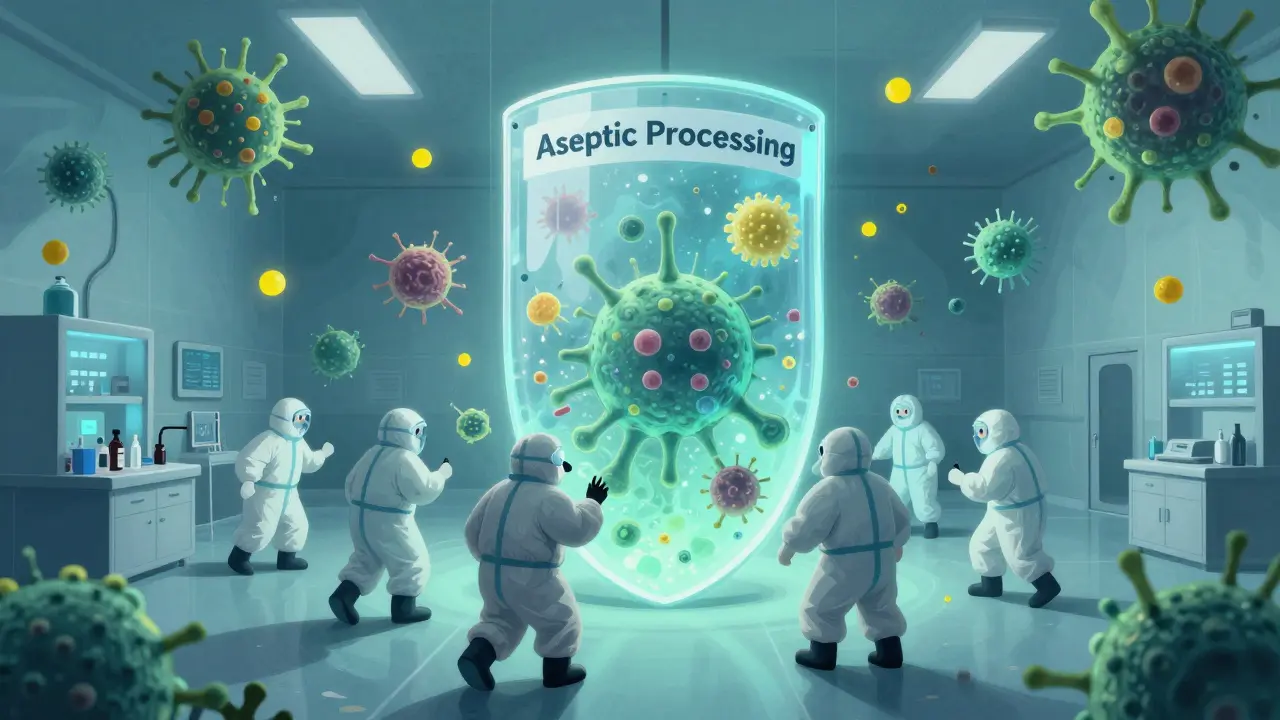
If there is one area that triggers immediate FDA alarm bells, it is Aseptic Processing manufacturing processes designed to keep products free from microbial contamination. In 2025, this appeared in 47% of all warning letters. Why? Because contamination can kill patients. Remember the heparin crisis of 2007-2009, which resulted in 84 deaths due to contaminated ingredients? The FDA does not forget.
Inspectors are looking for specific failures here:
- Inadequate Media Fill Studies: These studies simulate production using a nutrient-rich broth instead of the actual product to see if bacteria grow. If you skip steps or fail to validate these simulations, you cannot prove your sterile environment works. Health and Natural Beauty USA Corp. received a warning letter in July 2025 specifically for this failure.
- Failure to Maintain Sterile Environments: This includes improper gowning procedures, unmonitored air pressure differentials, or allowing non-essential personnel into cleanrooms during critical operations. Creative Essences, Inc. was cited in September 2025 for failing to maintain sterile conditions during critical fill operations.
To fix this, you must treat media fills as real production runs. Any deviation must be investigated with the same rigor as a product complaint. There is no such thing as a "minor" error in a sterile suite.
Data Integrity Failures: Trusting Your Records
You might think your science is solid, but if your records don’t prove it, the FDA will assume the worst. Data Integrity the completeness, consistency, and accuracy of data throughout its lifecycle issues appeared in 39% of 2025 warning letters. The FDA requires adherence to ALCOA+ principles: Attributable, Legible, Contemporaneous, Original, Accurate, plus Complete, Consistent, Enduring, and Available.
Common violations include:
- Missing Audit Trails: Instruments like UV-Vis and IR spectrophotometers must log every action taken by users. Guangxi Yulin Pharmaceutical Group Co. Ltd. was warned in September 2025 for lacking audit trails in their instruments. If an inspector cannot see who changed a result and when, they will assume fraud.
- Erasable Records: Using laminated production records with dry-erase markers is a major red flag. It allows operators to wipe out mistakes without leaving a trace. Investigations Quality highlighted this issue in May 2025, noting that paper-based systems must use single-strike-throughs with reasons for changes, never erasure.
- Lack of User Access Controls: Shared passwords or generic user accounts mean no one is accountable for data entry errors.
Remediation here is strict. The FDA requires validated electronic systems with minimum 180-day retention of records, sequential timestamping, and unique user IDs. You cannot simply promise to do better; you must implement technology that enforces compliance.
Material Control and Supplier Oversight
Your product is only as good as its raw materials. Material Control processes ensuring raw materials meet specifications before use in production deficiencies were found in 35% of warning letters. A significant portion of these involves high-risk excipients like glycerin and sorbitol, which can be contaminated with diethylene glycol (DEG), a toxic substance.
The FDA expects you to test for DEG and ethylene glycol (EG) at sensitivity levels of 0.1% w/w, referencing USP General Chapter <1085>. Health and Natural Beauty USA Corp. failed to test these components adequately, leading to a warning letter. Additionally, Foshan Yiying Hygiene Products Co., Ltd. was cited for inadequate verification of supplier testing reliability. You cannot blindly trust a Certificate of Analysis (CoA) from a supplier. You must qualify your suppliers and, for high-risk materials, perform incoming testing or rely on audited supplier data.
Process Validation Gaps
Proving your process works consistently is the essence of Process Validation establishing documented evidence that a process will consistently produce a product meeting its predetermined specifications. In 28% of 2025 warning letters, the FDA noted gaps here. Some facilities failed to validate basic processes, such as toothpaste manufacturing, while others lacked scientifically sound analytical methods.
The FDA’s 2022 Process Validation Guidance requires three consecutive successful validation batches with in-process controls meeting pre-specified acceptance criteria. If you change a parameter-like mixing time or temperature-you must re-validate. Skipping this step means you are producing product without scientific proof of its quality. Guangxi Yulin Pharmaceutical was cited for failing to establish robust analytical methods, making their quality data unreliable.

Geographic Trends and Regional Risks
Where you manufacture matters. The FDA increased unannounced foreign facility inspections by 40% in 2025, with 68% targeting Asian facilities. China, India, and Malaysia accounted for 73% of all warning letters issued that year. Here is how the issues break down by region:
| Region | Primary Issue | Warning Letters | Key Regulatory Context |
|---|---|---|---|
| China | Analytical Method Validation | 28 | Frequent lack of validated testing protocols |
| India | Data Integrity | 24 | Basic controls missing; CDSCO inspects <2% of domestic facilities annually |
| Malaysia | Quality Unit Oversight | 9 | Quality units lack independent authority |
Maria Chen, a quality assurance specialist, notes that Indian facilities often struggle with basic data integrity controls, partly because local regulators inspect fewer than 2% of domestic facilities annually. Chinese manufacturers frequently fail to establish Quality Units with proper authority. If you source from these regions, you must conduct rigorous audits yourself. Do not assume local compliance equals FDA compliance.
Remediation and Future Outlook
Receiving a warning letter is not the end, but it is a costly wake-up call. The FDA mandates engagement of independent CGMP consultants in 92% of cases. Remediation typically takes 6-18 months. For data integrity, you must implement validated audit trails. For material control, you need scientifically justified testing protocols. For process validation, you must demonstrate three consecutive successful batches.
Looking ahead to 2026, the FDA plans to conduct 1,200 unannounced inspections, including domestic facilities. Commissioner Robert Califf stated that QMM assessment results may inform inspection frequency starting in Q2 2026. Facilities with strong quality cultures see 63% fewer repeat findings and 41% faster remediation. Investing in quality is not just regulatory compliance; it is business strategy. As Hogan Lovells predicts, expect a 15-20% increase in warning letters related to quality culture deficiencies in 2026. The era of technical compliance alone is over. Now, the FDA wants to see a culture that values safety above all else.
What are the most common FDA manufacturing deficiencies in 2025?
The most common deficiencies are aseptic processing controls (47% of warning letters), data integrity failures (39%), material control issues (35%), and process validation gaps (28%). Aseptic processing remains the top concern due to the direct risk of patient harm from contamination.
How does the FDA define data integrity?
The FDA defines data integrity through the ALCOA+ principles: Attributable, Legible, Contemporaneous, Original, Accurate, plus Complete, Consistent, Enduring, and Available. Violations include missing audit trails, shared passwords, and the use of erasable records.
What is the FDA's Quality Management Maturity (QMM) initiative?
Launched in January 2024, the QMM initiative encourages manufacturers to adopt quality management practices beyond baseline CGMP requirements. As of September 2025, 87 manufacturers have participated in voluntary assessments. Starting in Q2 2026, QMM results may influence how frequently the FDA inspects a facility.
Which regions face the highest risk of FDA warning letters?
China, India, and Malaysia account for 73% of all warning letters issued in 2025. Chinese facilities are most cited for analytical method validation, Indian facilities for data integrity, and Malaysian facilities for quality unit oversight.
How long does it take to remediate FDA deficiencies?
Remediation typically ranges from 6 to 18 months, depending on severity. The FDA requires engagement of independent CGMP consultants in 92% of cases. Facilities with strong quality cultures achieve remediation 41% faster.