
Generic vs Brand Name Medications: What Really Matters for Your Health
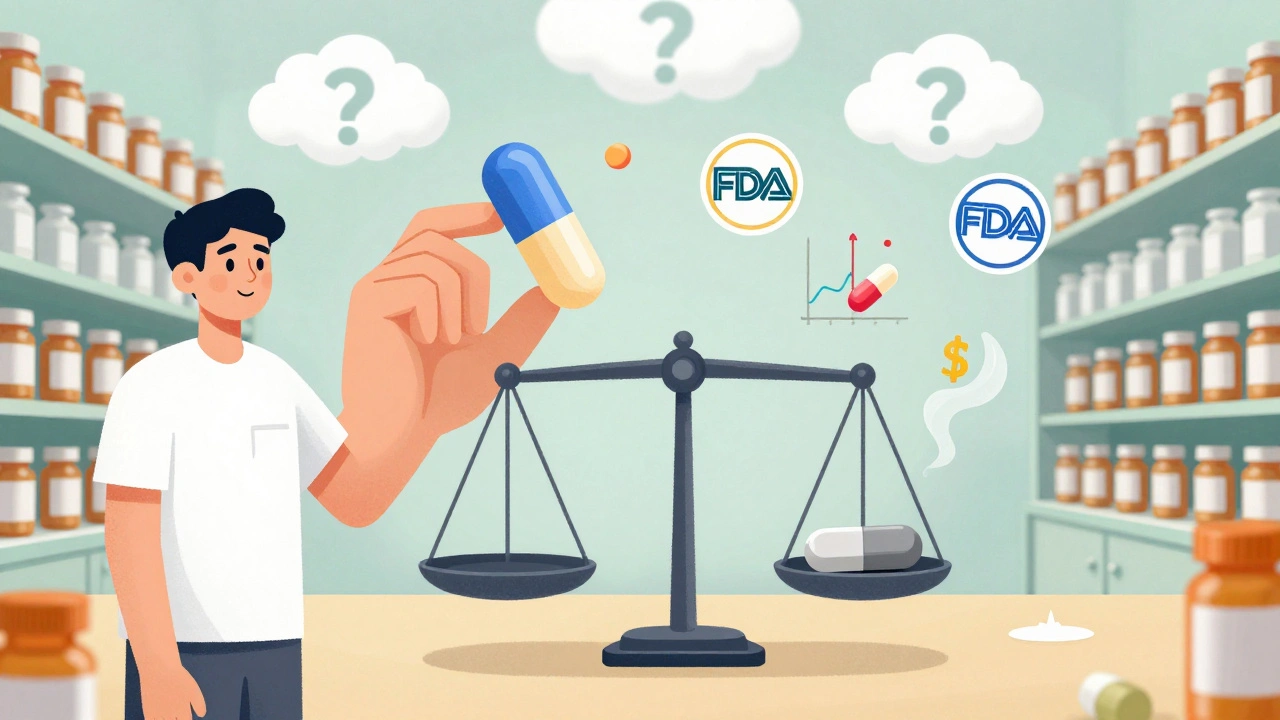
When you pick up a prescription, you might see two options: the brand-name pill you’ve heard of, or a cheaper generic version. The generic vs brand name, the difference between medications with identical active ingredients but different fillers, coatings, and manufacturing processes. Also known as brand-name equivalents, it’s not just a cost choice—it’s a health decision. The FDA says they’re the same. But if you’ve ever had a reaction after switching, you’re not imagining it.
The real difference isn’t in the active ingredient—it’s in the excipients, the non-active ingredients like fillers, dyes, and coatings that help the pill hold together or dissolve in your body. One person might tolerate the lactose in a generic version just fine, while another gets bloated or dizzy because their body reacts to the filler, not the drug. That’s why some people feel worse after switching, even when their doctor says it’s "the same thing." And it’s not just about side effects—therapeutic equivalence, how reliably a generic performs like the brand in real-world use matters most for drugs where tiny dose changes can cause big problems, like warfarin or levothyroxine.
Some states restrict generic swaps for these high-risk meds because the science shows patients have more fluctuations in blood levels after switching. Even if the generic passes lab tests, your body might not respond the same way. That’s why some people stick with the brand, not because they’re stubborn, but because their health depends on consistency. And if you’ve ever noticed your sleep, mood, or energy shifting after a pharmacy switch, it could be the coating on the pill changing how fast the drug enters your system.
This isn’t about distrust in generics—it’s about understanding that medicine isn’t one-size-fits-all. The same active ingredient can behave differently in your body depending on what else is in the pill. You’re not alone if you’ve had a bad experience. Thousands do. And that’s why the posts below dig into real cases: people who reacted to fillers, doctors who fight for brand-only prescriptions, and studies that prove why some switches backfire. You’ll find out when generics are safe, when they’re risky, and what to ask your pharmacist before you accept a swap.
About
Medications