
Peptic Ulcer: Causes, Treatments, and What You Need to Know
A peptic ulcer, a sore that develops in the lining of the stomach or the first part of the small intestine. Also known as stomach ulcer, it’s not caused by stress or spicy food like many think—it’s usually from a bacterial infection or long-term use of common painkillers. If you’ve ever felt a burning pain in your belly that gets worse when your stomach is empty, you might be dealing with one.
The main culprit behind most peptic ulcers is H. pylori, a type of bacteria that weakens the protective mucus layer in your stomach. This lets stomach acid dig into the tissue and create an open sore. The other big cause is NSAIDs, like ibuprofen or aspirin, which block the enzymes that help protect your stomach lining. People who take these daily for arthritis or headaches are at higher risk. Even though they’re sold over the counter, they’re not harmless when used long-term.
Treatment isn’t one-size-fits-all. If H. pylori is the issue, doctors combine antibiotics with acid-reducing meds like proton pump inhibitors, drugs that shut down the acid pumps in your stomach cells. These are often the first line of defense because they let the ulcer heal by lowering acid levels. You might also hear about H2 blockers—they’re another option, but PPIs work faster and longer. The goal isn’t just to relieve pain, but to fully heal the tissue so it doesn’t come back.
What you eat doesn’t cause ulcers, but certain things can make symptoms worse. Coffee, alcohol, and smoking all increase acid and slow healing. Quitting smoking isn’t just good for your lungs—it’s critical if you have an ulcer. And while antacids give quick relief, they don’t fix the root problem. That’s why many people end up back in the doctor’s office—they treat the symptom, not the cause.
There’s a reason you’ll see so many posts here about medications like Prilosec, antibiotics, and pain relievers. These aren’t random—they’re directly tied to how peptic ulcers are diagnosed, treated, and managed. You’ll find real-world advice on what works, what doesn’t, and how to avoid common mistakes. Whether you’re newly diagnosed, managing a chronic issue, or just trying to understand why your doctor changed your meds, this collection gives you the facts without the fluff.
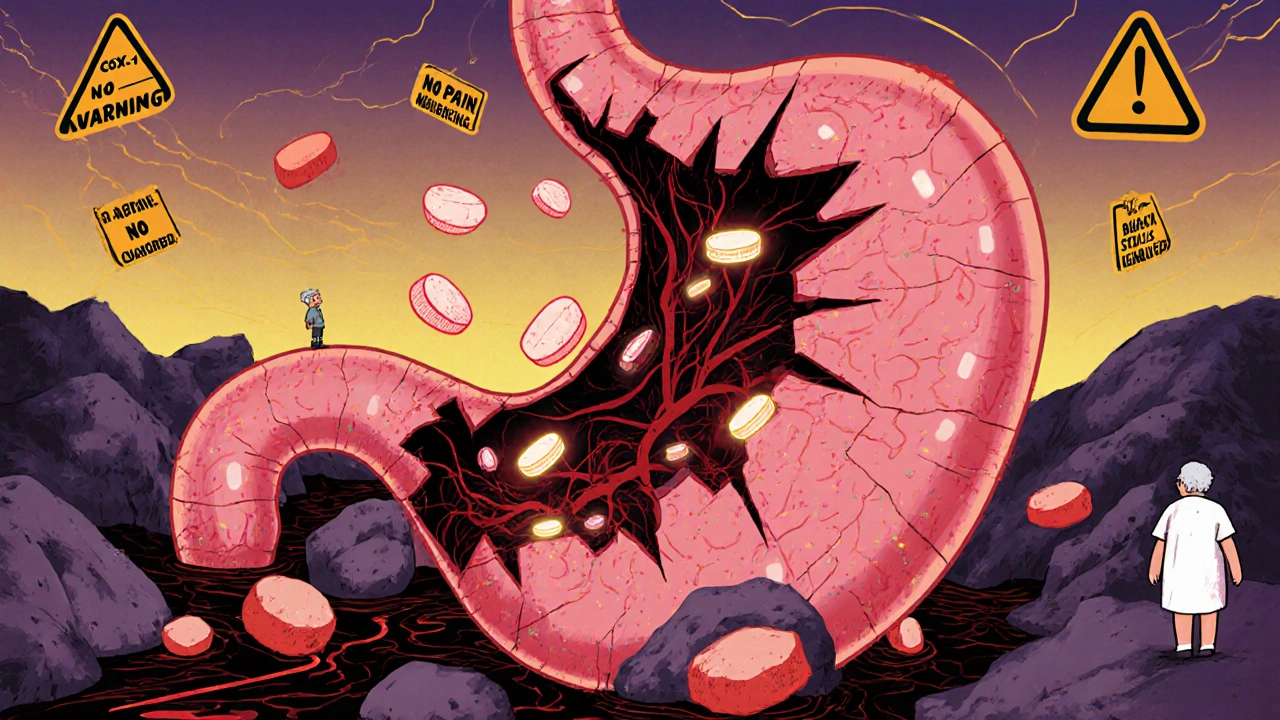
NSAIDs and Peptic Ulcer Disease: Understanding the Risk of Gastrointestinal Bleeding
NSAIDs like ibuprofen and naproxen can cause serious stomach bleeding, especially in older adults or those with risk factors. Learn who’s most at risk, how to protect yourself with PPIs, and safer alternatives for long-term pain relief.
About
Medications