
Real-World Evidence: What It Is and Why It Matters for Your Medications
When you hear real-world evidence, data collected from everyday patients outside controlled clinical trials. It's what happens when a drug leaves the lab and hits the pharmacy shelf, the doctor’s office, and your kitchen table. This isn’t theory. It’s what actually happens when thousands of people take a medication for months or years — with other health problems, different diets, and messy lives. The FDA approves drugs based on clinical trials, but those trials often leave out older adults, pregnant women, or people on five different pills. Real-world evidence fills those gaps.
Think about generic drugs, medications that copy brand-name drugs but cost much less. They’re proven to be bioequivalent in labs, but real-world evidence tells you if switching to a generic causes stomach upset, mood changes, or worse — because of the fillers, not the active ingredient. That’s why some people feel different after switching, even when the label says it’s the same. It’s also why state laws in 27 states block generic swaps for drugs like warfarin or levothyroxine — because real patients had bad outcomes when their pills changed, even slightly. And it’s not just generics. Real-world evidence shows why some people with diabetes get sicker when they’re ill, why diuretics work for some with ascites but not others, or why a new GLP-1 drug might cause nausea in 30% of users — numbers you won’t see in the brochure.
Real-world evidence doesn’t replace clinical trials. It completes them. It answers the questions trials never asked: Did the patient take it every day? Did they run out of pills because of cost? Did their kidney function drop after six months? These aren’t abstract concerns — they’re the reason some people stop taking meds, end up in the ER, or lose trust in their doctor. The posts below dive into exactly these kinds of stories: how sodium restriction affects ascites, why excipients in generics cause reactions, how NTI drugs behave differently in real life, and what happens after a year on a generic. You’ll see how patient outcomes shape guidelines, how drug shortages force real-time changes, and why what works on paper doesn’t always work in your body.
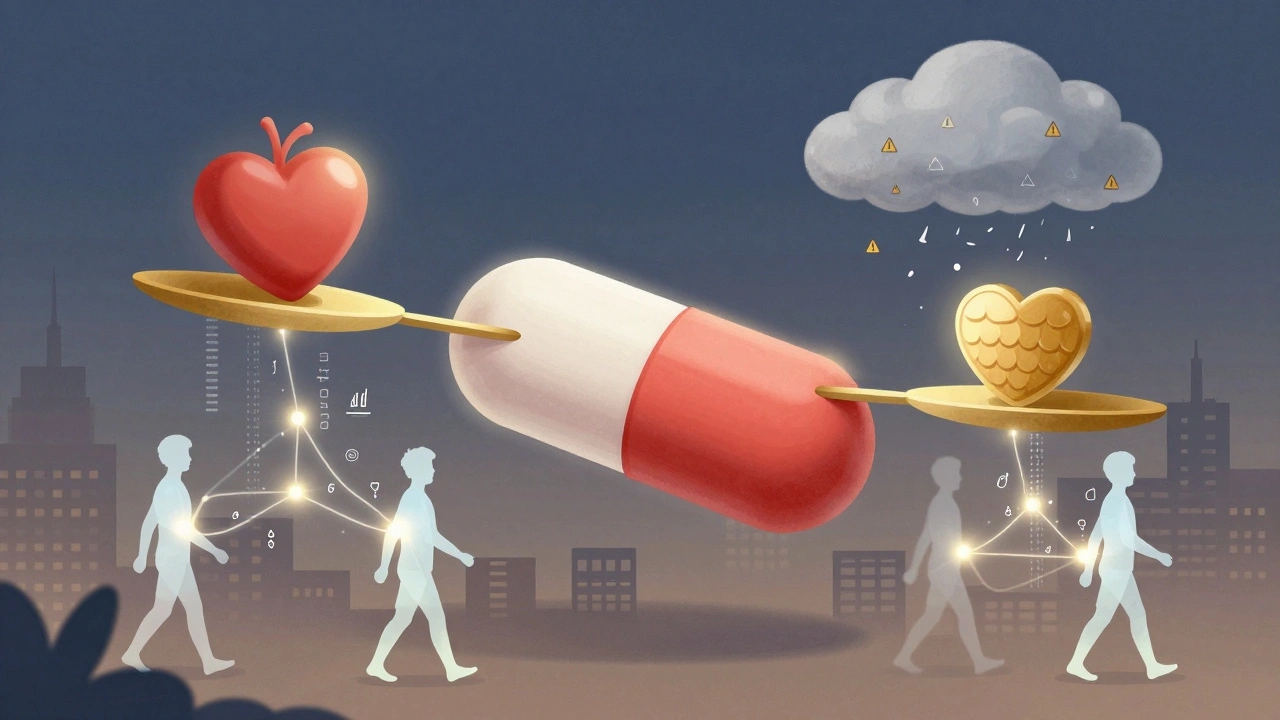
The Science of Medication Safety: Understanding Risk, Benefit, and Real-World Evidence
Understanding medication safety means knowing how drugs are tested, how risks are found after approval, and what real-world evidence tells us about true benefits and dangers. This is the science behind every prescription.
About
Medications