
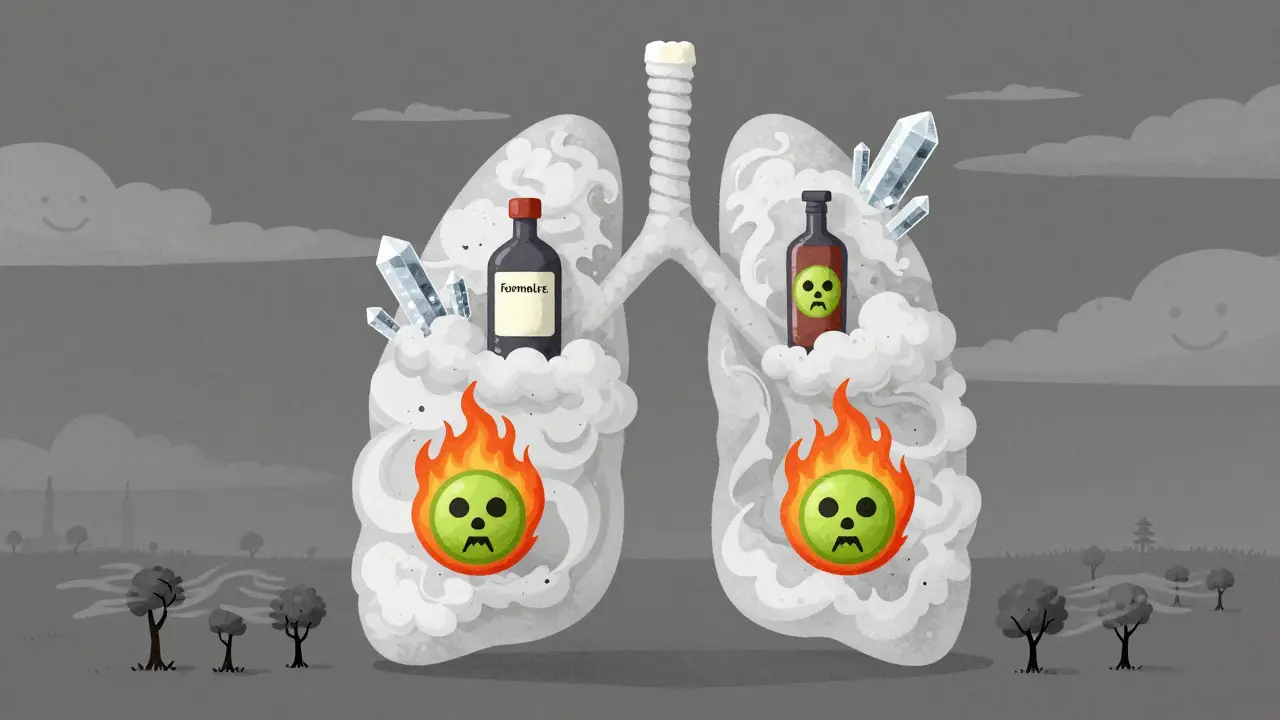
When you see someone vaping on the street, it’s easy to think it’s just water vapor-harmless, maybe even trendy. But the truth is, what’s inside that cloud isn’t just flavor and nicotine. It’s a mix of chemicals that can hurt your lungs, even if you’ve never smoked a cigarette. By 2025, the data is clear: vaping isn’t a safe alternative. It’s a different kind of risk.
What’s Actually in Vaping Aerosol?
E-cigarettes heat a liquid-usually made of propylene glycol, vegetable glycerin, nicotine, and flavorings-to create an aerosol you inhale. Sounds simple, right? But here’s what happens when that liquid gets hot: it breaks down into toxic compounds you can’t see or taste.
Studies from the University of North Carolina found that both propylene glycol and vegetable glycerin are toxic to lung cells. The more additives in the e-liquid-like flavorings or thickening agents-the worse the damage. And those flavorings? Many contain diacetyl, a chemical once linked to "popcorn lung," a serious and irreversible lung disease. While diacetyl has been banned in many countries, it’s still found in some products, especially those sold illegally or online.
Then there’s the rest: formaldehyde, acetaldehyde, acrolein, benzene, nickel, lead, and tin. These aren’t just trace amounts. They’re in every puff. Benzene? That’s a known carcinogen found in car exhaust. Acrolein? It’s used in weed killer and can burn your airways. The U.S. Surgeon General confirmed in 2016 that secondhand vape aerosol contains these same toxins-and ultrafine particles that get deep into your lungs.
The Immediate Damage: Inflammation and Irritation
Your lungs aren’t designed to handle chemical aerosols. Every time you vape, you’re coating your airways with irritants. That leads to inflammation-swelling, redness, and excess mucus. You might not notice it at first. But over time, this becomes chronic.
People who vape regularly report persistent coughing, wheezing, chest tightness, and shortness of breath-even if they’re young and otherwise healthy. These aren’t just "annoyances." They’re signs your lungs are under stress. The American Lung Association says these symptoms can develop into long-term lung disease, even in people with no prior history of respiratory problems.
One study showed that vapers had higher levels of inflammatory markers in their lungs than non-users. That’s not just a lab result. It means your immune system is constantly fighting off damage from the vape chemicals. And when your immune system is busy dealing with that, it’s less ready to fight off real threats like colds, flu, or pneumonia.
EVALI: The Wake-Up Call That Couldn’t Be Ignored
In 2019, something terrifying happened. Across the U.S., thousands of people-mostly young adults-showed up at hospitals with severe lung damage. They couldn’t breathe. Their oxygen levels dropped. Some needed ventilators. At least 68 people died.
The cause? EVALI-E-cigarette or Vaping Use-Associated Lung Injury. The CDC traced most cases to THC vape cartridges laced with vitamin E acetate. That thickening agent, meant to make the oil more potent, turned into a toxic sludge when heated. It coated the lungs like glue, blocking oxygen.
Even though vitamin E acetate has been targeted in regulations since then, EVALI taught us something critical: vaping products are not tightly controlled. What’s in your cartridge might not match the label. And even if you only use nicotine, the same chemical reactions can still damage your lungs. The risk isn’t just from black-market products. It’s built into the design of the device and the chemistry of the liquid.

Vaping and COPD: A Growing Threat
Chronic Obstructive Pulmonary Disease (COPD) used to be a smoker’s disease. Now, it’s showing up in people who’ve never lit a cigarette.
A major 2025 analysis from the NIH found that current e-cigarette users had a 48% higher risk of developing COPD compared to people who never vaped. That’s not a small increase. It’s the same level of risk seen in people who smoke fewer than five cigarettes a day. And unlike smoking, vaping doesn’t come with the obvious warning signs-so people don’t realize they’re in danger until it’s too late.
What makes this worse is that vaping damages the lungs differently than smoking. Traditional cigarettes burn tobacco, releasing tar and thousands of chemicals. Vaping heats liquid, releasing fewer carcinogens-but more fine particles and reactive chemicals that cause inflammation and weaken lung defenses. The result? Slower healing, weaker immunity, and a higher chance of long-term breathing problems.
How Vaping Weakens Your Immune System
Your lungs have a built-in defense system. Tiny hairs called cilia sweep out germs and debris. Special cells called macrophages swallow up invaders. Vaping shuts both down.
Research from the American Thoracic Society showed that e-cigarette vapor reduces the ability of macrophages to fight bacteria. In lab tests, lung cells exposed to vape aerosol were 50% less effective at clearing out pathogens like the bacteria that cause pneumonia. That’s not theoretical. Real-world data shows vapers get respiratory infections more often-and recover slower.
One study followed adults who vaped but didn’t smoke. They had twice the rate of bronchitis and ear infections compared to non-vapers. Another found that vapers who got the flu were more likely to be hospitalized. Your lungs aren’t just irritated-they’re disabled.
Is Vaping Better Than Smoking?
Yes and no. If you’re a current smoker who can’t quit, switching to vaping reduces your exposure to tar, carbon monoxide, and many cancer-causing chemicals. That’s why groups like the Royal College of Physicians in the UK say vaping is a harm reduction tool.
But here’s the catch: "Less harmful" doesn’t mean "harmless." And for people who’ve never smoked, vaping introduces a whole new set of risks. The National Academies of Sciences found that teens who vape are more likely to develop asthma, cough, and wheezing. The CDC says vaping can trigger asthma attacks. And the American Lung Association warns that vaping may lead to nicotine addiction-and eventually, cigarette smoking.
Dr. NeSmith put it simply: "No matter how you inhale nicotine-through smoke or vapor-you’re putting your lungs under stress." The goal shouldn’t be to swap one harmful habit for another. It should be to quit nicotine entirely.
What You Should Do If You Vape
If you vape and you’re worried about your lungs, here’s what matters now:
- Stop. Even if you feel fine. Lung damage builds silently. You might not have symptoms yet, but inflammation is happening.
- Get checked. Ask your doctor for a lung function test. It’s quick, painless, and can catch early signs of damage.
- Watch for symptoms. Persistent cough, shortness of breath during light activity, chest tightness, or frequent respiratory infections? See a pulmonologist.
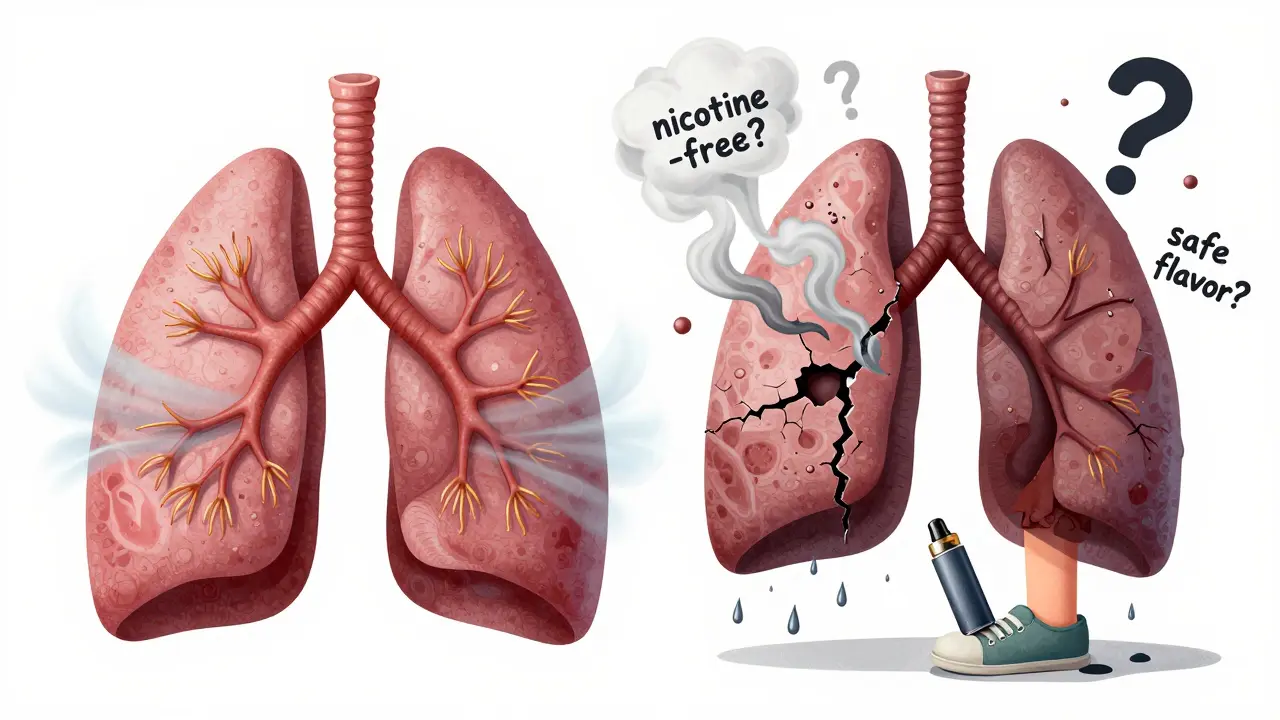
- Don’t trust flavor labels. Even "nicotine-free" vapes can contain harmful chemicals. The ingredients aren’t always listed accurately.
- Don’t mix vaping with smoking. Dual use doesn’t reduce risk-it doubles it.
Recovery is possible. After quitting, many people notice improved breathing within weeks. Cilia start working again. Inflammation goes down. But some damage-like scarring or reduced lung elasticity-may be permanent. The sooner you quit, the better your chances.
The Bottom Line
Vaping isn’t a harmless hobby. It’s a respiratory risk with real, documented consequences. The chemicals in e-cigarettes cause inflammation, weaken immunity, and increase the chance of serious lung disease-even in people who’ve never smoked.
The EVALI outbreak proved that unregulated vaping products can cause sudden, life-threatening damage. The rise in COPD among vapers shows the long-term cost. And the fact that youth are now the fastest-growing group of users means this isn’t just an adult problem-it’s a public health crisis in motion.
If you vape, the safest choice isn’t to switch brands or flavors. It’s to stop. Your lungs don’t need another cloud. They need rest, recovery, and clean air.
Can vaping cause permanent lung damage?
Yes. Vaping can cause irreversible damage to lung tissue, especially with long-term use. Inflammation from chemicals like acrolein and formaldehyde can lead to scarring, reduced lung function, and conditions like bronchiolitis obliterans or COPD. While some early damage may improve after quitting, structural changes in the airways and alveoli can be permanent.
Is nicotine-free vaping safe for your lungs?
No. Even nicotine-free vapes contain propylene glycol, vegetable glycerin, and flavorings-all of which become toxic when heated. Studies show these ingredients damage lung cells and trigger inflammation regardless of nicotine content. The absence of nicotine doesn’t make vaping safe.
How does vaping compare to smoking in terms of lung risk?
Vaping exposes users to fewer carcinogens than traditional cigarettes, but it introduces unique toxins like acrolein and ultrafine particles that damage lung function differently. While smoking carries a higher overall risk of cancer and COPD, vaping still increases COPD risk by nearly 50% and impairs immune defenses more than smoking in some studies. Neither is safe.
Can vaping trigger asthma?
Yes. Multiple studies, including those by the National Academies of Sciences, show that vaping increases the risk of asthma symptoms and attacks, especially in teens and young adults. The chemicals in vape aerosol irritate airways, causing bronchoconstriction and increased mucus production-key triggers for asthma.
What should I do if I think vaping is harming my lungs?
Stop vaping immediately. Schedule a visit with your doctor and ask for a pulmonary function test. If you have symptoms like chronic cough, shortness of breath, or frequent infections, request a referral to a pulmonologist. Early detection can prevent long-term damage. Don’t wait for symptoms to get worse.
Are there any safe vaping products?
No. There are no vaping products proven to be safe for lung health. Even products labeled as "medical-grade" or "organic" still heat chemicals that produce toxic byproducts. Regulatory oversight is inconsistent, and ingredients can change without notice. The only way to eliminate risk is to avoid vaping entirely.


Becky Baker
December 24, 2025 AT 13:57Y’all act like vaping is the end of the world but my cousin smoked two packs a day for 20 years and still runs marathons. This article is fearmongering with fancy words. If you wanna live in a bubble go ahead but don’t drag everyone else down with your panic.
Steven Destiny
December 26, 2025 AT 06:09Listen. I used to vape daily. Thought it was cool. Thought it was safe. Then I started coughing up stuff I didn’t even know existed. Went to the doc, got a pulmonary test-turns out my lungs looked like a burnt toast slice. I quit. Three months later? I can climb stairs without wheezing. This isn’t hype. It’s my life. Stop ignoring the signs.
Amy Lesleighter (Wales)
December 26, 2025 AT 22:17propylene glycol breaks down into formaldehyde when heated thats science not opinion. even if you got no nicotine its still burning chemicals in your lungs. i used to vape for stress now i just breathe. my lungs thank me. you dont need a fancy study to know smoke is smoke no matter how pretty the cloud looks
Peter sullen
December 28, 2025 AT 00:40It is imperative to underscore, with unequivocal scientific rigor, that the aerosolized particulate matter generated by electronic nicotine delivery systems (ENDS) constitutes a non-trivial pulmonary irritant, characterized by elevated concentrations of reactive carbonyls, ultrafine particulates, and metal nanoparticles-each of which has been empirically associated with oxidative stress, epithelial dysfunction, and downregulation of alveolar macrophage phagocytosis. The clinical implications are non-negotiable.
Fabio Raphael
December 28, 2025 AT 04:15I get why people vape. Stress, social pressure, boredom. I’ve been there. But reading this made me realize I didn’t even know what I was putting in my body. I thought it was just flavor and nicotine. Turns out I was basically inhaling weed killer and car exhaust. I’m quitting. Not because I’m scared-I’m just tired of my lungs being a science experiment.
Sophia Daniels
December 29, 2025 AT 12:46Oh honey, you think this is bad? Wait till you see what’s in those "nicotine-free" gummy-flavored pods that teens are smuggling into school. Vitamin E acetate? Pfft. Now they’re using polyethylene glycol and acetoin-chemicals so nasty, even the chemists at the lab threw up. You think your vape is "safe"? Sweetie, your lungs are currently throwing a rave with toxic DJs and no bouncers.
Nikki Brown
December 31, 2025 AT 08:55You’re not just hurting yourself-you’re normalizing addiction for kids. Every time you vape in public, you’re telling teenagers it’s cool. You’re a walking billboard for ruin. I’ve seen too many teens start with "just one puff" and end up in rehab. You think you’re being rebellious? You’re just being selfish. 💔
roger dalomba
January 1, 2026 AT 06:48So… vaping = bad. Got it. Next?
Rajni Jain
January 2, 2026 AT 20:02i used to vape when i was stressed at work. then i started having chest pain. my mom in india told me to try breathing exercises instead. i did. now i dont miss the vape at all. your lungs are your best friend-dont treat them like trash. take a breath. really. just breathe.