
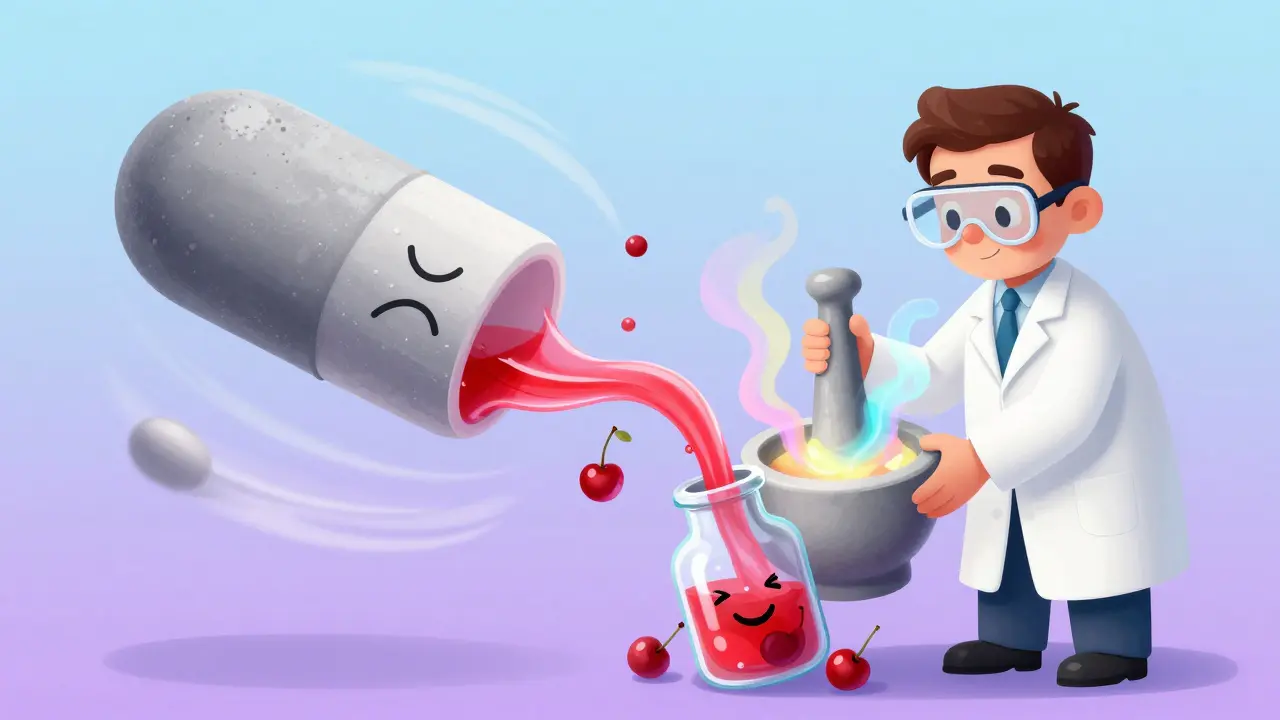
Imagine trying to swallow a pill that tastes like chalk, or needing a dose of medication that doesn't exist in the standard sizes sold at your local pharmacy. For millions of patients, this isn't just an inconvenience-it's a barrier to getting better. This is where compounded medications are custom-made prescription drugs created by pharmacists to meet specific patient needs that commercial drugs cannot satisfy. Unlike mass-produced pills from big pharmaceutical companies, these formulations are tailored individually for you.
You might be wondering if these custom formulas are safe. The short answer is yes, but with important caveats. Compounded drugs are not approved by the Food and Drug Administration (FDA) for safety or effectiveness before they reach you. This means the responsibility for quality falls heavily on the pharmacist creating them. Understanding when you need one, how to find a reputable provider, and what risks exist is crucial for your health.
What Exactly Are Compounded Medications?
To understand compounding, think back to the early days of pharmacy. Before large factories existed, every single prescription was mixed by hand in a small shop. That practice never truly disappeared; it just evolved. Today, compounding pharmacies are specialized facilities that prepare personalized medication formulations based on individual prescriptions. They take active drug ingredients and combine them into specific forms-like creams, liquids, gels, or suppositories-that aren't available off the shelf.
The primary reason we still use compounding is simple: one size does not fit all. Standard pharmaceutical products are designed for the average patient. But what if you have a severe allergy to lactose, gluten, or certain dyes found in most pills? What if you need a dose of 1.5mg, but the manufacturer only makes 1mg and 2mg tablets? In these cases, compounding fills the gap. It allows healthcare providers to prescribe exactly what a patient needs, rather than forcing them to compromise with the next best thing.
When Do You Actually Need a Custom Formula?
Not everyone needs compounded meds. In fact, experts agree they should be the exception, not the rule. However, there are several clear scenarios where they become essential:
- Allergies and Intolerances: If you react to fillers like dyes, preservatives, or gluten in standard drugs, a compounding pharmacist can remove those ingredients entirely.
- Dosage Precision: Some conditions require very specific dosing adjustments during treatment. Compounding allows for precise titration, such as reducing a hormone dose by tiny increments until the right balance is found.
- Difficulty Swallowing Pills: About 40% of adults and up to 80% of children struggle to swallow pills. Compounding can turn a tablet into a flavored liquid, a dissolvable lozenge, or a topical gel.
- Combining Medications: If you take multiple drugs daily, a compounding pharmacist can sometimes mix them into a single dosage form, improving adherence and simplifying your routine.
- Veterinary Needs: Animals often require doses or forms that human medicine doesn't provide. Compounding is a staple in veterinary care for species-specific treatments.
A common example is pediatric ADHD medication. A child might refuse to take bitter pills but will happily drink a cherry-flavored liquid version. Studies show that flavored liquid formulations can improve adherence rates by nearly 30% compared to unflavored alternatives. Another frequent use case is hormone replacement therapy, where bioidentical hormones are customized to match a patient's exact biological profile.

Safety Risks and Regulatory Oversight
This is the part that worries many people, and rightfully so. Because compounded medications are not FDA-approved, the agency does not test them for safety, efficacy, or quality control before they are dispensed. This lack of pre-market approval creates potential risks if the pharmacy cutting corners.
The biggest wake-up call for the industry was the 2012 meningitis outbreak linked to the New England Compounding Center. Poorly sterilized steroid injections contaminated with bacteria affected 798 patients and caused 64 deaths. That tragedy led to the passage of the Drug Quality and Security Act in 2013, which established stricter rules for compounding.
Today, the regulatory landscape is split into two main categories:
- Section 503A Pharmacies: These are traditional community pharmacies regulated by state boards. They compound medications for individual patients based on valid prescriptions. They must follow United States Pharmacopeia (USP) standards, including Chapter <795> for non-sterile compounds and Chapter <797> for sterile ones.
- Section 503B Outsourcing Facilities: These are larger operations registered with the FDA. They produce larger batches of compounded drugs without individual prescriptions and must adhere to Current Good Manufacturing Practices (CGMP). They are subject to more rigorous FDA inspections.
Despite these regulations, issues persist. Between 2010 and 2020, compounded medications accounted for only 1% of total prescriptions but represented 17% of drug recalls due to quality issues. Recent enforcement actions have seen the FDA issue warning letters to pharmacies for improper sterilization techniques and mislabeling. The key takeaway here is that while the system has improved, vigilance is still required from both providers and patients.
How to Find a Reputable Compounding Pharmacy
Not all compounding pharmacies are created equal. Some operate with high standards and expert staff, while others may cut corners to save money. Here is how you can protect yourself:
First, look for accreditation. The Pharmacy Compounding Accreditation Board (PCAB) is a third-party organization that inspects and accredits compounding pharmacies. As of 2023, only about 350 of the approximately 7,500 compounding pharmacies in the U.S. hold PCAB accreditation. This is a strong indicator of quality.
Second, ask questions. A reputable pharmacist will be happy to explain how they source their ingredients, what quality controls they perform, and why they chose a specific formulation for you. If they seem evasive or unwilling to share details, walk away.
Third, check reviews and ratings. Platforms like Healthgrades show that specialty compounding pharmacies with dedicated formulation experts tend to have higher satisfaction ratings (around 4.6 out of 5 stars) compared to general pharmacies offering limited compounding services (around 3.8 out of 5 stars).
Finally, ensure your healthcare provider is involved. Federal law requires a valid patient-pharmacist-provider relationship. Your doctor should know you are using compounded medication and monitor your response to it. Never self-prescribe compounded drugs, especially for complex conditions like hormone therapy.

Cost and Insurance Coverage Challenges
One downside of compounding is the cost. Because each batch is made individually, economies of scale don't apply. Basic non-sterile compounds can range from $30 to $100, compared to $10-$50 for generic equivalents. Complex sterile compounds, which require specialized equipment and testing, can cost between $200 and $500.
Insurance coverage is another hurdle. Medicare Part D covers only about 42% of compounded medication claims, compared to 78% for commercially available drugs. Private insurers vary widely in their policies. Some plans exclude compounding entirely, while others cover it if no commercial alternative exists. Always check with your insurance provider before starting treatment, and be prepared to pay out-of-pocket if necessary.
| Feature | Commercial Medications | Compounded Medications |
|---|---|---|
| FDA Approval | Yes (tested for safety/efficacy) | No (pharmacist responsible for quality) |
| Customization | Limited (standard doses/forms) | High (exact doses, allergen-free, custom forms) |
| Cost | $10 - $50 (generics) | $30 - $500+ (depending on complexity) |
| Insurance Coverage | Wide (78% Medicare coverage) | Limited (42% Medicare coverage) |
| Best For | Standard treatments, large populations | Allergies, unique dosing, swallowing difficulties |
The Future of Personalized Medicine
Compounding is evolving beyond simple formulation changes. Emerging trends include precision compounding using pharmacogenomic data. This means creating medications tailored to an individual's genetic profile. For example, patients with CYP2D6 gene variants that affect drug metabolism may benefit from customized doses that standard guidelines don't account for. Early adopters report better therapeutic outcomes in these cases.
However, controversy remains. The FDA has cracked down on pharmacies compounding weight-loss drugs like semaglutide in ways that resemble manufacturing rather than compounding. Commissioner Robert Califf has warned against large-scale production of compounded versions of FDA-approved drugs when those drugs are available. The line between legitimate compounding and unauthorized manufacturing is thin, and regulators are watching closely.
The path forward requires balancing access to necessary customized medications with robust quality standards. As Dr. Lucinda Maine of the American Association of Colleges of Pharmacy stated, we need to elevate compounding standards while preserving its essential role in addressing unmet patient needs.
Are compounded medications safe?
Compounded medications can be safe when prepared by reputable pharmacies following strict quality standards like USP Chapters <795> and <797>. However, they are not FDA-approved, meaning the agency does not verify their safety or efficacy beforehand. Risks increase if the pharmacy lacks proper accreditation or fails to follow sterile techniques. Always choose accredited providers and consult your healthcare provider.
Why would I need a compounded medication instead of a regular one?
You might need a compounded medication if you have allergies to ingredients in standard drugs (like dyes or gluten), require a specific dose not commercially available, have difficulty swallowing pills, or need a combination of drugs in one form. Compounding addresses these unique needs that mass-produced medications cannot satisfy.
Does insurance cover compounded medications?
Coverage varies significantly. Medicare Part D covers only about 42% of compounded medication claims, compared to 78% for commercial drugs. Private insurers have different policies; some cover compounding if no commercial alternative exists, while others exclude it entirely. Always check with your insurer before starting treatment.
How do I find a trustworthy compounding pharmacy?
Look for pharmacies accredited by the Pharmacy Compounding Accreditation Board (PCAB). Ask questions about their ingredient sourcing and quality control processes. Check online reviews and ratings, preferring specialty compounding pharmacies over general ones. Ensure your healthcare provider is involved in the process and monitors your treatment.
What is the difference between Section 503A and 503B compounding?
Section 503A refers to traditional community pharmacies regulated by state boards, compounding for individual patients based on prescriptions. Section 503B refers to outsourcing facilities registered with the FDA, which produce larger batches without individual prescriptions and must follow stricter Current Good Manufacturing Practices (CGMP). 503B facilities face more rigorous federal oversight.