
Narrow Therapeutic Index Drug Checker
Check Your Medication
Enter your medication name to see if it's a narrow therapeutic index (NTI) drug that requires special consideration when switching between generics.
When you pick up a prescription, you might see two options: the familiar brand name you’ve heard on TV, or a cheaper generic with a plain label. You might wonder - is the generic just as safe? Or are you risking your health to save money?
The short answer? For nearly every medication, yes - generics are just as safe as brand names. The U.S. Food and Drug Administration (FDA) requires them to meet the same strict standards for active ingredients, strength, purity, and how quickly they work in your body. But there’s more to the story than that.
What Makes a Generic Drug “Generic”?
A generic drug isn’t a copycat. It’s a legally approved version of a brand-name drug that contains the exact same active ingredient, in the same dose, and works the same way. The FDA doesn’t allow any wiggle room here. If your brand-name pill has 50 milligrams of lisinopril, the generic must have exactly 50 milligrams of lisinopril - no more, no less.
The difference? Inactive ingredients. These are the fillers, dyes, and binders that hold the pill together or make it easier to swallow. The FDA lets generic manufacturers use different ones - which is why a generic pill might look different in color or shape. But these inactive ingredients don’t affect how the drug works. They’re not the reason the drug cures your high blood pressure or lowers your cholesterol.
Before a generic hits the shelf, it must pass a bioequivalence test. That means researchers measure how much of the drug enters your bloodstream and how fast. The generic must deliver between 80% and 125% of the brand-name drug’s absorption rate. That’s not a wide gap - it’s tight enough to ensure your body reacts the same way. Over 97% of approved generics get an “A” rating in the FDA’s Orange Book, meaning they’re considered fully interchangeable with the brand.
Why Do People Think Generics Are Less Effective?
It’s not about science. It’s about perception.
A 2022 Kaiser Family Foundation survey found that 68% of Americans believe generics are less effective than brand-name drugs. Yet, 89% of those same people had used generics before. That disconnect is telling. People trust the name they recognize. They remember the brand from TV ads. They assume the expensive version must be better.
Real-world stories add to the confusion. On Drugs.com, some patients report feeling “off” after switching from Synthroid to generic levothyroxine. Reddit threads are full of people saying their thyroid levels fluctuated after a switch. These aren’t made-up complaints. They’re real experiences.
But here’s what’s missing from those stories: context. Most people don’t realize that switching between different generic brands - not just brand to generic - can cause changes. If you take one generic for six months, then your pharmacy switches to a different generic (still FDA-approved), your body might react differently because the inactive ingredients changed. That’s not the generic’s fault. It’s a quirk of how pharmacies source their supplies.
And then there’s the cost factor. When you pay $11 for a generic instead of $657 for the brand, you’re more likely to notice side effects - because you’re paying attention. You’re thinking, “I saved money, so maybe this isn’t working as well.” That psychological effect is real, and it can make you feel worse - even if your blood levels haven’t changed.
When Generics Might Need Extra Caution
There’s one group of drugs where the stakes are higher: narrow therapeutic index (NTI) drugs.
These are medications where even a tiny change in blood concentration can lead to serious problems. Too little, and the drug doesn’t work. Too much, and it becomes toxic.
Examples include:
- Warfarin (Coumadin) - a blood thinner
- Levothyroxine (Synthroid) - for thyroid replacement
- Phenytoin (Dilantin) - for seizures
- Digoxin (Lanoxin) - for heart rhythm
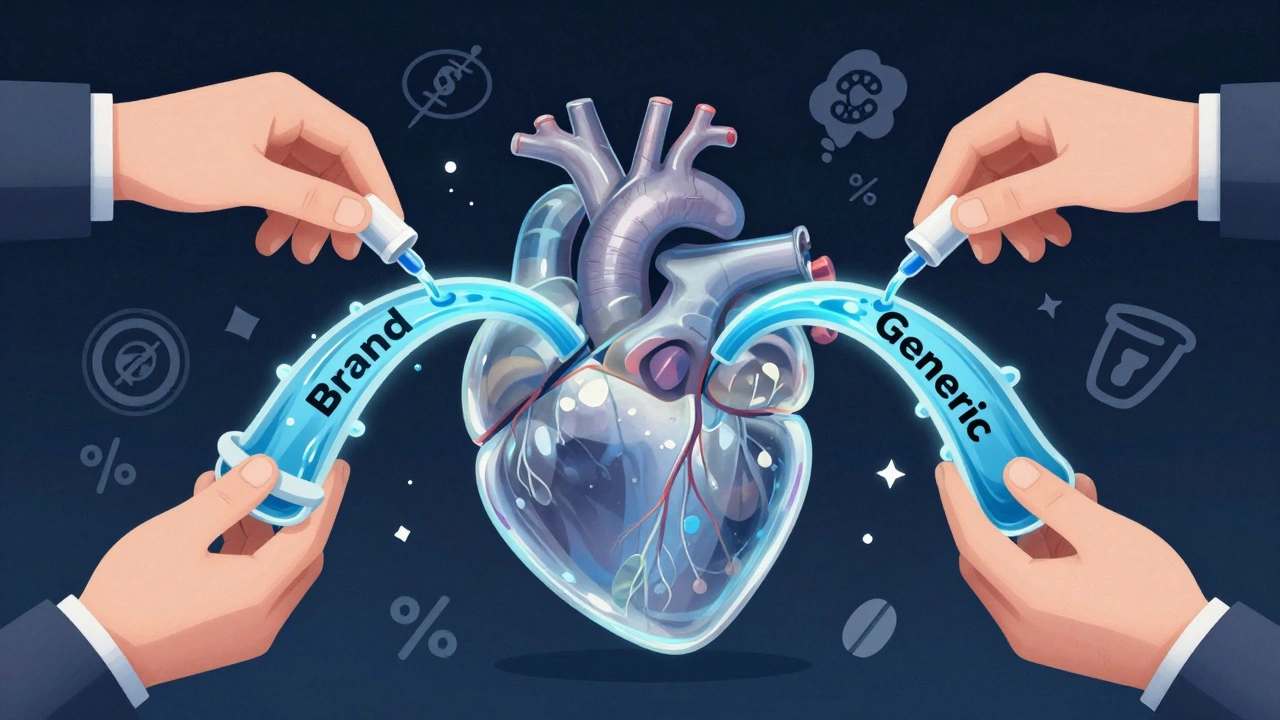
For these, the FDA recommends extra monitoring. Some doctors prefer to keep patients on the same brand or generic consistently. That’s not because generics are unsafe - it’s because small variations in absorption, even within FDA limits, can matter more here.
A 2019 study in JAMA Internal Medicine followed 1.5 million Medicare patients on levothyroxine. It found no difference in hospitalizations or adverse events between those on brand and those on generic. But a 2017 Canadian study of older adults on blood pressure meds saw a slight uptick in ER visits after switching to generics. The researchers admitted the results could’ve been influenced by other factors - like patients being older, sicker, or less consistent with their meds.
The takeaway? For NTI drugs, consistency matters more than brand. If you’re stable on a generic, stay on it. If you’re stable on a brand, don’t switch unless your doctor says so. Don’t let your pharmacy swap you between different generics without telling you.
Who Makes Generic Drugs - and Are They Reliable?
Most people think generics are made in cheap overseas factories. That’s partly true. But here’s the twist: about half of all generic drugs sold in the U.S. are now made by the same companies that make brand-name drugs.
Pfizer, Novartis, Teva, and Mylan all have generic divisions. In fact, Pfizer’s Greenstone and Novartis’s Sandoz are among the biggest generic suppliers in the world. These companies know how to make these drugs because they made the originals.
The FDA inspects both brand and generic manufacturing sites. As of 2023, generic facilities are inspected every 2.3 years on average - almost as often as brand-name ones. In 2022, the FDA issued warning letters to 12 generic manufacturers for data integrity issues - mostly linked to facilities in India and China. That’s concerning, but it’s also proof the system is working: the FDA caught the problems and acted.
What’s more, the FDA’s Adverse Event Reporting System (FAERS) shows generics have slightly more reports than brands - but that’s because generics are used far more often. In 2022, 90% of all prescriptions filled in the U.S. were generics. More use = more reports. The actual rate of serious side effects per 100,000 prescriptions is nearly identical.
Cost Savings Are Real - and Huge
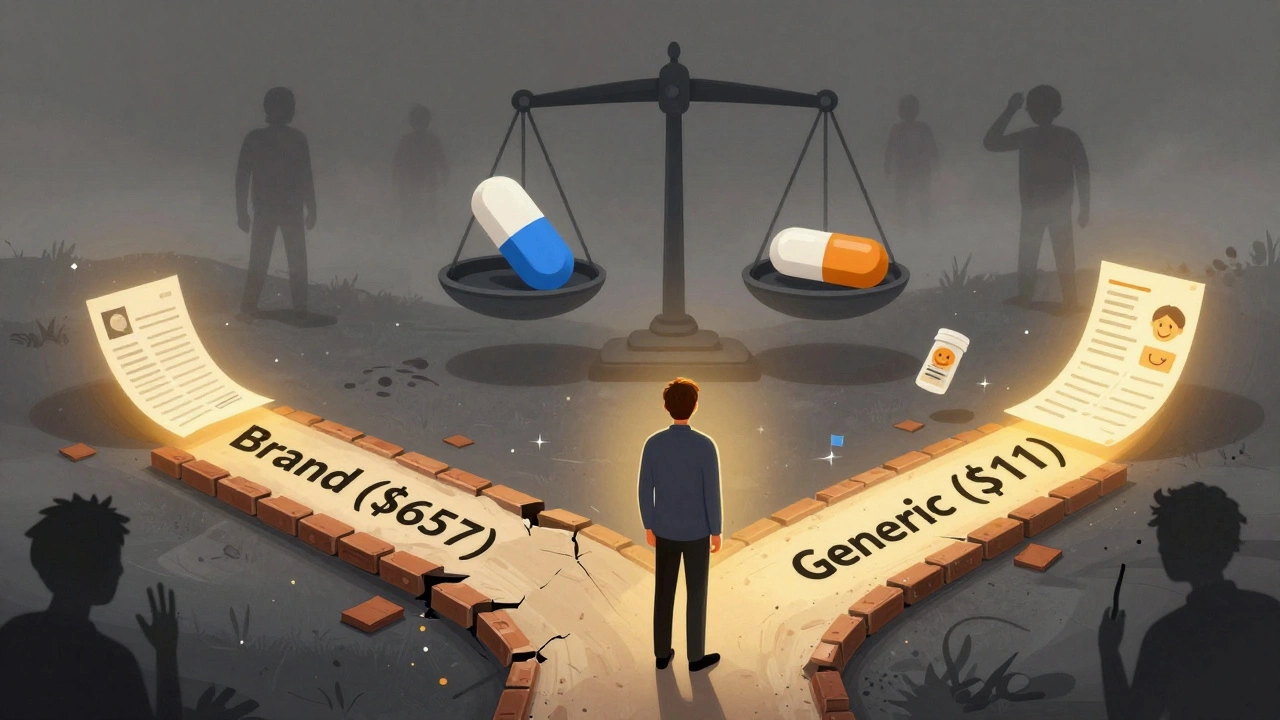
Let’s talk numbers. A brand-name drug can cost $657 per prescription. The generic? Around $11. That’s an 85% savings.
For patients paying out-of-pocket, that’s life-changing. A 2023 report from the Generic Pharmaceutical Association found patients save an average of $387 per prescription by choosing generics. Over a year, that could mean thousands saved on chronic conditions like diabetes, high cholesterol, or hypertension.
The entire Medicare program saved $1.67 trillion between 2006 and 2020 thanks to generics. That’s not a small number. That’s enough to cover health care for millions of seniors for years.
And it’s not just about price. The 2022 Inflation Reduction Act includes new rules to speed up generic competition for Medicare drugs. That means more generics will hit the market faster, driving prices down even more.
What Should You Do?
Here’s what to do if you’re unsure about switching to a generic:
- Ask your doctor - especially if you’re on an NTI drug. Don’t assume the switch is automatic.
- Ask your pharmacist - if your generic changes, ask why. Get the name of the manufacturer. Write it down.
- Stick with one version - if you’re stable on a generic, don’t let your pharmacy switch you to a different one without telling you.
- Monitor how you feel - if you notice new side effects after a switch, tell your doctor. It could be the inactive ingredients, or it could be coincidence.
- Don’t avoid generics out of fear - for 97% of medications, they’re just as safe and effective. The science is clear.
For most people, the choice is simple: take the generic. Save money. Get the same treatment. The FDA, doctors, pharmacists, and decades of research all agree.
The real risk isn’t taking a generic. It’s skipping your medicine because you can’t afford the brand.
Frequently Asked Questions
Are generic drugs as effective as brand-name drugs?
Yes. The FDA requires generic drugs to have the same active ingredient, strength, dosage form, and route of administration as the brand-name version. They must also prove bioequivalence - meaning they deliver the same amount of medicine into your bloodstream at the same rate. For over 97% of approved generics, this means they work just as well.
Why do some people feel worse after switching to a generic?
Most often, it’s not the active ingredient. It’s switching between different generic versions - each with different inactive ingredients. If you’ve been on one generic for months and your pharmacy switches to another, your body might react to the new fillers or dyes. That’s why consistency matters. If you’re stable on a specific generic, ask your pharmacist not to switch it without telling you.
Are generic drugs made in unsafe facilities?
No. The FDA inspects all drug manufacturing facilities - brand and generic - using the same standards. Generic facilities are inspected every 2.3 years on average. While some warning letters have been issued to overseas factories, these are exceptions, not the norm. The FDA blocks imports from facilities that fail inspections. Most generic drugs are now made by the same companies that make brand-name drugs.
Can I trust generics for chronic conditions like high blood pressure or diabetes?
Absolutely. Studies involving millions of patients show no difference in outcomes for conditions like hypertension, diabetes, and high cholesterol when using FDA-approved generics. The key is taking your medicine consistently - whether it’s brand or generic.
What about drugs like levothyroxine or warfarin? Are generics safe for those?
For narrow therapeutic index drugs like levothyroxine and warfarin, the FDA recommends careful monitoring. Studies show no overall increase in risk when switching to generics, but small changes in blood levels can matter. If you’re on one of these drugs, stick with the same version (brand or generic) unless your doctor advises otherwise. Don’t let your pharmacy switch you without warning.
Do generics take longer to work than brand-name drugs?
No. Bioequivalence testing ensures generics enter your bloodstream at the same rate and to the same extent as the brand. If the brand works in 30 minutes, the generic will too. Any perceived delay is usually psychological or due to switching between different generic manufacturers.
Next Steps
If you’re currently on a brand-name drug and paying high out-of-pocket costs, talk to your doctor about switching to a generic. Most prescriptions can be switched without issue.
If you’re on a narrow therapeutic index drug like levothyroxine or warfarin, ask your pharmacist to note your current generic manufacturer on your profile. Request to stay on that same version unless your doctor says otherwise.
If you’ve had a bad experience after switching, don’t assume the generic is unsafe. Track your symptoms, note the exact drug name and manufacturer, and bring it up with your provider. You might just need to go back to the version that worked for you.
Generics aren’t a compromise. They’re a smart, safe, and proven choice for the vast majority of patients. The science doesn’t lie - and neither does the savings.


Ruth Witte
December 8, 2025 AT 15:22Noah Raines
December 10, 2025 AT 02:25Delaine Kiara
December 11, 2025 AT 02:36Andrea Petrov
December 11, 2025 AT 02:51Lauren Dare
December 11, 2025 AT 08:09Graham Abbas
December 12, 2025 AT 13:50Angela R. Cartes
December 13, 2025 AT 09:02Andrea Beilstein
December 14, 2025 AT 23:22iswarya bala
December 16, 2025 AT 18:01Philippa Barraclough
December 17, 2025 AT 08:25Tim Tinh
December 18, 2025 AT 19:18Olivia Portier
December 19, 2025 AT 11:51Tiffany Sowby
December 20, 2025 AT 13:30Asset Finance Komrade
December 21, 2025 AT 00:18