
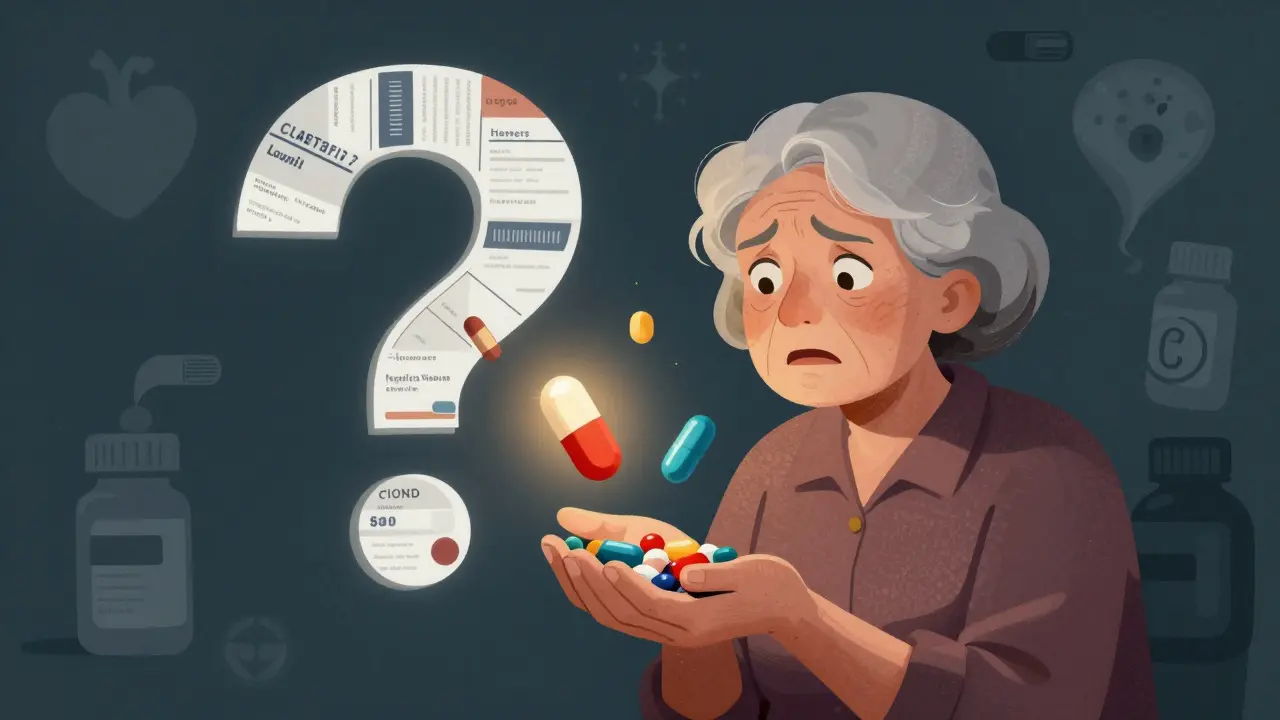
When you pick up a prescription, you expect the pill in your hand to do what it’s supposed to do. But what if the pill looks different than last time? What if it’s a different color, shape, or size? For millions of people, especially those with low health literacy, this simple change can cause confusion, fear, and even dangerous mistakes. The problem isn’t that generic medications don’t work-they do. The problem is that health literacy gaps make it hard for patients to understand why they look different and why they’re still safe to take.
Why generics look different-and why that matters
Generic drugs contain the exact same active ingredients as brand-name drugs. They work the same way, at the same strength, and are held to the same safety standards. But they often look completely different. Why? Because drug manufacturers can change the color, shape, size, and even the markings on generic pills as long as the active ingredient stays the same. This is legal. It’s common. And it’s confusing.A 2021 study in the Journal of the American Geriatrics Society found that over half of older adults taking heart medications would stop taking a pill if it looked different from what they remembered. Some threw them away. Others hid them in drawers. One woman with diabetes told her pharmacist, "I didn’t take my metformin for three days because it changed from a white oval to a pink round pill. I thought it was something else. My blood sugar shot up, and I ended up in the ER."
This isn’t rare. In fact, the FDA reported that 42% of patients in a national survey couldn’t confirm that generic drugs are just as effective as brand-name ones. Even worse, a 2018 study showed that 68% of patients worried about how well generics would work-compared to just 22% who worried about brand-name drugs. That’s not because generics are less effective. It’s because people don’t understand the system.
Who’s most affected?
Low health literacy doesn’t mean someone is unintelligent. It means they struggle to understand medical terms, read small print on labels, or remember instructions when they’re overwhelmed. The U.S. Department of Health and Human Services estimates that 80 million adults have basic or below-basic health literacy. That’s one in three Americans.Older adults, people with limited education, non-native English speakers, and those managing multiple chronic conditions are hit hardest. Imagine someone taking five different pills for diabetes, high blood pressure, and cholesterol. One day, their metformin changes from a white oval to a blue capsule. Their lisinopril changes from a green tablet to a white one. Their statin becomes a larger pill with a different imprint. Suddenly, they’re not sure what’s what. They start skipping doses. They mix up pills. They stop taking them altogether.
Medicare data from 2022 showed that 63% of beneficiaries with less than a high school education reported confusion after a generic switch. The same group was 3.1 times more likely to refuse a generic substitution altogether-even when it saved them money.
The hidden cost of confusion
This isn’t just about discomfort. It’s about safety. Between 2015 and 2020, the Institute for Safe Medication Practices recorded 1,247 medication errors linked to confusion between different generic versions of the same drug. That’s 17% of all reported generic-related errors. Many of these involved patients taking too much, too little, or the wrong drug entirely.One pharmacist in Ohio shared on Reddit: "I see at least two patients a week who refuse generics because they don’t look like what they expect. One man refused his generic blood thinner because it was yellow instead of white. He ended up having a stroke because he stopped taking it."
The financial cost is just as real. A 2022 IQVIA report found that patients who understood their generics had 18% higher adherence rates. That meant $1,247 less in annual healthcare costs per person. That’s because fewer ER visits, fewer hospitalizations, and fewer doctor trips are needed when people take their meds correctly.
What’s being done to fix this?
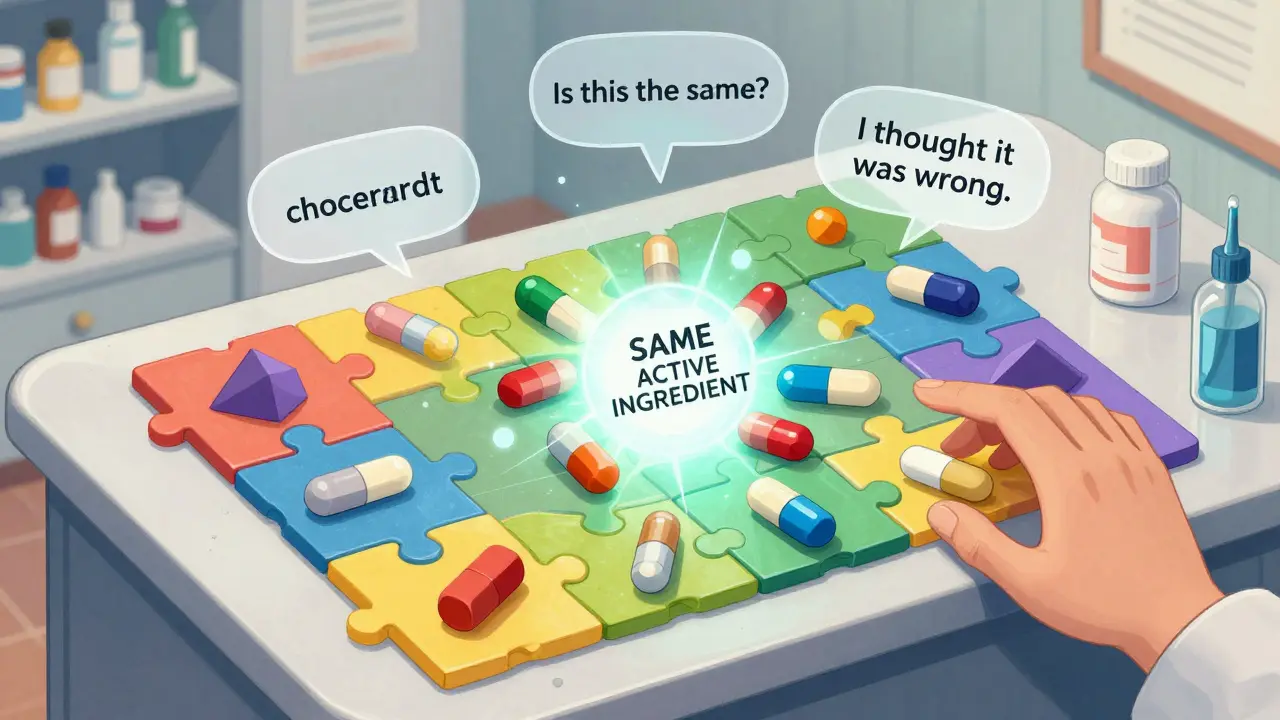
Some solutions are already working. The CDC’s Universal Precautions for Health Literacy, used in over 90% of Federally Qualified Health Centers, trains staff to explain generics clearly: "This is the same medicine, just made by a different company. It works the same. It just looks different."Another tool gaining traction is the "Brown Bag Medication Review." Patients bring all their pills to their appointment. The provider lays them out and checks each one. This simple step caught 44% more medication errors in a Johns Hopkins study. It gives patients a chance to say, "Wait, this one looks different," and get an answer right away.
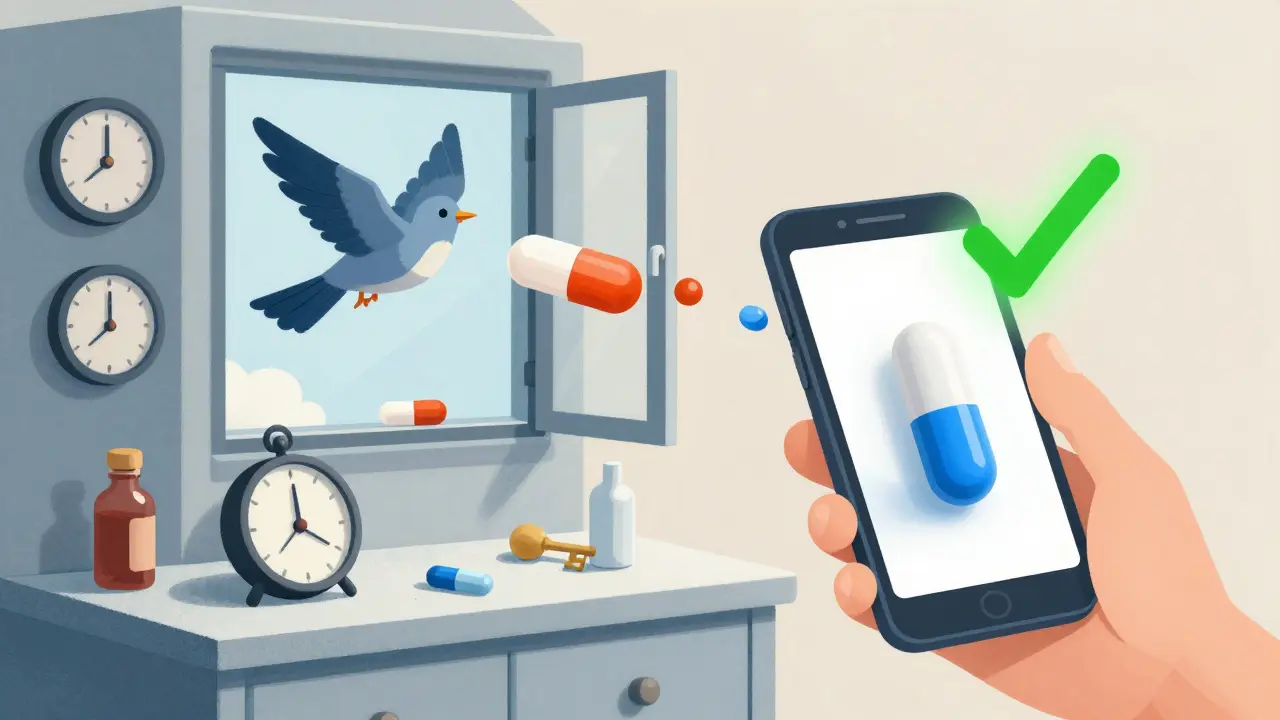
Digital tools are helping too. The Medisafe app, used by over 4 million people, lets users scan their pills and store images. When a new generic arrives, the app alerts them: "Your metformin changed shape. It’s still the same medicine. Here’s what it used to look like." A 2022 trial showed this improved understanding by 37%.
In Europe, countries like Germany and France adopted standardized packaging under the Falsified Medicines Directive. They made the pill shape, color, and imprint more consistent across manufacturers. Result? A 19% drop in medication errors. Australia went further, introducing color-coded pill packaging by therapeutic class-blue for blood pressure, green for diabetes, etc. That cut errors by 33%.
What patients and providers can do today
You don’t have to wait for policy changes. Here’s what works right now:- Ask your pharmacist: "Is this the same medicine I was taking before? Why does it look different?" They’re trained to explain this.
- Use the "Ask Me 3" method: Ask: 1) What is my medicine for? 2) How do I take it? 3) What should I watch out for? Many clinics now use this system.
- Take a photo: When you get a new prescription, take a picture of the pill. Save it in your phone. Next time it changes, you’ll know it’s still the same.
- Bring all your pills to appointments: Don’t just list them. Bring the bottles. It helps your doctor catch mix-ups before they cause harm.
- Don’t assume: If it looks different, assume you need to ask-not assume it’s wrong.
The future: standardization and tech
The FDA’s 2023 draft guidance proposes color-coding generics by drug class-like blood pressure, diabetes, or cholesterol meds. This mirrors what Australia and the EU are doing. It’s simple. It’s visual. It works.AI tools are also emerging. A June 2023 study in the New England Journal of Medicine tested an app that used image recognition to identify pills and explain generics in plain language. For patients with low health literacy, understanding improved by 63%. That’s huge.
Meanwhile, the WHO and the Biden administration have both set goals to reduce generic confusion by 25% by 2027. This isn’t just about saving money. It’s about saving lives.
Bottom line
Generic medications save billions of dollars every year. They make treatment possible for people who otherwise couldn’t afford it. But if patients don’t understand them, they won’t take them. And that’s when harm happens.The solution isn’t more jargon. It’s clearer communication. Better labeling. Visual consistency. And a system that assumes people will get confused-and builds in safeguards to prevent it.
Next time you get a new pill, don’t just swallow it. Look at it. Ask about it. Take a picture. You’re not being paranoid. You’re being smart.
Are generic medications as effective as brand-name drugs?
Yes. Generic medications must contain the same active ingredient, strength, dosage form, and route of administration as the brand-name version. They’re tested to ensure they work the same way in the body. The FDA requires generics to meet the same strict standards for safety and effectiveness. The only differences are in inactive ingredients, color, shape, or packaging-none of which affect how well the medicine works.
Why do generic pills look different every time I refill my prescription?
Different manufacturers make the same generic drug. Each one uses its own design for color, shape, and markings. This is allowed by law. It doesn’t mean the medicine is different. But because the appearance changes, many patients think they’ve been given the wrong medication. That’s why it’s important to ask your pharmacist or check your pill with a trusted app or photo.
Can changing the appearance of a generic drug cause me to stop taking it?
Yes, and this happens more often than you think. A 2021 study found that over half of older adults taking heart medications stopped taking a pill when it looked different. Some thought it was fake, or that it was meant for someone else. Others worried it was less effective. This leads to missed doses, worsening health, and sometimes emergency room visits. Always ask your pharmacist if the change is normal.
What should I do if my generic medication looks different?
Don’t stop taking it. Don’t assume it’s wrong. Call your pharmacist and ask: "Is this the same medicine I was taking before?" They can confirm the active ingredient and explain the change. You can also take a picture of your pill the first time you get it, so you have a reference next time. Apps like Medisafe can help you track changes visually.
How can I help a loved one who’s confused about generics?
Help them bring all their medications to doctor visits. Use the "Brown Bag" method. Ask them to describe each pill-color, shape, markings. If they can’t, help them take photos. Use simple language: "This is still the same medicine, just made by a different company. It works the same way." Encourage them to ask their pharmacist questions. And remind them: changing looks doesn’t mean changing effectiveness.


Diane Croft
March 1, 2026 AT 22:28It’s wild how something as simple as a pill’s color can make people stop taking life-saving medicine. I’ve seen older neighbors panic when their metformin switched from white to blue. No one told them it was the same drug. Just a little education from the pharmacist could’ve saved them weeks of fear and high blood sugar.
Pharmacists are the unsung heroes here. They’re the ones who actually explain the difference, not just hand over the bottle. We need to pay them more and train them to do this proactively, not reactively.
Donna Zurick
March 2, 2026 AT 01:36Take a picture of your pill the first time you get it. Seriously. It’s the easiest thing in the world. I do it every time. Now when the shape changes, I just pull up the photo and breathe. No panic. No guesswork. Just peace of mind.
Simple. Free. Works.
Ethan Zeeb
March 2, 2026 AT 13:30Let’s be real - this isn’t a health literacy problem. It’s a pharmaceutical industry problem. Why are we letting companies change the damn look of generics at will? There’s zero medical reason for it. It’s just branding. Profit. They want you to think the white pill is "better" than the yellow one. That’s manipulation, not science.
The FDA should mandate consistent color, shape, and imprint across all generics. No exceptions. If it’s the same active ingredient, it should look the same. End of story.
Darren Torpey
March 3, 2026 AT 01:13Imagine your meds are your daily ritual - like coffee or brushing your teeth. Then one day, your coffee cup turns into a teapot. You stare at it. You question everything. "Is this even coffee?" That’s what happens with pills. The brain doesn’t care about active ingredients. It cares about the shape, the color, the feel.
That’s why the Brown Bag method is genius. It turns chaos into clarity. It turns fear into conversation. And the apps? They’re like a visual translator for your medicine cabinet. I wish my grandma had one. She’d still be taking her blood pressure meds.
We’re not just fixing labels. We’re fixing trust. And trust? That’s what keeps people alive.
Lebogang kekana
March 4, 2026 AT 05:12Back home in South Africa, we don’t even have brand-name drugs most of the time. Generics are all we’ve got. And you know what? People don’t freak out. Why? Because the system doesn’t trick them. The pharmacy gives them a printed sheet - big font, pictures, simple words - showing the old pill and the new one side by side.
We need that here. Not apps. Not jargon. Just a clear picture and a human voice saying: "Same medicine. Different wrapper. You’re still safe."
It’s not rocket science. It’s basic dignity.
Pankaj Gupta
March 4, 2026 AT 07:54The data is unequivocal: patients who understand generics have higher adherence, fewer ER visits, and lower overall costs. Yet, we continue to treat health literacy as an afterthought. This is not merely a communication issue - it is a systemic failure of healthcare infrastructure.
Standardized pill design, mandatory pharmacist counseling, and visual aids should be federally mandated. The cost of inaction - measured in preventable hospitalizations and deaths - far exceeds the investment required to implement these solutions. We have the tools. We lack the political will.
Renee Jackson
March 5, 2026 AT 17:29As a healthcare provider, I can attest that the most effective intervention is not technological, but relational. When a patient feels heard, respected, and clearly guided, they are far more likely to adhere to their regimen.
The "Ask Me 3" framework is not merely a tool - it is a philosophy of care. It transforms passive recipients into active participants. And when patients are empowered to ask questions, they stop fearing the unknown.
I urge all institutions to embed this approach into every patient interaction. Not as an add-on. As a core standard.
RacRac Rachel
March 7, 2026 AT 01:21OMG this is so real 😭 I had a friend who stopped her thyroid med because it went from white to purple. She thought it was "fake". She got dizzy, passed out, had to be rushed to urgent care. Her doctor was furious - but she was terrified.
Now I take pics of every pill I get. I even label them in my notes: "Metformin 500mg - white oval → now blue round. Still good!"
My phone is basically a pill encyclopedia. And guess what? My anxiety dropped 90%.
Also, if you don’t have a phone? Ask your pharmacist for a printed card. They’ll give you one. Seriously. Just ask.
Jane Ryan Ryder
March 8, 2026 AT 21:49Of course people get confused. The system is designed to confuse them. Big Pharma doesn’t want you to know generics are identical - they want you to think the brand-name one is "premium". So they make the pills look different on purpose. It’s a scam.
And now we’re supposed to be grateful that some app takes a picture? That’s not innovation - that’s damage control for a broken system.
Fix the law. Don’t just slap a Band-Aid on it with apps and photos. This is corporate negligence dressed up as patient care.
Callum Duffy
March 9, 2026 AT 13:00It is deeply concerning that a nation with such advanced medical infrastructure continues to allow avoidable harm to arise from preventable communication failures.
The evidence from Australia, Germany, and the EU demonstrates that standardization of pill appearance significantly reduces error rates. The United States, despite its capacity for innovation, lags behind in implementing these straightforward, evidence-based reforms.
It is not a question of feasibility. It is a question of priority. Patient safety must supersede commercial convenience. The time for incrementalism has passed.