
Licorice Root Safety Calculator
Is Your Licorice Safe?
Licorice root contains glycyrrhizin, which can interfere with blood pressure medications. This calculator helps you determine if your consumption is within the safe limit of 100 mg daily.
Note: Glycyrrhizin is the active compound in licorice root that causes these effects. The safe limit is based on the European Food Safety Authority's recommendation. For maximum safety, avoid licorice root if you're taking blood pressure medication.
Many people take licorice root supplements for digestion, sore throats, or stress relief. But if you're on blood pressure medication, this common herb could be quietly undoing all your hard work. It doesn’t just cause side effects - it can make your pills completely ineffective.
How Licorice Root Sabotages Blood Pressure Control
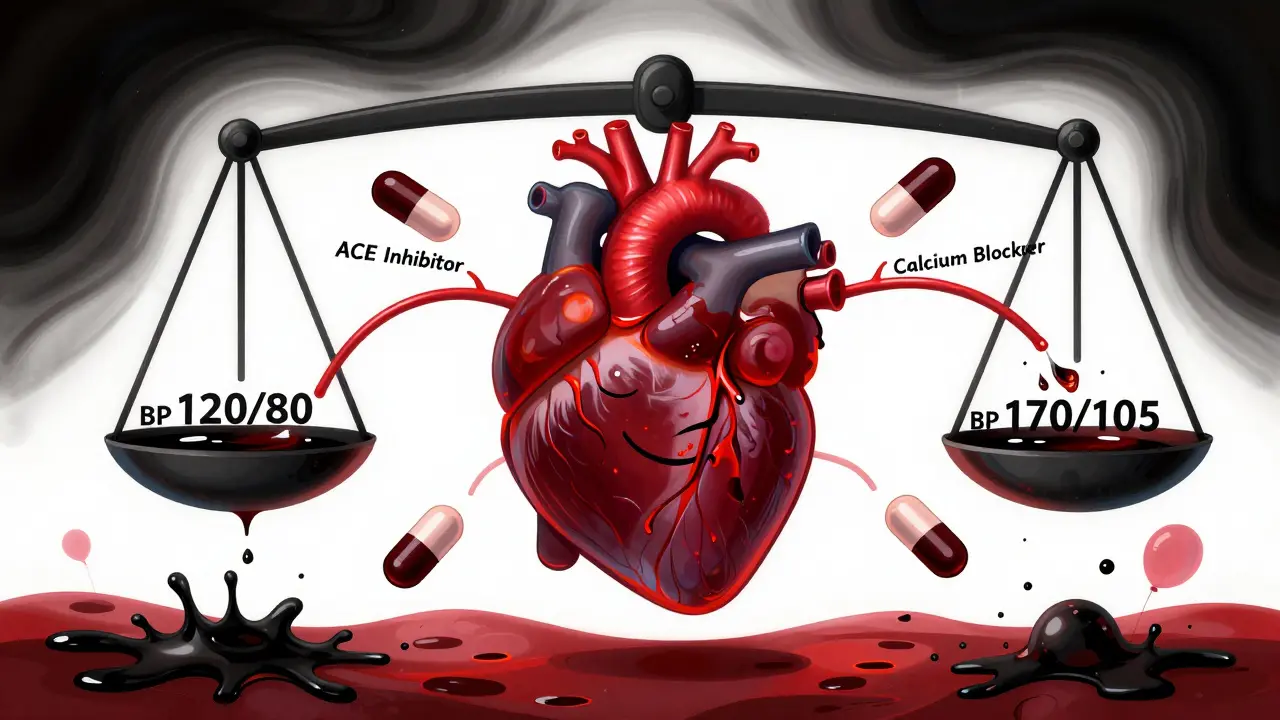
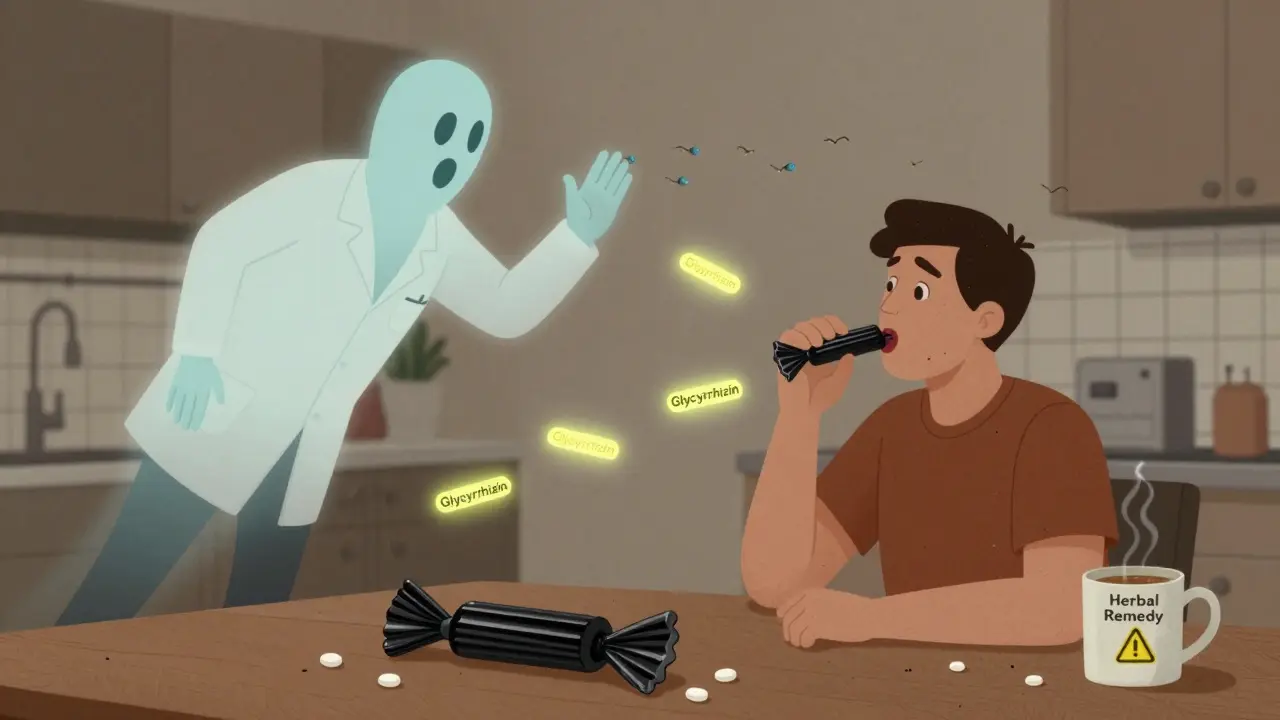
Licorice root contains a compound called glycyrrhizin. This isn’t just a sweetener - it acts like a hormone in your body, mimicking aldosterone, the hormone that tells your kidneys to hold onto salt and water. That sounds harmless until you realize: holding onto salt and water raises your blood pressure. And if you’re already taking medication to lower it, this is like turning up the volume on a speaker while trying to turn it down.When glycyrrhizin enters your system, it blocks an enzyme called 11β-hydroxysteroid dehydrogenase type 2. Normally, this enzyme keeps cortisol - a stress hormone - from binding to blood pressure receptors. Without it, cortisol acts like aldosterone. Your body starts retaining sodium, losing potassium, and swelling with extra fluid. The result? Blood pressure climbs, sometimes by 20 to 30 mmHg in just a few days.
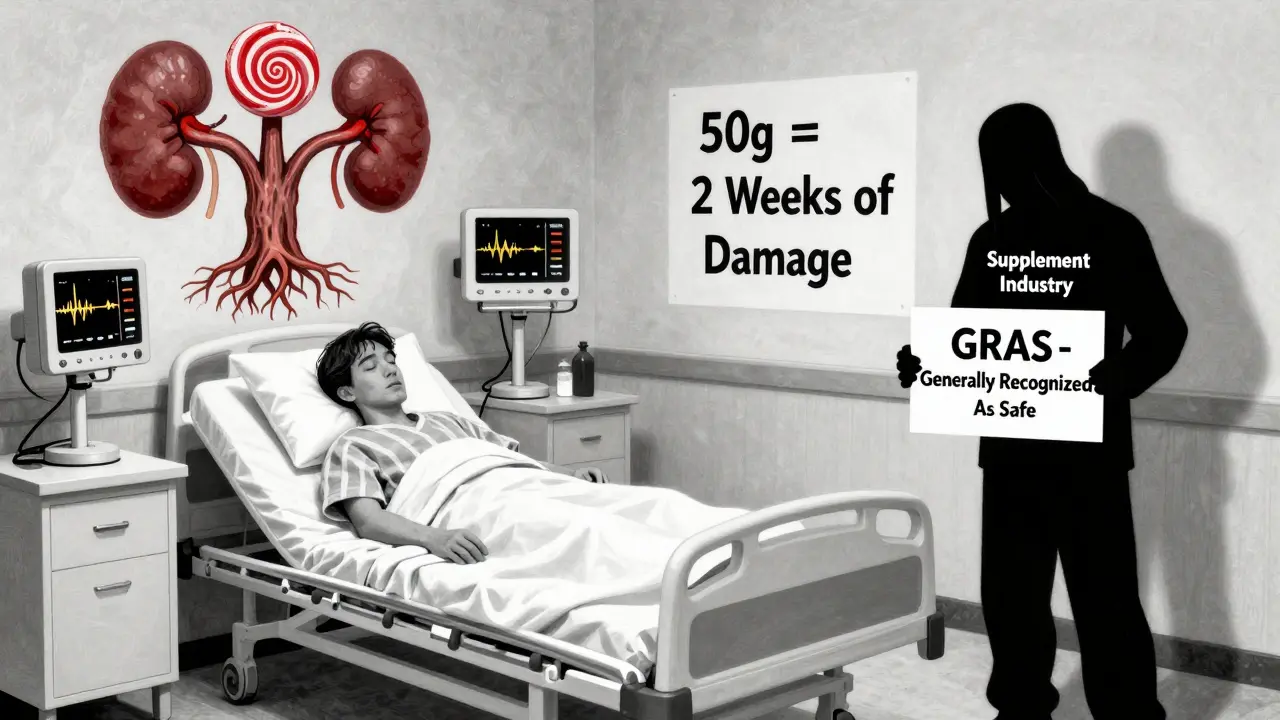
Studies show this isn’t theoretical. A 2015 study in the European Journal of Clinical Nutrition found that people who ate just 100 mg of glycyrrhizin daily for two weeks saw their systolic pressure jump significantly. That’s about the amount in 50 grams of real licorice candy - less than a small bag.
Which Blood Pressure Medications Are Affected?
This isn’t just about one type of drug. Licorice root interferes with nearly every major class of antihypertensives:- ACE inhibitors (like lisinopril): Effectiveness drops by 30-50%. One patient in a 2006 study saw his BP rise from 128/82 to 168/96 after just 10 days of daily licorice tea.
- ARBs (like losartan): Effectiveness decreases by about 25%. The body’s natural way of relaxing blood vessels gets overridden by fluid overload.
- Calcium channel blockers (like amlodipine): Blood pressure control worsens by 15-20%. A 2018 study showed patients needed higher doses just to stay stable.
- Potassium-sparing diuretics (like spironolactone): This is the worst combo. Licorice causes potassium loss, while these drugs try to keep potassium high. The result? Complete cancellation of effects. One 2020 case report described a patient whose BP spiked to 210/115 after combining them.
Even if your medication isn’t on this list, the fluid retention and low potassium caused by licorice can still make your heart work harder - defeating the whole purpose of taking pills.
It’s Not Just Supplements - Candy and Tea Count Too
Most people think they’re safe if they’re not taking capsules. But that’s a dangerous assumption.In the U.S., about 95% of black licorice candy doesn’t even contain real licorice root - it’s flavored with anise oil. But the other 5%? That’s where the danger lives. And it’s not just candy. Licorice root is commonly added to herbal teas, cough syrups, traditional Chinese medicine formulas, and even some tobacco products.
One 2019 case series found that 6 out of 8 patients who developed severe hypertension while on blood pressure meds had been drinking licorice tea daily, convinced it was “just a natural remedy.” None of them read the ingredient list.
Always check labels. If you see “Glycyrrhiza glabra,” “licorice extract,” or “licorice root,” stop. If it says “anise oil” or “natural flavor,” you’re probably fine.
How Much Is Too Much?
There’s no safe amount if you’re on blood pressure medication. But here’s the reality: most people don’t realize how little it takes to cause harm.- 100 mg of glycyrrhizin per day - the limit set by the European Food Safety Authority - is enough to trigger changes in blood pressure and potassium.
- That’s roughly 50 grams of licorice candy with real root. Or one cup of strong licorice tea daily.
- Some herbal supplements contain up to 24% glycyrrhizin. A single capsule might have 150 mg.
And the effects don’t disappear when you stop. Glycyrrhizin sticks around. Its metabolites can linger for up to two weeks. So even if you quit after a weekend of candy, your blood pressure might still be elevated.
What Happens to Your Body
Beyond high blood pressure, licorice root causes real, measurable damage:- Potassium drops: Levels can fall below 3.0 mmol/L (normal is 3.5-5.0). Low potassium causes muscle weakness, cramps, and dangerous heart rhythms.
- Fluid retention: Plasma volume increases by 5-15%. Your heart pumps harder. Swelling in ankles and hands is common.
- Heart strain: The combination of high pressure and low potassium increases risk of arrhythmias and even heart attack.
One Reddit user, u/HypertensionWarrior, posted about his BP rising from 135/85 to 157/92 over two weeks after eating licorice candy. His doctor found his potassium was 2.9 - dangerously low. He had to be hospitalized.
What You Should Do
If you’re on blood pressure medication:- Stop all licorice products - including tea, candy, supplements, and herbal remedies - immediately.
- Check every label. Look for “Glycyrrhiza glabra” or “licorice root.” Don’t trust “natural flavor.”
- Talk to your pharmacist. Many don’t know about this interaction. Ask them to review all your supplements.
- Get your potassium checked. If you’ve consumed licorice in the past 2 weeks, ask for a blood test. Levels below 3.5 need correction.
- Choose deglycyrrhizinated licorice (DGL). If you need licorice for digestion, DGL has less than 1% glycyrrhizin and is safe.
The American Heart Association recommends avoiding all glycyrrhizin-containing products if you have hypertension, heart failure, or kidney disease. There’s no benefit worth the risk.
Why This Isn’t Widely Known
The supplement industry isn’t required to warn consumers. In the U.S., the FDA classifies licorice root as GRAS - Generally Recognized As Safe - for flavoring. But that doesn’t mean it’s safe for people on meds.A 2021 survey found only 37% of licorice supplement labels mention blood pressure risks. In Europe, products with more than 10 mg glycyrrhizin per serving must carry a warning. The U.S. doesn’t. That means millions of people are unknowingly putting themselves at risk.
And here’s the kicker: doctors rarely ask about herbal supplements. Patients rarely mention them. The interaction flies under the radar - until someone ends up in the ER.
What’s Next?
The FDA is proposing a new law - the Dietary Supplement Listing Act of 2023 - that would require manufacturers to list exact amounts of active ingredients like glycyrrhizin. If passed, this could finally make labels transparent.Until then, the only safe rule is this: if you’re on blood pressure medication, don’t take anything labeled “licorice root.” Not even once.
Can I still eat black licorice candy if I’m on blood pressure meds?
Only if the label says "anise oil" or "natural flavor" - and nothing about licorice root. Most U.S. black licorice candy doesn’t contain real licorice, but 5% does. Always check the ingredients. If you see "Glycyrrhiza glabra," "licorice extract," or "licorice root," avoid it. Even a small amount can raise your blood pressure and lower your potassium.
How long does it take for licorice root to affect blood pressure meds?
Effects can show up in as little as 3-5 days. A 2006 study documented a patient’s blood pressure rising significantly after just 10 days of daily licorice tea. The compound glycyrrhizin builds up in your system, and its effects last up to two weeks after you stop. So even occasional use can be risky.
Is deglycyrrhizinated licorice (DGL) safe with blood pressure meds?
Yes. DGL is licorice root with over 99% of the glycyrrhizin removed. It’s commonly used for stomach issues and doesn’t affect blood pressure or potassium levels. If you need licorice for digestive relief, DGL is the only safe option while on antihypertensive medication.
Can licorice root cause low potassium even if I’m not on meds?
Yes. Even people not taking blood pressure meds can develop low potassium from daily licorice consumption. This can lead to muscle cramps, fatigue, irregular heartbeat, and in severe cases, heart rhythm problems. The risk increases with daily use over two weeks or more. The European Food Safety Authority says 100 mg of glycyrrhizin per day is the maximum safe limit - but for people with heart or kidney conditions, even that’s too much.
Should I get my potassium checked if I’ve eaten licorice recently?
Absolutely. If you’ve consumed any product with real licorice root in the past two weeks - even once - ask your doctor for a serum potassium test. Levels below 3.5 mmol/L are considered low, and below 3.0 mmol/L is dangerous. The Merck Manual recommends checking potassium every two weeks if you’re on diuretics and have consumed licorice. Don’t wait for symptoms like cramps or palpitations - by then, it may be too late.


Rachele Tycksen
March 22, 2026 AT 16:20Grace Kusta Nasralla
March 23, 2026 AT 20:35Aaron Sims
March 24, 2026 AT 01:59Stephen Alabi
March 24, 2026 AT 11:25Kevin Siewe
March 24, 2026 AT 15:36Chris Farley
March 25, 2026 AT 15:21James Moreau
March 26, 2026 AT 03:15J. Murphy
March 27, 2026 AT 02:49Jesse Hall
March 27, 2026 AT 07:39Donna Fogelsong
March 29, 2026 AT 00:00Sean Bechtelheimer
March 30, 2026 AT 10:55Seth Eugenne
March 31, 2026 AT 12:37