
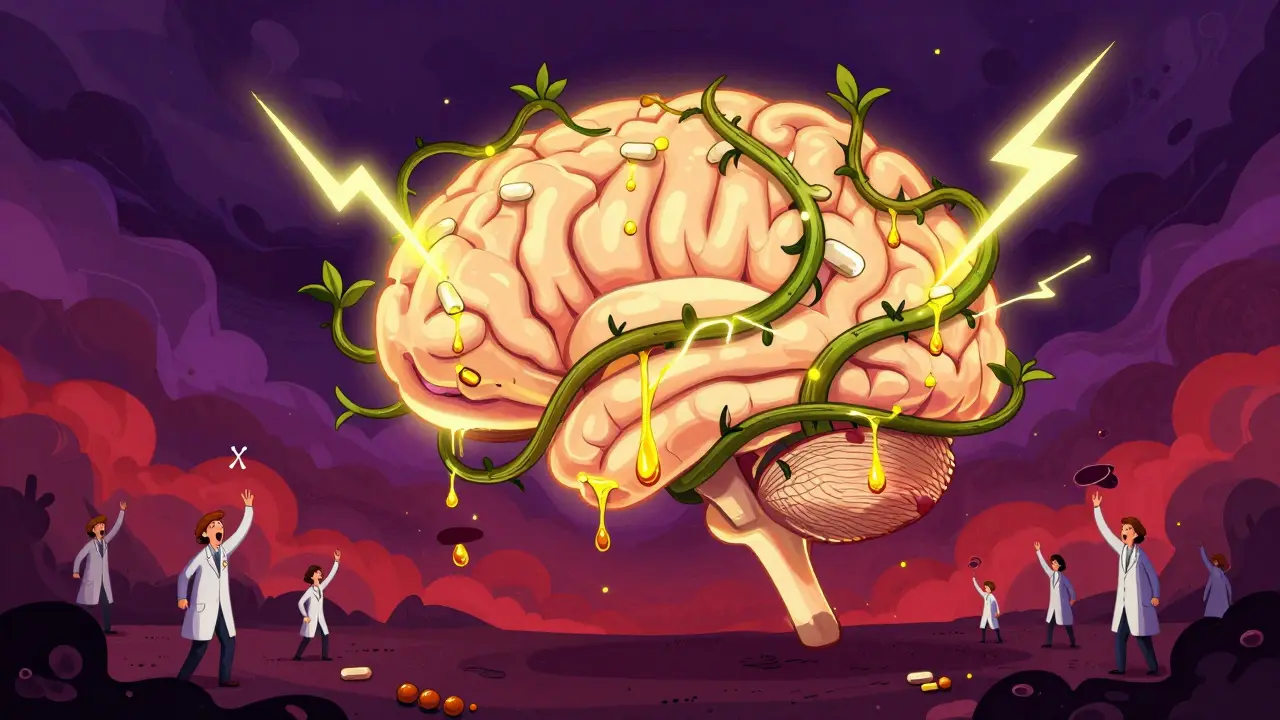
Many people turn to St. John’s Wort because they want something "natural" to help with low mood. It’s sold in pharmacies, health stores, and online-no prescription needed. But here’s the problem: if you’re already taking an SSRI antidepressant like sertraline, escitalopram, or fluoxetine, combining it with St. John’s Wort can trigger a medical emergency called serotonin syndrome.
What Is Serotonin Syndrome?
Serotonin syndrome isn’t just a side effect-it’s a potentially deadly condition caused by too much serotonin in your brain and nervous system. Serotonin is a chemical that helps regulate mood, sleep, and digestion. When SSRIs work, they slow down how fast your body clears serotonin, so more of it stays around. St. John’s Wort does something similar: it blocks serotonin reuptake and also weakly inhibits monoamine oxidase, the enzyme that breaks serotonin down. When you stack them together, serotonin levels spike fast.Symptoms can start within hours or take up to two weeks. Mild signs include sweating, shivering, tremors, nausea, or diarrhea. But things get serious fast: high fever over 106°F, muscle rigidity, confusion, seizures, irregular heartbeat, or even organ failure. There have been documented deaths from this combo. The Mayo Clinic, Cleveland Clinic, and the FDA all warn: don’t mix them.
Why St. John’s Wort Is Riskier Than You Think
People assume herbal means safe. That’s a dangerous myth. St. John’s Wort isn’t just a gentle tea-it’s a powerful drug. Its active ingredient, hyperforin, turns on enzymes in your liver (CYP3A4, CYP2C19) that break down medications. This doesn’t just affect SSRIs. It also lowers the effectiveness of birth control pills, blood thinners like warfarin, HIV meds, and even seizure drugs. Women on the pill have gotten pregnant after taking St. John’s Wort. People on cyclosporine after a transplant have rejected their organs.Even worse, most people don’t tell their doctors they’re taking it. A 2021 study in JAMA Internal Medicine found only about one in three people using herbal supplements mentioned them to their healthcare provider. Why? Because they think it’s harmless. But St. John’s Wort is not harmless. It’s a pharmacologically active substance with documented interactions-more than 50, according to the National Institutes of Health.
Which SSRIs Are Most Dangerous to Mix?
Not all SSRIs react the same way. Sertraline and escitalopram are metabolized by CYP2C19, an enzyme that St. John’s Wort strongly induces. That means your body clears them faster, but also that serotonin builds up dangerously when both are present. Paroxetine, while not primarily cleared by CYP2C19, has been linked to severe cases in multiple reports. Fluoxetine sticks around in your system for weeks, so even stopping it before starting St. John’s Wort isn’t enough-you need a full two-week washout period, and vice versa.There’s no safe SSRI to pair with St. John’s Wort. The European Medicines Agency and the American Psychiatric Association both list this combination as absolutely contraindicated. No exceptions. No "low doses." No "just for a few days." The risk isn’t theoretical-it’s been seen in hospitals across the U.S., Europe, and Canada. In 2023, Canada made St. John’s Wort prescription-only after 17 confirmed serotonin syndrome cases.
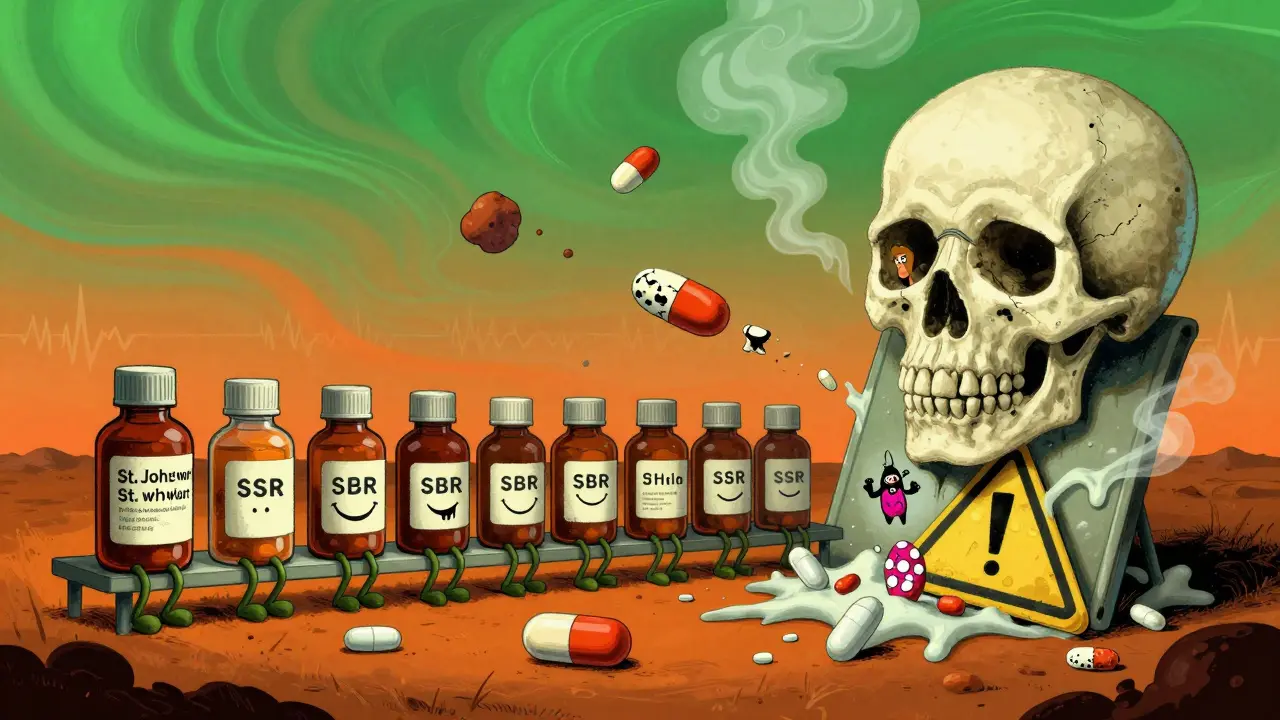
What Happens If You’ve Already Taken Both?
If you’ve accidentally taken St. John’s Wort with your SSRI, don’t panic-but don’t wait either. Stop the herbal supplement immediately. Call your doctor or go to urgent care. Tell them exactly what you took, how much, and when. If you’re experiencing fever, rapid heart rate, muscle twitching, or confusion, go to the ER. Serotonin syndrome can escalate quickly. Treatment includes stopping both substances, giving benzodiazepines to calm the nervous system, and sometimes using serotonin blockers like cyproheptadine.Don’t assume you’re fine just because you feel okay. Symptoms can appear days after you started the combo. And if you’ve been taking St. John’s Wort for weeks or months, your body may have adapted to lower SSRI levels. Restarting your SSRI too soon after stopping the herb can also trigger serotonin syndrome-hence the two-week waiting period doctors recommend.
Is There a Safe Alternative?
If you’re considering St. John’s Wort because your SSRI isn’t working well enough, or because you dislike the side effects, talk to your doctor. There are better options. Switching to a different SSRI, adding therapy like CBT, or trying a non-SSRI antidepressant like bupropion or mirtazapine are proven strategies. Some people benefit from exercise, light therapy, or omega-3 supplements-all of which have research backing and no dangerous interactions.St. John’s Wort has been studied for mild depression. But even in those cases, its effectiveness is inconsistent. One large trial showed it worked about as well as a low-dose SSRI-but only in people with very mild symptoms. And it came with the same risks. There’s no scenario where the benefit outweighs the danger when you’re already on an SSRI.
What Should You Do Now?
If you’re taking an SSRI, stop using St. John’s Wort immediately. Don’t just cut back. Don’t wait for your next appointment. Call your doctor today. Bring your supplement bottle with you-some labels don’t even list hyperforin content, so your doctor needs to see what you’re actually taking.If you’re thinking about starting St. John’s Wort for depression, don’t. Talk to a mental health professional first. There are safer, regulated, evidence-based treatments available. The fact that it’s sold over the counter doesn’t mean it’s safe. The FDA doesn’t approve dietary supplements for safety or effectiveness before they hit the shelf. That’s why you’re on your own to figure out the risks.
And if you know someone else taking this combo-tell them. People don’t realize how dangerous this is. A simple conversation could save a life.
What About Other Herbal Supplements?
St. John’s Wort isn’t the only herbal product that causes trouble. 5-HTP, L-tryptophan, SAMe, and even some Ayurvedic remedies can raise serotonin levels. Even certain foods like aged cheeses or cured meats can interact with MAOIs-but that’s a different class of drug. The point is: if you’re on any antidepressant, assume every supplement is a potential hazard until proven otherwise. Always check with your prescriber before adding anything new.Why Is This Still Happening?
Because the supplement industry is barely regulated. Companies can sell St. John’s Wort without proving it works or showing how it interacts with other drugs. Marketing labels say "natural mood support"-not "potentially fatal when mixed with antidepressants." The FDA has issued 12 safety alerts on this product since 2018. But there’s no mandatory warning on the bottle. No required labeling of hyperforin content. No age restrictions. No pharmacist counseling.This isn’t just a medical issue-it’s a public health failure. People are dying because they were never properly warned. And until packaging laws change, the risk will keep growing.

Bobbi-Marie Nova
January 15, 2026 AT 18:54Okay but like... why is this even a debate? I took SJW for a month because my insurance wouldn't cover my SSRIs and now I'm in the ER with a 104 fever and my mom's crying. Just don't. Please. I'm not even mad, just... exhausted.
Samyak Shertok
January 17, 2026 AT 16:15Ah yes, the great pharmaceutical-industrial complex conspiracy. You think they scare you about herbal medicine because they care? No. They scare you because they want you to keep buying their overpriced, patent-protected SSRIs while they patent the next serotonin modulator in 2027. Nature doesn't need FDA approval. Humans do. And we're the ones who got it backwards.
Henry Ip
January 19, 2026 AT 06:25I've been on sertraline for 8 years and my therapist suggested SJW for sleep. I didn't listen. I'm alive because I trusted the science over the hype. If you're thinking about mixing them, just stop. Call your doctor. It's not worth the gamble.
waneta rozwan
January 21, 2026 AT 00:19Let me guess-you're the type who thinks 'natural' means 'safe' and also probably thinks vaccines cause autism and that 5G is spying on your dreams. You're not just ignorant, you're dangerous. And you're probably reading this while sipping your 'mood-boosting' herbal tea like it's holy water.
Nicholas Gabriel
January 22, 2026 AT 20:03Guys. I just want to say-thank you. Thank you for posting this. I had a friend who ended up in the ICU last year because she thought SJW was 'just a supplement.' She didn't tell her psychiatrist. She didn't tell her mom. She didn't tell anyone. She almost died. Please, if you're reading this and you're on an SSRI-don't take it. Don't even think about it. Your brain is not a lab experiment. And your life? It's not worth risking for a placebo with teeth.
Cheryl Griffith
January 23, 2026 AT 19:24I get it. You're tired of feeling numb. You're tired of side effects. You want something gentle. But SJW isn't gentle-it's a sledgehammer wrapped in a yoga mat. I tried it after my divorce. Thought it would help. Ended up feeling like my nerves were on fire. Stopped. Went back to therapy. Got a new med. I'm better now. Not because of herbs. Because I listened.
swarnima singh
January 23, 2026 AT 21:13they told me sjw was safe... now my brain feels like it's being rewired by a drunk electrician. i dont even know if im me anymore. why do they let this stuff be sold? who is profiting? who is lying? the truth is buried under labels that say 'natural'... but nothing is natural when your body is screaming
Isabella Reid
January 24, 2026 AT 22:37As someone who grew up in India where herbal remedies are part of daily life, I get the appeal. But this isn't turmeric in milk. This is a chemical handshake between two powerful drugs that don't know they're supposed to be polite. Respect your body. Respect your meds. And if you're unsure? Ask. Always ask.
Jody Fahrenkrug
January 26, 2026 AT 16:02My mom took SJW with her antidepressant and didn't tell anyone. She's fine now, but I still have nightmares. Just... please, don't be like her. Talk to someone. Even if it's just a pharmacist. They're not there to judge. They're there to help you not die.
Kasey Summerer
January 28, 2026 AT 05:51St. John’s Wort: because nothing says "I love my brain" like turning it into a serotonin rave with no bouncer. 🤪💊 #DontBeThatPerson
kanchan tiwari
January 29, 2026 AT 16:54They don't want you to know this. The FDA, Big Pharma, the WHO-they all profit from your fear. SJW is ancient medicine. They banned it because it's too cheap. They're scared. They know if people start healing naturally, they lose billions. You think this is about safety? No. It's about control. They want you dependent. Don't let them win.