
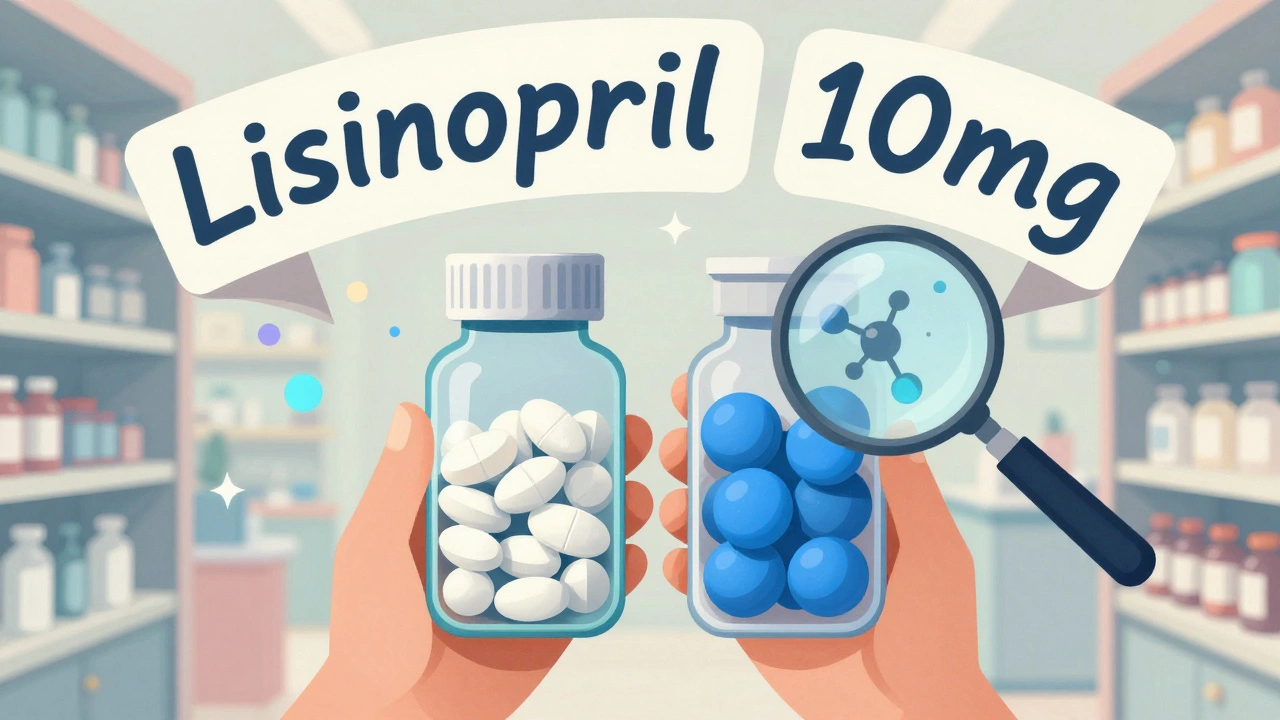
Every time you pick up a refill, your pills might look different. Same medicine. Same dose. But now they’re white instead of blue. Smaller. Bigger. Different letters stamped on them. If you’ve ever paused, stared at the bottle, and thought, “Is this really the same thing?” - you’re not alone. In fact, 67% of patients report confusion when their pills change appearance between refills. That’s not just annoying. It’s dangerous.
Why Your Pills Look Different (Even When They’re the Same)
The reason your medication looks different isn’t a mistake. It’s the law. In the U.S., 90% of prescriptions are filled with generic drugs. Generic manufacturers aren’t allowed to copy the exact shape, color, or size of brand-name pills. So even if you’ve been taking the same drug for years - say, lisinopril for high blood pressure - the next refill might come from a different company. One might make a small oval white pill. Another might make a large round blue one. Both have the same active ingredient. Both work the same way. But they look nothing alike. This is why comparing your new prescription label to your old one isn’t optional. It’s a safety step. The FDA says the active ingredient must match. But that’s only half the story. You need to check everything else too.What to Check on Every Prescription Label
When you get your new bottle, don’t just grab it and go. Sit down. Open your old bottle. Lay them side by side. Here’s exactly what to compare:- Patient name - Is it spelled exactly right? Misspellings happen. One wrong letter and you could get someone else’s meds.
- Medication name - Look for both the brand name (like “Lipitor”) and the generic name (like “atorvastatin”). Make sure both match your old label.
- Dosage strength - Is it 10 mg? 20 mg? 5 mg? This is critical. A wrong dose can cause serious harm, especially with blood thinners, thyroid meds, or seizure drugs.
- Manufacturer - You’ll see something like “Mfg: ACCORD HEALTHCARE” or “Made by Teva.” If this changed from your last refill, it’s a new generic version. Not a problem - but worth noting.
- Rx number - This is your unique prescription ID. If it’s different from your last fill, that’s normal. But if it’s the same number and the pill looks totally different, double-check with your pharmacist.
- Prescriber name - Did your doctor change? Did someone else write this script? If not, that’s fine. But if you didn’t see your doctor recently, ask why.
- Refills remaining - Your old bottle said “3 refills left.” Does the new one say the same? If it says “0,” your doctor may have changed your plan.
- Expiration date - It’s not required by law, but most pharmacies put it on. If it’s less than 6 months away, ask if you can get a fresher batch.
When a Change Could Be Dangerous
Not all medications are created equal when it comes to generic swaps. For drugs with a narrow therapeutic index - meaning the difference between a helpful dose and a harmful one is tiny - even small changes in how the drug is made can affect you. These include:- Warfarin (blood thinner)
- Levothyroxine (thyroid hormone)
- Phenytoin (seizure control)
- Cyclosporine (organ transplant)
Use the Pill Identifier Tool - It’s Free and Accurate
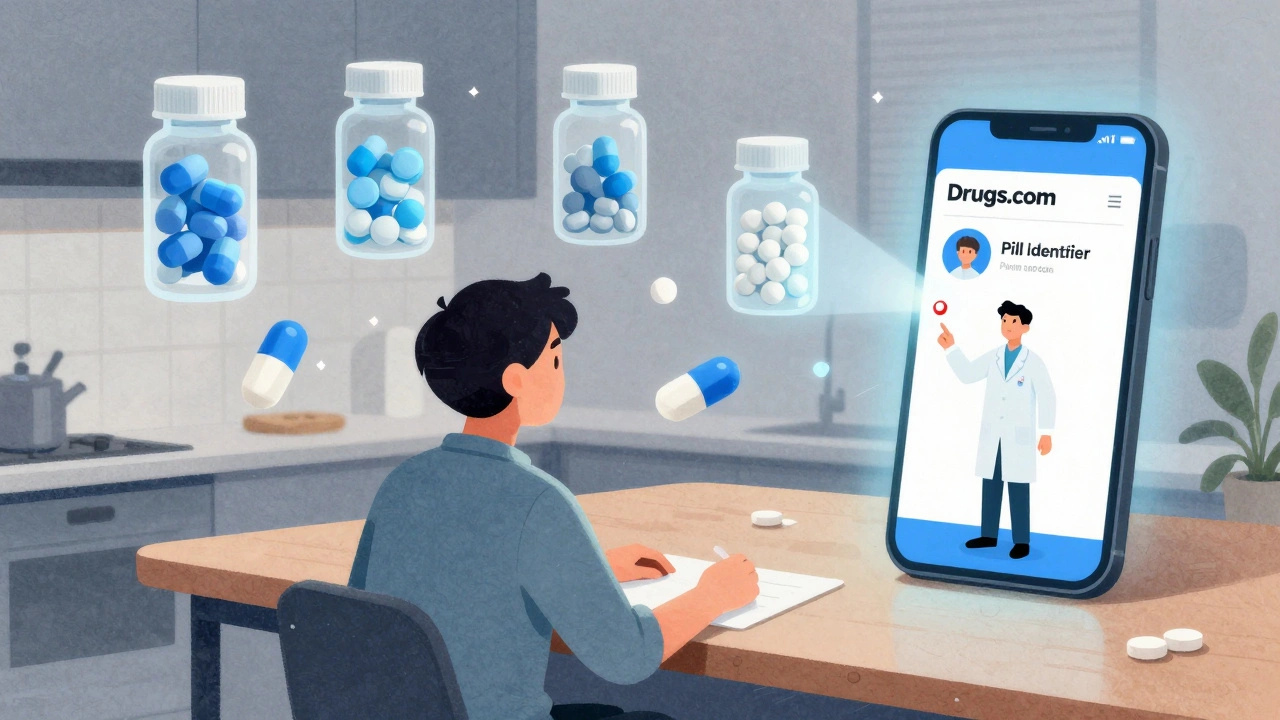
If you’re unsure whether the pill in your new bottle is right, use the Drugs.com Pill Identifier. It’s free, reliable, and used by millions. Just enter:- The shape (round, oval, capsule)
- The color
- The imprint (letters or numbers stamped on the pill)
Red Flags You Should Never Ignore
Here are signs your new prescription might be wrong:- The active ingredient is different from your old label
- The dosage strength changed without your doctor’s approval
- The label says “Brand substitution not permitted” - but you got a generic anyway
- The pill looks completely wrong and the Pill Identifier doesn’t recognize it
- You’re told it’s the same drug, but it tastes different or gives you new side effects
How to Make This Easier Going Forward
You don’t have to stress every time you refill. Here’s how to simplify:- Keep a small notebook or phone note with the names, doses, and appearances of all your meds. Add a photo of each pill.
- Ask your pharmacist to write the manufacturer name on your label if it’s not already there.
- Use electronic prescriptions. They’re 99% more accurate than handwritten ones. Ask your doctor if they can send prescriptions electronically.
- Ask for one manufacturer for your high-risk meds. Many pharmacies will honor this request if you ask.
- Set a reminder on your phone: “Check new pill bottle vs. old one” every time you refill.
What Pharmacists Want You to Know
Pharmacists are trained to catch errors - but they can’t read your mind. If you don’t speak up, they assume everything’s fine. A 2022 survey found 42% of patients over 65 rely on pill color or shape to know what they’re taking. That’s risky. But if you ask questions, pharmacists are happy to help. One pharmacist in Liverpool told me: “I’ve had patients bring me three different bottles and say, ‘Which one’s right?’ I don’t mind. I’d rather you ask than take the wrong pill.”Final Thought: Your Safety Is Your Responsibility
Medication errors are preventable - but only if you’re involved. The system isn’t perfect. Pills change. Labels get messy. Pharmacies get busy. But you hold the power to stop a mistake before it happens. Next time you get a refill, take 60 seconds. Compare. Confirm. Ask. It’s not extra work. It’s your insurance against harm.Why do my pills look different even though it’s the same medicine?
Generic drug manufacturers aren’t allowed to copy the exact shape, color, or size of brand-name pills. Even though the active ingredient is the same, different companies use different fillers, coatings, and manufacturing methods. This means your pills can look completely different - but still be medically identical. Always check the label for the generic name and dosage to confirm.
Can switching generic manufacturers make my medication less effective?
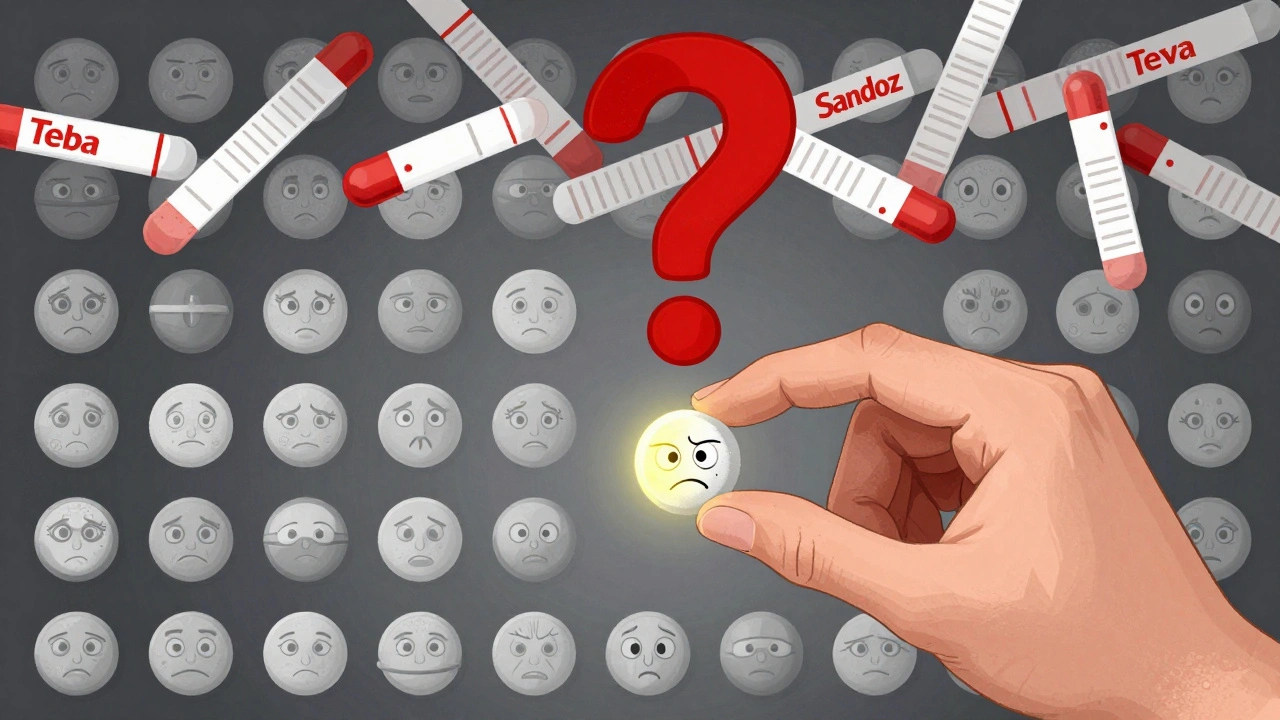
For most medications, no. But for drugs with a narrow therapeutic index - like warfarin, levothyroxine, or phenytoin - even tiny differences in how the drug is absorbed can affect your body. If you’re on one of these, it’s safer to stick with the same generic manufacturer. Ask your pharmacist to keep you on the same one if it’s working well.
What should I do if my new pill doesn’t match the description on the label?
Don’t take it. Use the Drugs.com Pill Identifier to search by shape, color, and imprint. If it doesn’t match, call your pharmacy immediately. Ask to speak to the pharmacist. If they can’t explain it clearly, contact your doctor. It’s better to be safe than sorry.
Is it safe to mix pills from different bottles into one container?
No. Mixing pills increases the risk of confusion, especially when generics change appearance. If you use a pill organizer, keep each medication in its original bottle and only transfer one day’s dose at a time. Always label the organizer clearly with the drug name and time of day.
How can I tell if my prescription was filled correctly?
Compare the new label to your old one. Check the patient name, medication name, dosage, manufacturer, and refill count. Use the Drugs.com Pill Identifier to confirm the pill’s appearance. If anything doesn’t match, call the pharmacy before taking the medication. Electronic prescriptions reduce errors - ask your doctor to use them.
Can I ask my pharmacy to always give me the same generic brand?
Yes. Many pharmacies will honor this request, especially for high-risk medications. Just say: “I’ve been doing well on the version from [Manufacturer Name]. Can you please fill this with the same one?” They may need to order it, but most will try.
What if my doctor didn’t say anything about switching generics?
That’s normal. Pharmacists can switch to generic versions unless the prescription says “brand substitution not permitted.” Your doctor may not know which generic you’re getting. Always check the label yourself. If you’re unsure, call your doctor’s office to confirm the prescription was written correctly.

Evelyn Pastrana
December 10, 2025 AT 11:57So let me get this straight - I’m supposed to memorize every pill’s color and shape like it’s a damn barcode? And if my blood pressure med turns from blue to white, I’m supposed to panic? I get it’s safety, but also… why does my pharmacy think I’m a robot who needs a pill ID app to live?
Nikhil Pattni
December 11, 2025 AT 04:36Guys, I’ve been a pharmacist in Mumbai for 18 years and let me tell you - this is not just an American problem. In India, generics are everywhere, and patients don’t even check labels. I once had a man take his wife’s diabetes pill because it was white and round like his. He ended up in hypoglycemic shock. The problem isn’t the pill, it’s the culture. People think ‘same name = same thing.’ No. The fillers matter. The coating matters. Even the humidity where it’s stored can change absorption. You need to know your manufacturer, not just your drug name. And yes, use Drugs.com - it saved my patient last week when the bottle said ‘Metformin 500mg’ but the pill was stamped ‘LUPIN’ instead of ‘SUNPHARMA’ - totally different dissolution rate. Don’t be lazy. Your life isn’t a Google search.
Arun Kumar Raut
December 12, 2025 AT 17:55I really appreciate this post. I’ve been helping my mom manage her meds since she had her stroke, and I can’t tell you how many times we’ve stared at a new bottle thinking, ‘Wait, is this right?’ I started taking pictures of every pill with my phone - front and back - and keeping them in a folder called ‘Medications.’ It’s dumb, but it works. I also started asking the pharmacist, ‘Can you write the maker’s name on the label?’ They usually do now. It’s not about being paranoid - it’s about being smart. And if you’re on warfarin or thyroid meds? Don’t swap brands without talking to your doc. Small changes = big consequences. We’re all just trying to stay alive here.
precious amzy
December 14, 2025 AT 02:17How quaint. You treat pharmaceuticals as if they were consumer goods subject to aesthetic whimsy - as if the pill’s hue were a matter of personal preference rather than a consequence of regulatory arbitrage and corporate cost-cutting. The real tragedy isn’t the color change; it’s the epistemological surrender of the patient to the illusion of control. You consult a database to verify a pill’s identity - as if truth could be indexed by shape and imprint. But the deeper truth? You’ve outsourced your agency to a system that profits from your confusion. The pill is not the medicine. The label is not the truth. The body is the only reliable instrument - and yet, you’d rather trust an algorithm than your own experience. How very modern.
William Umstattd
December 15, 2025 AT 21:42Of course you’re supposed to check your pills. But why is this even a thing? Why does the FDA allow this mess? Why don’t they force generics to look identical? It’s not like the pill’s color affects efficacy - it’s just branding. And now we’re expected to become pill detectives? Meanwhile, the same companies that make the brand-name drug also make the generic - they just slap a different label on it. This isn’t safety. It’s corporate theater. And now we’re supposed to be grateful for a free app that tells us what we already know? This system is broken. And you’re just cleaning up the mess they made.
Sabrina Thurn
December 17, 2025 AT 00:23For those on narrow therapeutic index drugs - especially levothyroxine - the bioequivalence thresholds are set at 80–125% AUC and Cmax, but that’s population-level data. Individual pharmacokinetics vary wildly due to gut pH, CYP enzyme polymorphisms, and even fiber intake. One study in JAMA Internal Medicine showed 28% of patients on levothyroxine experienced TSH fluctuations after switching manufacturers - even when labeled ‘bioequivalent.’ The FDA’s equivalence standard is a statistical average, not a guarantee for you. If you’re stable on Teva, stay on Teva. If your TSH jumped from 2.1 to 6.8 after a switch? That’s not ‘just a coincidence.’ Document it. Request a prior authorization for a specific generic. Your endocrinologist will thank you. And yes - use the pill identifier, but cross-reference with your lab values. The pill is a delivery mechanism. Your physiology is the endpoint.
Anna Roh
December 18, 2025 AT 01:28Just don’t take the new pills if they look weird. I did once. Ended up in the ER. Don’t be me.
Elliot Barrett
December 18, 2025 AT 07:38You people are overcomplicating this. If the name, dose, and Rx number match - you’re fine. The color? The shape? Who cares? You think your body can tell the difference between a white oval and a blue round pill? It’s the same molecule. If you’re having side effects, it’s not the pill - it’s your anxiety. I’ve been on the same meds for 12 years. Never checked a label. Never had a problem. Stop being paranoid. The pharmacy isn’t trying to kill you.