

By the time most people hear the words type 2 diabetes, the damage has already been building for years. It doesn’t come out of nowhere. It starts quietly-with fatigue that won’t go away, a waistline that keeps growing, and blood tests that show numbers creeping up but aren’t quite "bad enough" to worry about. That’s where insulin resistance and metabolic syndrome come in. They’re not just medical terms. They’re warning signs most people ignore until it’s too late.
What Is Insulin Resistance, Really?
Insulin is your body’s key to unlocking cells so glucose-your main energy source-can get inside. When you eat, your pancreas releases insulin to tell muscle, fat, and liver cells: "Open up, let the sugar in." But with insulin resistance, those cells stop listening. They become numb to the signal. So glucose stays in your blood, and your pancreas panics. It pumps out even more insulin to force the door open.
This goes on for years. Your blood sugar might still look normal because your pancreas is working overtime. But inside your body, things are falling apart. Fat builds up in your liver and muscles-not the kind you can see, but the kind that interferes with how cells respond to insulin. High levels of free fatty acids from belly fat trigger inflammation. Your cells get stressed. Their internal machinery starts to break down. That’s what scientists call endoplasmic reticulum stress and oxidative stress. It’s not just about sugar. It’s about your whole metabolism going off track.
Dr. Ralph DeFronzo’s research from the 1970s still holds up today: insulin resistance is the core problem in over 80% of type 2 diabetes cases. And here’s the scary part-you can have it for 10 to 15 years before your fasting blood sugar hits the danger zone. By then, your pancreas is worn out.
Metabolic Syndrome: The Silent Combo
Metabolic syndrome isn’t one disease. It’s a cluster of five warning signs that show up together. You don’t need all five to be in trouble. Just three.
- Big waist: 94 cm or more for men in Europe, 90 cm for South Asian and East Asian men; 80 cm or more for women
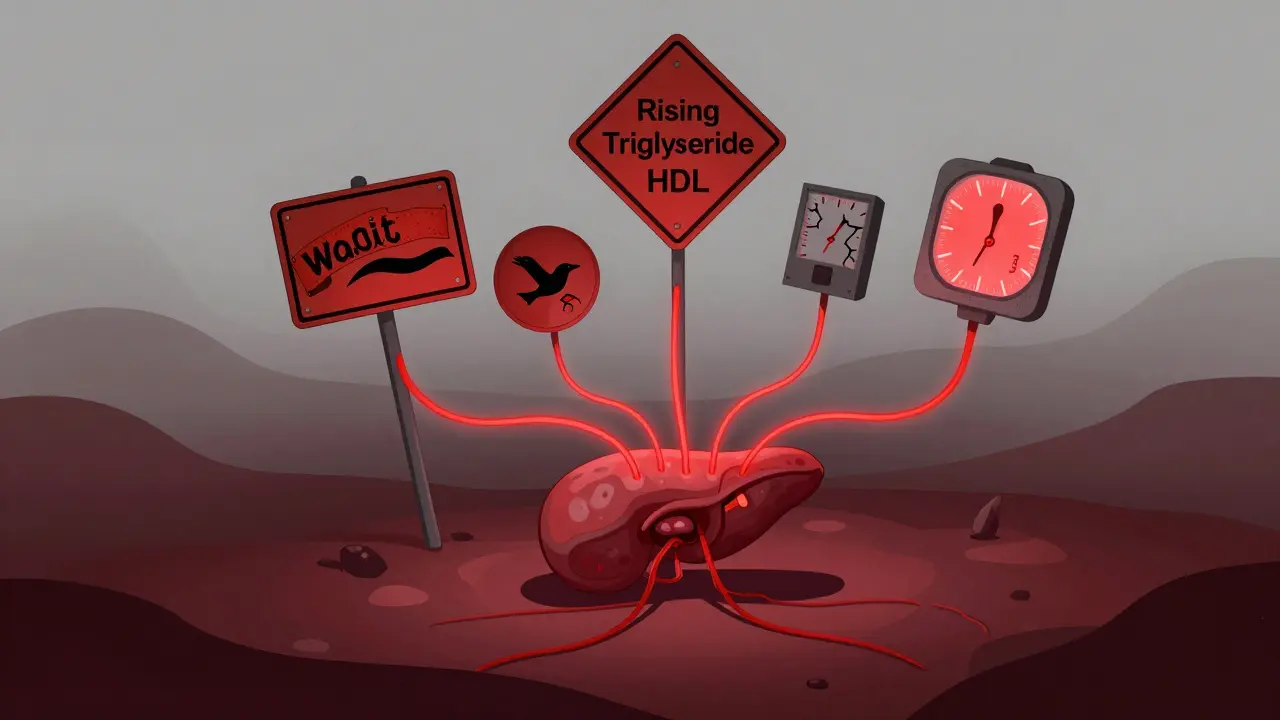
- Triglycerides above 150 mg/dL
- HDL (good cholesterol) below 40 mg/dL for men, below 50 mg/dL for women
- Blood pressure at or above 130/85 mmHg
- Fasting blood sugar of 100 mg/dL or higher
These numbers aren’t random. They’re all tied to insulin resistance. High triglycerides? That’s because your liver is flooded with fat and spilling it into your blood. Low HDL? Your body’s trying to clean up the mess but can’t keep up. High blood pressure? Insulin makes your kidneys hold onto sodium and water. And that rising fasting sugar? Your pancreas is barely keeping pace.
Back in the 80s, Dr. Gerald Reaven called this "Syndrome X." Today, experts are pushing to rename it "metabolic dysfunction syndrome"-because it’s not just a collection of symptoms. It’s a broken system. And the evidence is clear: if you have metabolic syndrome, your risk of developing type 2 diabetes jumps 5 to 6 times. Your chance of a heart attack or stroke? Up by 200 to 300%.
Why Some People Get It and Others Don’t
Not everyone who’s overweight gets metabolic syndrome. And not everyone with metabolic syndrome is overweight. About 30-40% of obese people never develop it. Why? Genetics. Fat distribution matters more than total weight.
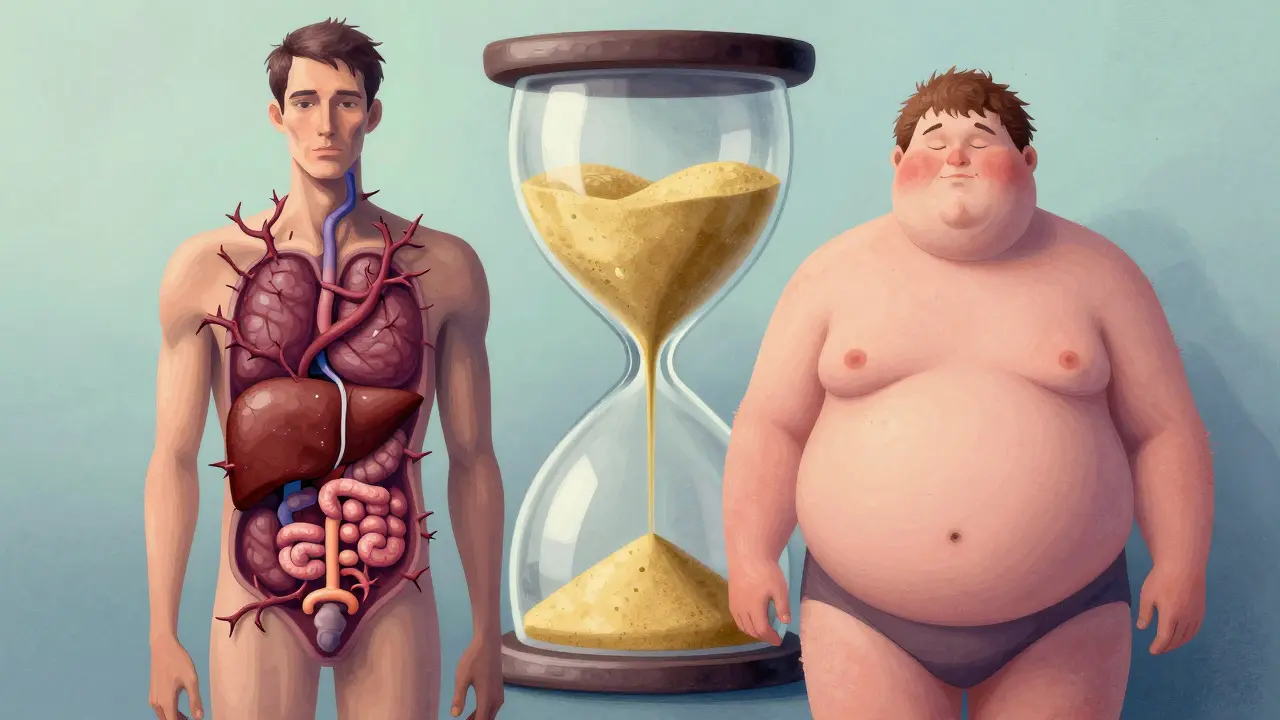
If your fat is stored under your skin-your thighs and hips-you’re at lower risk. But if your fat is deep inside your belly, wrapping around your liver and organs? That’s the dangerous kind. This visceral fat is metabolically active. It leaks inflammatory chemicals directly into your bloodstream. That’s what triggers insulin resistance.
And then there are the lean people with type 2 diabetes. Especially in South Asian populations. They might have normal weight, but their bodies store fat in the wrong places-liver, pancreas, muscles. Their beta cells are under more pressure from the start. That’s why some experts, like Dr. Anna Gloyn from Oxford, argue that beta cell failure might be the main driver in these cases, not just insulin resistance.
But here’s the truth: whether you’re overweight or not, insulin resistance is still the engine driving this whole process. It’s just that in leaner people, the engine breaks faster.
Prediabetes: The Last Chance to Turn Back
Prediabetes means your blood sugar is higher than normal but not yet diabetic. Fasting glucose between 100 and 125 mg/dL. HbA1c between 5.7% and 6.4%. This is the window where you can still reverse things.
The Diabetes Prevention Program (DPP), a landmark study followed for over 20 years, showed that people with prediabetes and metabolic syndrome who lost just 7% of their body weight and exercised 150 minutes a week cut their risk of type 2 diabetes by 58%. That’s more effective than most medications.
Metformin-the first-line drug for prediabetes-reduced risk by 31%. But lifestyle changes didn’t just lower blood sugar. They improved insulin sensitivity, lowered blood pressure, cleaned up cholesterol, and even reduced liver fat. One study, Look AHEAD, found that 51% of participants who lost 10% of their body weight saw their diabetes reversed within a year. Twelve percent stayed in remission eight years later.
That’s not a miracle. That’s biology. When you take the pressure off your pancreas, it can heal.
What Happens When You Cross the Line Into Type 2 Diabetes
Once your fasting blood sugar hits 126 mg/dL or your HbA1c crosses 6.5%, you’re officially diagnosed with type 2 diabetes. At this point, your beta cells are worn down. They’ve been pumping out insulin for years and are now failing. You’re no longer just insulin resistant-you’re insulin deficient.
That’s why many people start needing pills, then injections. But even now, it’s not too late to change course. Studies show that people who lose weight, move more, and eat better can still reduce their HbA1c below 6.5% and stop medications. It’s not common, but it’s possible.
And the tools are getting better. New drugs like semaglutide (Wegovy, Ozempic) and tirzepatide (Mounjaro) don’t just lower blood sugar. They make you feel full, burn fat, and protect your heart. In the STEP trials, people lost nearly 15% of their body weight on average. In SELECT, 66% of those with type 2 diabetes achieved remission.
But these drugs aren’t magic. They’re tools. The real fix is still lifestyle. Medications help you get there. They don’t replace it.
What You Can Do Right Now
You don’t need a fancy diet. You don’t need to run marathons. Start small.
- Move daily. Walk 30 minutes. Five days a week. That’s 150 minutes. Doesn’t matter if it’s at lunch, after dinner, or before work. Just move.
- Drop sugar. Not just candy. Soda, fruit juice, sweetened coffee, even "healthy" granola bars. These spike insulin and feed fat storage.
- Eat more protein and fiber. Eggs, beans, lentils, leafy greens, broccoli, whole grains. They stabilize blood sugar and keep you full.
- Sleep 7-8 hours. Poor sleep increases cortisol, which raises blood sugar and makes fat harder to lose.
- Check your waist. If you’re a man over 94 cm (37 inches) or a woman over 80 cm (31.5 inches), you’re at risk. Measure it. Know it.
And get your blood tested. Not just fasting glucose. Ask for HbA1c, triglycerides, HDL, and liver enzymes (ALT). If you have three of the five metabolic syndrome markers, you’re already in danger. Don’t wait for a diabetes diagnosis.
The Bigger Picture
Over 537 million adults have type 2 diabetes worldwide. By 2050, the CDC says one in three Americans will have it. That’s not inevitable. It’s a choice we’ve made as a society-cheap food, sedentary jobs, sleep-deprived lives.
But the science is clear: insulin resistance and metabolic syndrome are reversible-at least in the early stages. The body isn’t broken. It’s overwhelmed. And it can heal if you give it the right conditions.
This isn’t about willpower. It’s about understanding the system. Your body isn’t failing you. It’s trying to survive the environment you’ve created for it. Change the environment, and your body will change with it.



Sue Stone
January 22, 2026 AT 17:18This hit me right in the feels. I had prediabetes last year and just started walking after dinner. No fancy diet, no supplements-just movement. My HbA1c dropped from 6.1 to 5.4 in four months. It’s not magic, it’s consistency.
Kerry Evans
January 24, 2026 AT 16:03Let’s be honest-this article ignores the elephant in the room: pharmaceutical greed. Big Pharma doesn’t want you to reverse diabetes, they want you on metformin for life. The DPP study? Buried under ads for Ozempic. The real enemy isn’t insulin resistance-it’s the profit motive.
Stacy Thomes
January 24, 2026 AT 19:15YES. I lost 22 lbs just by cutting out juice and walking with my dog. My doctor said I was ‘pre-diabetic’-now I’m just ‘fine.’ You don’t need a gym. You just need to move. Start today. Your future self will thank you.
Dawson Taylor
January 26, 2026 AT 06:16The mechanistic clarity of insulin resistance as the central pathophysiological driver is well-supported in the literature. The metabolic syndrome construct, while clinically useful, remains a descriptive constellation rather than a causal entity. The real paradigm shift lies in recognizing adipose tissue as an endocrine organ, not merely a passive storage depot.
dana torgersen
January 27, 2026 AT 01:52i just read this at 3am and now i’m crying??? like… why does my body hate me?? i eat healthy-ish and still have a belly… and my liver enzymes are up… and i’m 32?? is it too late?? i just… i just want to feel normal again…
Anna Pryde-Smith
January 28, 2026 AT 12:49Oh please. You think walking and cutting soda is enough? I’ve been doing that for five years and my HbA1c is still 7.2. You’re romanticizing this. This isn’t about willpower-it’s about genetics, trauma, and systemic neglect. People like you make it worse by pretending it’s simple.
Kerry Moore
January 29, 2026 AT 11:54Dr. DeFronzo’s work remains foundational, and the integration of endoplasmic reticulum stress and oxidative stress as key mediators of insulin resistance is increasingly validated by proteomic and metabolomic studies. The notion that beta-cell failure may precede insulin resistance in lean phenotypes, as suggested by Dr. Gloyn, merits further longitudinal investigation.
Laura Rice
January 30, 2026 AT 01:50Okay but can we talk about how no one tells you that your liver gets FAT from sugar?? Like… I thought it was just my stomach. I had a fatty liver scan last year and I cried. I didn’t even know that was a thing. This article saved me. Thank you.
Andrew Smirnykh
January 30, 2026 AT 05:00In East Asian populations, the concept of ‘normal weight’ metabolic syndrome is particularly relevant. I’ve seen patients with BMIs under 22 develop type 2 diabetes due to visceral adiposity and ectopic fat deposition. Western guidelines often fail these populations. We need ethnicity-specific thresholds.
Janet King
January 31, 2026 AT 02:28Measure your waist. Get your HbA1c. Check your triglycerides. These are simple, cheap, and life-saving tests. If you have three of the five criteria, you are at high risk. Don’t wait for symptoms. Prevention is not optional-it’s essential.
Vanessa Barber
January 31, 2026 AT 09:54Yeah right. ‘Just walk more.’ Like I have time. I work two jobs, sleep 4 hours, and my kid has autism. This article is for people who don’t live in the real world.
charley lopez
February 2, 2026 AT 01:19While lifestyle interventions demonstrate efficacy in the DPP cohort, the generalizability to populations with high psychosocial stressors, limited healthcare access, or genetic predispositions remains limited. The pharmacological adjuncts-GLP-1 RAs, SGLT2 inhibitors-represent a necessary evolution in clinical management, not a capitulation to lifestyle failure.