
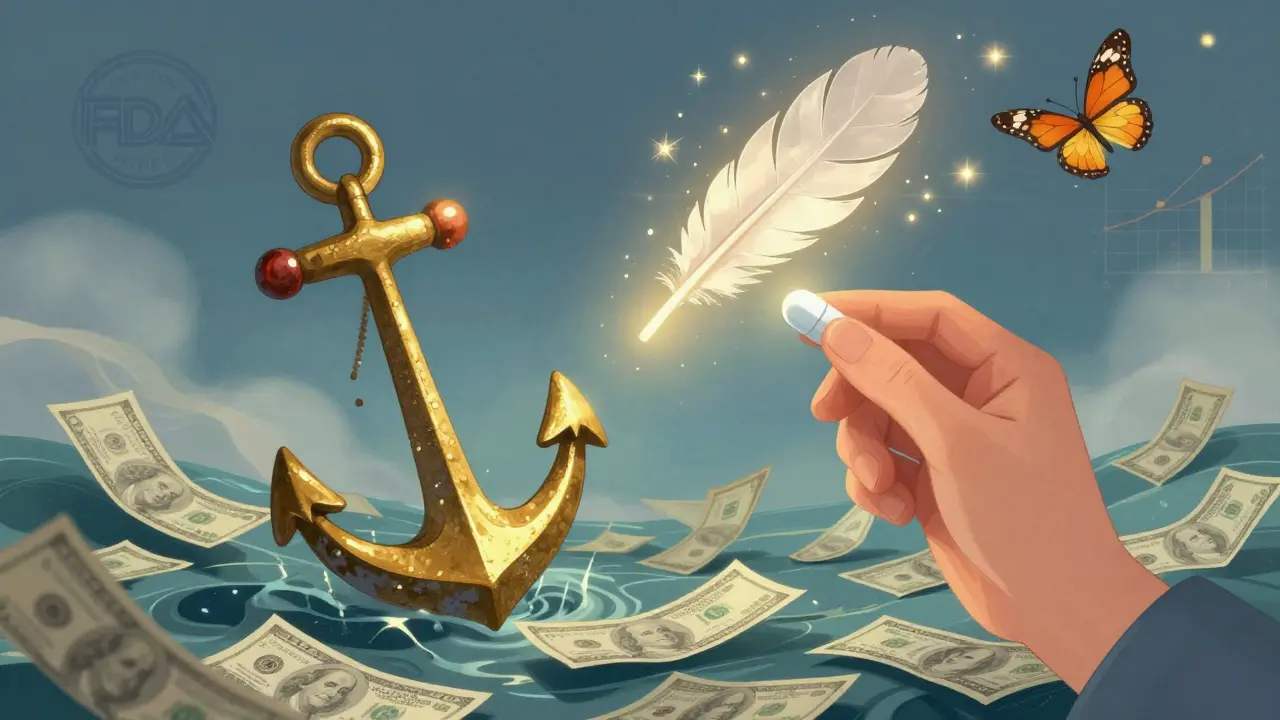
More than 90% of prescriptions in the U.S. are filled with generic drugs. They work just as well as brand-name medicines, cost 80-85% less, and are held to the same strict standards by the FDA. Yet, many patients still hesitate to take them. Why? It’s not because generics are less effective. It’s because they don’t understand them.
Why Patients Doubt Generic Medications
Patients aren’t being irrational. They’ve been conditioned to believe that price equals quality. A pill that costs $5 feels like it must be inferior to one that costs $50-even when both contain the exact same active ingredient, in the same dose, and meet the same bioequivalence standards (80-125% range for absorption). This myth persists despite decades of data proving otherwise.
Research shows the biggest fears aren’t about safety-they’re about control. A 2024 study found that 25.7% of patients don’t want to switch from a brand-name drug simply because they’re used to it. Another 29.5% worry about new side effects. And 20.8% say they’d rather pay more if it means feeling more secure. These aren’t just preferences-they’re emotional responses rooted in lack of information.
Demographics matter too. Patients with lower education levels, lower incomes, or Medicaid coverage are significantly more likely to distrust generics. Non-white patients report lower confidence levels than white patients. Older adults (over 60) are more accepting, but only if they’ve been clearly told why the switch is safe. And here’s the key: patients who get no explanation are twice as likely to refuse a generic substitution.
The Power of a Two-Minute Conversation
It’s not complicated. The single most effective way to increase patient confidence in generics is a short, clear conversation.
A 2023 study in the Journal of General Internal Medicine found that 84.7% of patients who received an explanation from their pharmacist felt comfortable switching to a generic. Only 63.2% of those who didn’t get any explanation felt the same. That’s a 21.5-point gap created by just two or three minutes of talking.
What should that conversation include?
- “This generic is the same medicine.” Not “similar.” Not “close.” Same active ingredient. Same dose. Same way it works in your body.
- “The FDA requires it to work just like the brand.” Mention the Abbreviated New Drug Application (ANDA) process. No need to use the term-just say, “The government checks every generic to make sure it does exactly what the brand does.”
- “You’re not losing anything.” No drop in effectiveness. No increase in side effects. The only difference is the price-and the savings.
One pharmacist in Ohio shared a simple script that worked: “I know you’ve been on the brand for a while. This generic has the same medicine in it, approved by the FDA, and costs $40 less per month. Most people switch without any change in how they feel. But if you notice anything different, let us know. We’ll help you.”
That’s it. No jargon. No charts. Just honesty and reassurance.
What Pharmacists Can Do That Doctors Can’t
Doctors prescribe. Pharmacists explain.
Doctors often don’t have time to talk about substitutions. Pharmacists are the ones handing the bottle to the patient. They’re the last line of defense against misunderstanding.
Studies show pharmacists are seen as the most trusted source of information about generics-more than websites, pamphlets, or TV ads. Yet, too many pharmacies treat substitution as a transaction, not a conversation. At Walmart Pharmacy, patients complained about rushed consultations. At CVS, those who got detailed explanations rated the service 4.2 out of 5.
Here’s what works in practice:
- Ask: “Have you taken this generic before?”
- Listen: Don’t interrupt. Let them voice their fears.
- Clarify: “I hear you’re worried about side effects. That’s common. The medicine is the same, but sometimes the fillers change. That’s why some people notice a difference in how it feels-though not in how well it works.”
- Offer: “We can monitor you for two weeks. If anything feels off, we’ll switch you back.”
That last part is critical. Giving patients control reduces anxiety. They’re not being forced into a cheaper option-they’re being supported in a smart choice.
Addressing the Real Concerns
Not all concerns are myths. Some are real, and they need real answers.
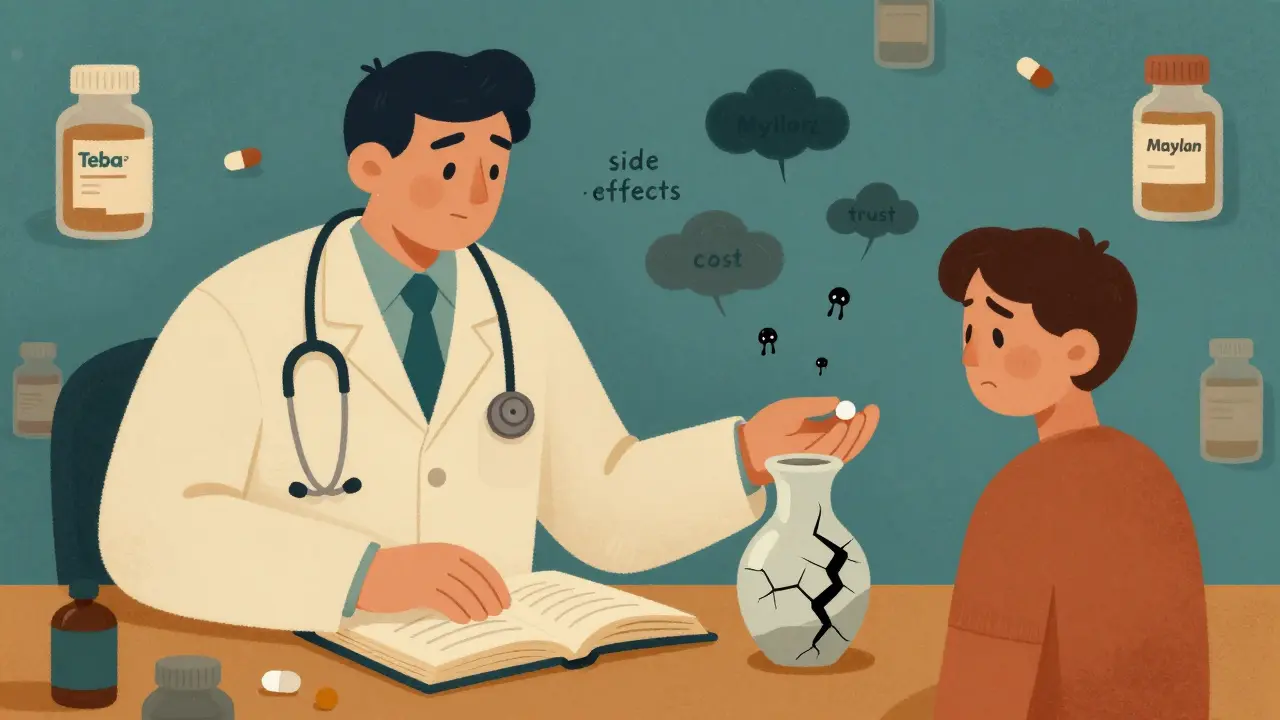
“My generic Sertraline made me feel different.” This comes up often on Reddit. The truth? The active ingredient is identical. But inactive ingredients-like dyes or fillers-can vary. For most people, this makes no difference. For a small number, especially those sensitive to additives, it might cause minor changes in how they feel-like a slight change in nausea or sleep pattern. That’s not the drug failing. It’s the body adjusting to a different binder. Tell patients: “If you notice something unusual, come back. We can try a different generic brand, or go back to the original.”
“I don’t trust the manufacturer.” Generic drugs are made by companies like Teva, Mylan, and Sandoz-some of the largest pharmaceutical firms in the world. They’re inspected by the FDA just like brand-name makers. Many brand-name drugs are even made in the same factories as generics.
“What about complex drugs like inhalers or injectables?” These are trickier. The FDA requires extra testing for complex generics. But if it’s approved, it’s safe. Don’t assume. Ask the pharmacist. If the drug has a REMS program (Risk Evaluation and Mitigation Strategy), make sure the patient understands how to use it correctly. A quick demo with the inhaler or pen can ease fears.
What Doesn’t Work
Handing out a pamphlet? It’s not enough. Only 62% of patients found them “somewhat helpful.”
Posting a sign that says “Generics Save You Money”? That reinforces the idea that generics are just cheap-not equal.
Letting the pharmacist make the switch without telling the patient? That’s the fastest way to lose trust. Patients want to be involved. They want to know why. And if they’re not asked, they assume something’s being hidden.
Even well-meaning phrases like “It’s the same thing” can backfire. Patients hear “same thing” and think “cheap knockoff.” Use precise language: “Same medicine. Same effect. Lower cost.”
The Bigger Picture: Why This Matters
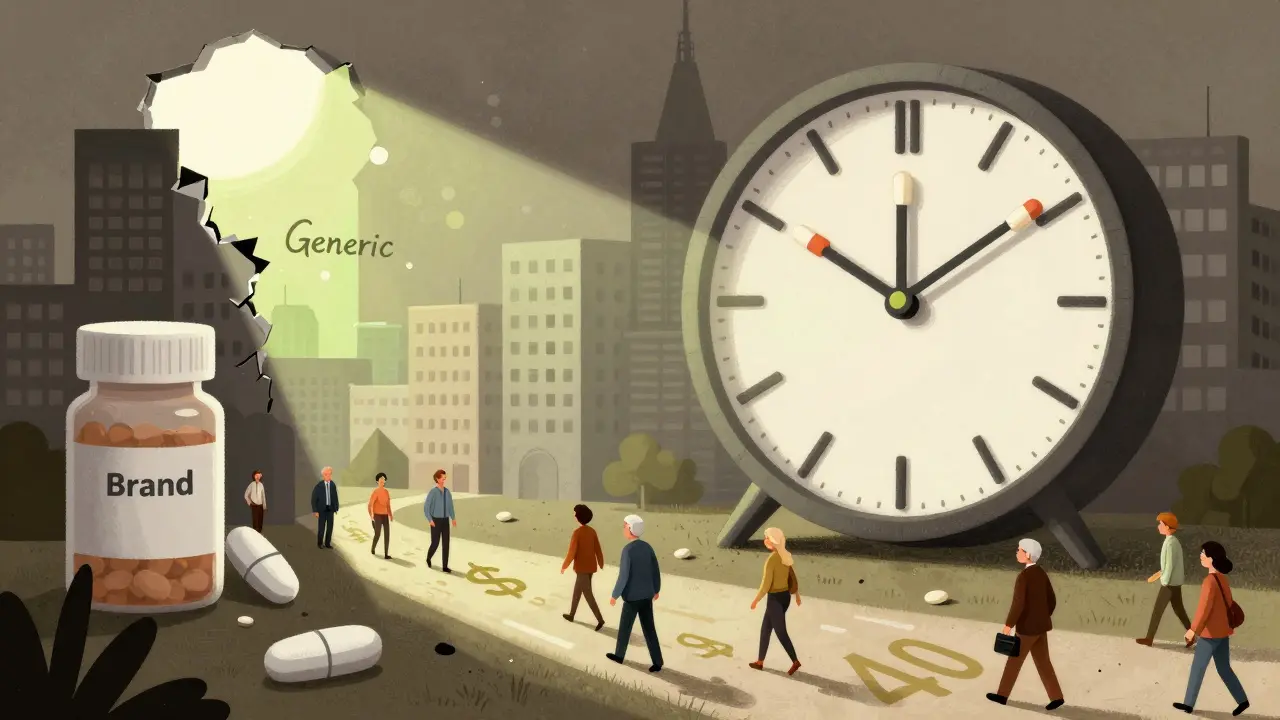
Generic drugs saved the U.S. healthcare system $370 billion in 2022. That’s billions in savings for families, insurers, and taxpayers. But those savings mean nothing if patients stop taking their meds because they’re afraid.
When someone skips their blood pressure pill because they think the generic won’t work, they’re not saving money-they’re risking a stroke. When a diabetic avoids their insulin because they’re worried about side effects, they’re not being cautious-they’re being misinformed.
Improving confidence in generics isn’t about marketing. It’s about equity. It’s about making sure everyone-no matter their income, race, or education level-has equal access to safe, effective treatment.
The data is clear: when patients are properly informed, they accept generics. When they’re not, they don’t. The solution isn’t new science. It’s better communication.
What You Can Do Today
Whether you’re a patient, a pharmacist, or a caregiver, here’s how to help:
- If you’re prescribed a generic: Ask, “Is this the same as the brand? How do I know it will work?”
- If you’re a pharmacist or nurse: Take two minutes. Explain. Listen. Offer to follow up.
- If you’re a doctor: Say, “I’m switching you to a generic because it’s just as effective and will save you money. Let me know if you have any concerns.”
- If you’re a family member: Don’t assume someone’s refusing because they’re cheap. Ask them what they’re worried about.
There’s no need for fancy tools, apps, or campaigns. Just talk. The science is settled. The medicine works. What’s left is trust-and that’s built one conversation at a time.
Are generic drugs really as safe as brand-name drugs?
Yes. The FDA requires generic drugs to have the same active ingredient, strength, dosage form, and route of administration as the brand-name version. They must also meet the same strict standards for quality, purity, and stability. Before approval, generics must prove they’re bioequivalent-meaning they work in the body the same way, within a very narrow range. Thousands of studies and decades of real-world use confirm they’re just as safe.
Why do some people say their generic medicine doesn’t work the same?
Sometimes, the inactive ingredients-like fillers, dyes, or coatings-are different. These don’t affect how the medicine works, but they can change how the pill feels in the stomach or how quickly it dissolves. For most people, this makes no difference. For a small number, especially those with sensitivities, it might cause minor side effects like nausea or dizziness. If this happens, switching to a different generic brand (not back to the original) often solves it. The active ingredient hasn’t changed.
Can pharmacists substitute generics without telling me?
In most states, pharmacists can substitute a generic unless the doctor writes “dispense as written” or the drug is on a restricted list. But even when substitution is allowed, patients should still be informed. Best practice is to always explain the switch. Not doing so leads to confusion and distrust. Patients who are told about the change are far more likely to accept it and continue taking their medication.
Do generics take longer to work than brand-name drugs?
No. Bioequivalence testing ensures generics are absorbed into the bloodstream at the same rate and to the same extent as the brand. If a generic took longer to work, it wouldn’t be approved. The FDA requires that the absorption levels fall within 80-125% of the brand’s. That’s a very tight range. Any noticeable delay is likely due to individual differences in metabolism-not the drug itself.
Why do some generics look different from the brand?
By law, generics can’t look exactly like the brand-that’s to avoid trademark infringement. So they may have a different color, shape, or marking. But the medicine inside is identical. Think of it like different brands of aspirin: one might be white and oval, another red and round. They both contain acetylsalicylic acid. The appearance doesn’t change how it works.
Should I avoid generics if I’m on multiple medications?
No. In fact, using generics can make managing multiple medications easier by reducing cost barriers. There’s no evidence that generics interact differently with other drugs than brand-name versions. The active ingredient is what matters for interactions. If you’re concerned, ask your pharmacist to review all your meds together. They can check for any potential issues-whether the drugs are generic or brand.

paul walker
January 28, 2026 AT 23:47Man, I used to be skeptical too-until my doc switched me to generic lisinopril and I saved $80 a month with zero difference in how I felt. Seriously, same pill, just cheaper. Why are we still acting like it’s some scam?
Alex Flores Gomez
January 30, 2026 AT 21:33Let’s be real-generic drugs are just the pharmaceutical industry’s way of monetizing placebo effects. If you’re not paying premium prices, you’re not getting premium results. The FDA? More like ‘Follows Dubious Standards.’
Frank Declemij
January 31, 2026 AT 15:03Generics are bioequivalent by law and proven in thousands of studies. The only difference is cost and appearance. Patients who refuse them based on myth are doing themselves harm. Simple as that.
DHARMAN CHELLANI
January 31, 2026 AT 19:40Generic? More like generic excuse for lazy pharma. My cousin took generic Xanax and started hallucinating. Coincidence? I think not.
kabir das
February 1, 2026 AT 15:17OH MY GOD. I just realized-my generic metformin has a different smell! It’s like… chemical! I’ve been poisoned!! I’m going to the ER. I can’t believe this is happening. I trusted the system. I trusted them. I trusted the little white pill. 😭💔
Megan Brooks
February 2, 2026 AT 04:41The emotional resistance to generics is deeply human. We equate price with care, and switching feels like being abandoned by the system. But the truth is, when we choose generics, we’re choosing access-for ourselves and for others who can’t afford otherwise. It’s not just medicine. It’s justice.
Ryan Pagan
February 3, 2026 AT 00:41Here’s the kicker: the same factories that make your $100 brand-name drug also make the $5 generic. Same line. Same inspectors. Same quality control. The only thing that changes is the label and the price tag. That’s not a compromise-it’s a win. Stop letting marketing fool you.
Paul Adler
February 4, 2026 AT 15:45I appreciate the data here. But I wonder if the real barrier isn’t misinformation-it’s the lack of continuity in care. If a patient sees a different pharmacist every time, or gets no follow-up, no amount of talking will fix the anxiety. Trust isn’t built in two minutes-it’s built over time.
Sheryl Dhlamini
February 6, 2026 AT 08:30I used to be the person who refused generics-until my mom had a stroke because she stopped her blood pressure med because she thought the generic was ‘fake.’ I’ll never forget the guilt. Now I tell everyone: don’t let fear kill you. Ask questions. Get the facts. This post? Lifesaver.
Kristie Horst
February 6, 2026 AT 17:08Oh, so now we’re supposed to be impressed that pharmacists can talk? Groundbreaking. I’m sure the 4.2/5 rating at CVS was due to the heartfelt ‘I hear you’ and not the fact that they were paid to say it. 😌
Andy Steenberge
February 6, 2026 AT 19:40One thing missing from this discussion: the psychological impact of pill appearance. People form attachments to the shape, color, and even the imprint on their pill. It’s not irrational-it’s cognitive anchoring. The solution isn’t to dismiss it, but to acknowledge it. ‘I know this looks different, but it’s the same medicine.’ That’s the magic phrase.
Laia Freeman
February 8, 2026 AT 06:53OMG I JUST REALIZED MY GENERIC OMEPRAZOLE IS A DIFFERENT SHAPE?? I’M PANICKING. I’M SURE IT’S GONNA KILL ME. I’M GOING TO TIKTOK ABOUT IT. #GenericScam #PharmaLies #ImNotTakingIt
rajaneesh s rajan
February 9, 2026 AT 01:20Generics are fine. But let’s not pretend the system is fair. The real problem is that brand-name companies pay to delay generics. That’s not a patient issue. That’s a corporate crime.
Jasneet Minhas
February 11, 2026 AT 00:31Generics = 🤑💰📉 But also 🩺✅💊 Same stuff. Just no fancy logo. 🤷♂️
Eli In
February 12, 2026 AT 11:20As someone who grew up in a country where generics were the only option, I can say this: access to affordable meds isn’t a luxury. It’s survival. The U.S. has the technology to fix this. It just needs the will.