
Side Effect Frequency Calculator
Find Side Effect Frequencies
Enter a medication name to see how common side effects really are. Replace vague terms like "common" or "rare" with exact percentages.
Side Effect Frequencies
Common Side Effects
Less Common Side Effects
Red Flags
Important Note: Overemphasizing side effects can increase the nocebo effect (anxiety causing symptoms to appear). Doctors now recommend risk-stratified communication focusing on what's most likely and serious.
When you start a new medication, your doctor might say, "Common side effects include headache and dizziness." But what does "common" really mean? Is it 1 in 10 people? 1 in 100? And what if you get a side effect no one mentioned? You’re not alone. Most patients feel left in the dark about what to expect - and that silence can cost you your health.
Why Side Effect Communication Matters More Than You Think
Nearly 50% of people stop taking their prescribed medications within the first year. The biggest reason? Unexpected side effects. Not because the drug didn’t work - because they didn’t know what might happen, and when it did, they panicked and quit. A 2015 study found that 90% of patients want their doctor to talk about side effects. But only 66% actually hear about the common ones, and just 75% get warned about dangerous ones. That gap isn’t just a communication issue - it’s a safety issue. The FDA says failure to properly explain side effects contributes to 18% of prescription-related malpractice claims. And according to the American Heart Association, better communication boosts medication adherence by 22%. It’s not about scaring you. It’s about preparing you.What Doctors Should Tell You - And What They Often Skip
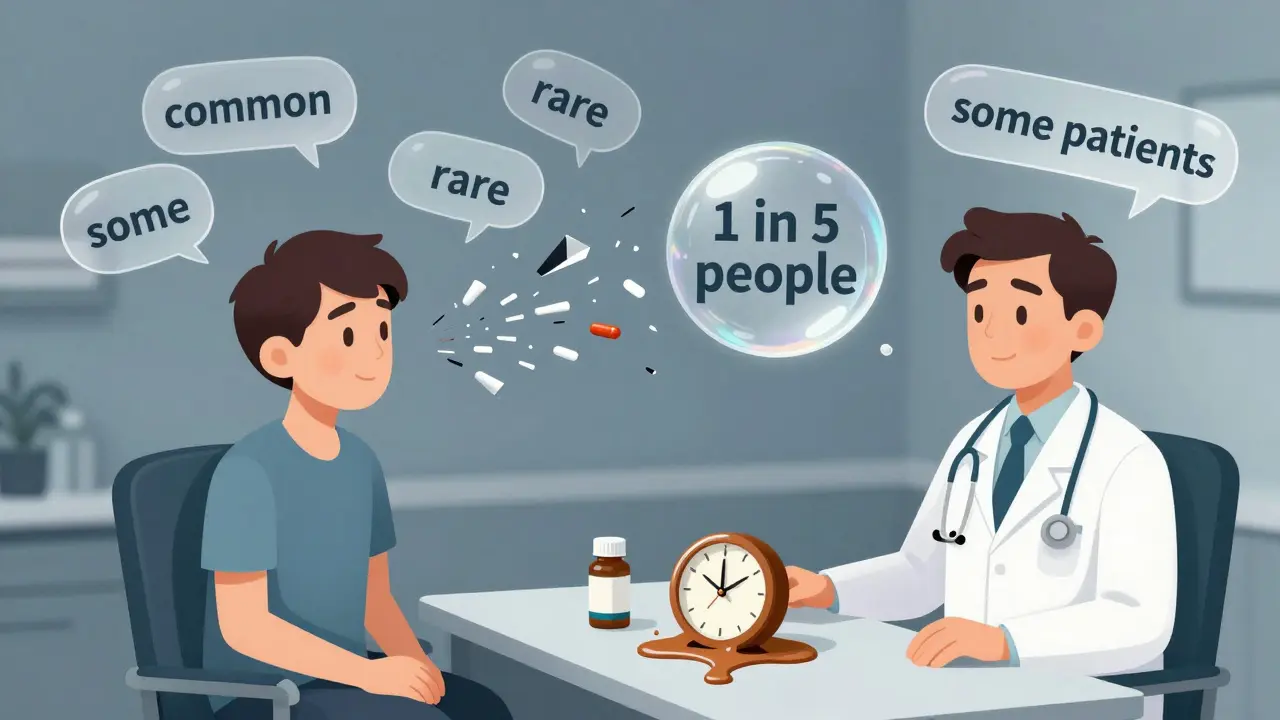
Most doctors list 3 to 4 side effects per drug. But pharmacological databases list 15 to 25 possible reactions. That’s a huge gap. Here’s what you need to hear:- Frequency: Not just "common" or "rare." Say: "This happens in 1 out of 5 people" or "Less than 1 in 100." Vague terms like "some patients" leave you guessing.
- Severity: Distinguish between annoying (like dry mouth) and dangerous (like liver damage). Don’t lump them together.
- Timing: When does it usually start? Within hours? Days? Weeks?
- Management: What can you do if it happens? "Take it with food," "drink extra water," or "call us if your skin turns yellow."
Your Preferences Matter - And So Does Your Doctor’s Approach
Not everyone wants the same level of detail. Research shows:- 49% of patients want to know about both common and serious side effects.
- 26% only want to hear about dangerous ones.
- 17% only care about the mild ones.

What to Say When You’re Already Having Side Effects
Maybe you started the pill last week and now you’re dizzy every afternoon. You’re not sure if it’s normal - or if you should stop. Don’t wait. Don’t assume it’ll go away. Don’t just stop cold turkey. Instead, say this:- "I’ve been feeling [symptom] since I started [medication]. It’s happening [frequency] and it’s affecting [daily activity]."
- "Is this something I should expect to pass, or should we adjust the dose?"
- "What’s the safest way to handle this if it continues?"
How to Get Better Information - Even If Your Doctor Doesn’t Bring It Up
Doctors are pressed for time. A 15-minute visit rarely leaves room for deep side effect talks. But you can take control. Before your appointment:- Write down every medication you take - including supplements.
- Make a list of side effects you’ve noticed, even if you think they’re unrelated.
- Ask your pharmacist for the patient information sheet. It’s legally required for most prescriptions.
- Ask: "What are the top 3 side effects I should watch for with this drug?"
- Ask: "How often do they happen?"
- Ask: "What should I do if I get one?"
- Check your after-visit summary. Does it list side effects? If not, call and ask for a copy.
- Use apps like Medisafe or MyTherapy that track symptoms and alert you to patterns.

When to Be Concerned - And When to Wait It Out
Not every side effect means stop the drug. Common, mild side effects (usually okay to wait):- Headache
- Mild nausea
- Dry mouth
- Fatigue
- Changes in taste
- Swelling of face, lips, or throat
- Difficulty breathing
- Severe rash or blisters
- Yellow skin or eyes (sign of liver stress)
- Unexplained bruising or bleeding
- Chest pain or irregular heartbeat
- Thoughts of self-harm or sudden mood changes
The Bigger Picture: Why This Conversation Is Changing
The U.S. spends $100-$289 billion a year on avoidable healthcare costs from people not taking their meds. Poor side effect communication is a big part of that. New guidelines from the FDA and AMA now push for personalized, structured conversations. They’re standardizing terms like "very common" (>10%), "common" (1-10%), and "rare" (<0.1%) so patients aren’t left guessing. And technology is helping. AI tools now analyze millions of patient reports to predict which side effects you’re most likely to get - based on your age, gender, other meds, and even your genetics. As more people take 4 or 5 medications at once - especially seniors - the risk of interactions grows. That makes clear, honest communication not just helpful - essential.What You Can Do Today
You don’t need to wait for your next appointment to start taking charge.- Look up your medication’s FDA-approved Patient Package Insert. It’s online - search "[drug name] FDA patient information."
- Write down your top 3 concerns about side effects and bring them to your next visit.
- If you’ve stopped a medication because of side effects, tell your doctor. They need to know.
- Ask your pharmacist for a side effect cheat sheet - many offer free printed guides.
How do I know if a side effect is serious enough to call my doctor?
Look for symptoms that are new, sudden, or worsening. Red flags include trouble breathing, swelling, yellow skin, chest pain, severe rash, or thoughts of self-harm. If you’re unsure, call your doctor or pharmacist - it’s better to check than to wait. Most side effects are mild and pass with time, but serious ones need quick action.
Why do doctors only mention a few side effects when there are so many?
Doctors focus on the most common and most dangerous side effects to avoid overwhelming you. Listing every possible reaction - even rare ones - can increase anxiety and even cause side effects to happen just because you’re expecting them. The goal isn’t to scare you, but to prepare you for what’s likely and what’s urgent.
What if my doctor won’t talk about side effects?
Be direct. Say: "I want to understand what side effects I might experience and how to handle them." If they still brush you off, ask for the patient information sheet or schedule a follow-up with a pharmacist. You have the right to know. If your doctor consistently dismisses your concerns, consider finding one who values shared decision-making.
Can side effects get worse over time?
Some side effects improve as your body adjusts - like nausea or dizziness. But others can build up, especially if you’re taking multiple drugs. For example, liver stress from long-term use of certain painkillers or statins can worsen slowly. That’s why tracking symptoms and checking in regularly with your doctor matters, even if you feel fine.
Should I stop taking my medication if I get a side effect?
Never stop suddenly unless it’s a medical emergency. Stopping cold turkey can be dangerous - especially for blood pressure, antidepressant, or seizure meds. Instead, call your doctor. They may adjust your dose, switch you to another drug, or suggest a strategy to manage the side effect. Your health depends on this conversation - not on guesswork.



Emily Leigh
January 20, 2026 AT 10:06Renee Stringer
January 20, 2026 AT 20:43Courtney Carra
January 22, 2026 AT 15:35kumar kc
January 24, 2026 AT 08:28clifford hoang
January 24, 2026 AT 21:13Arlene Mathison
January 25, 2026 AT 15:33Carolyn Rose Meszaros
January 26, 2026 AT 06:45Greg Robertson
January 27, 2026 AT 21:29